


Listen to the article
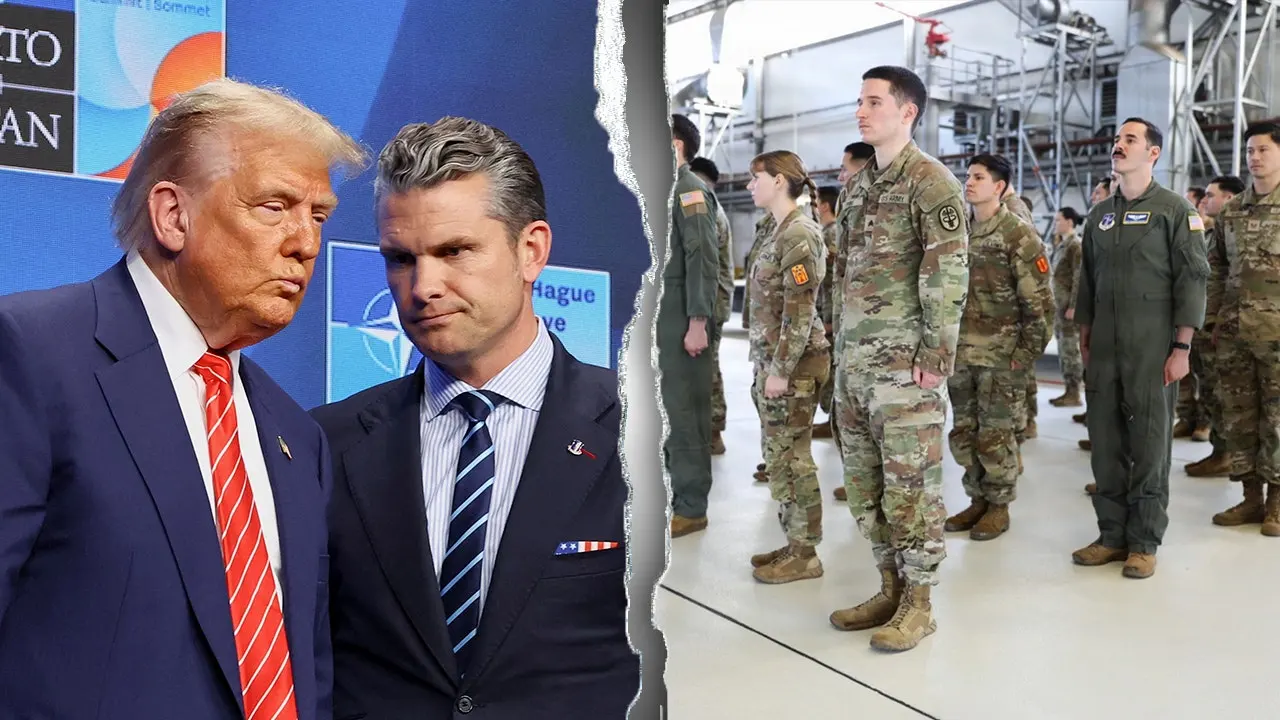
President Trump has ordered the withdrawal of 5,000 U.S. troops from Germany, escalating tensions with key NATO allies amid the ongoing Iran conflict. The Pentagon announced Friday that the drawdown will occur over the next six to 12 months, according to spokesperson Sean Parnell.
The decision comes as several European allies, including Germany, Italy, and Spain, have limited U.S. military access to bases for Iran-related missions. This resistance has prompted Trump to consider broader troop reductions across Europe.
“Yeah, probably… Why shouldn’t I?” Trump responded Thursday when asked if he would consider pulling troops out of Italy and Spain. He specifically criticized both nations, stating that “Italy has not been of any help to us” and describing Spain as “horrible, absolutely horrible” for refusing to allow use of jointly operated bases for missions related to the Iran conflict.
The German withdrawal follows comments by Chancellor Friedrich Merz that the U.S. was “being humiliated” by Iran. Merz later attempted to downplay tensions, stating: “On all these issues, we maintain close and trusting contact with our partners, including — and especially — those in Washington. We do so in the shared transatlantic interest. We do so with mutual respect and a fair sharing of burdens.”
German Foreign Minister Johann Wadephul emphasized the strategic importance of U.S. military installations, noting that “the Ramstein Air Base serves an irreplaceable function for both the US and us.”
However, Trump’s plans may face significant congressional hurdles. Current defense legislation prohibits reducing U.S. troop levels in Europe below 76,000 without providing lawmakers with an assessment and certifying that such a move would not harm American or NATO security interests.
“The provision does not prohibit the administration from going below 76,000, but it does establish hurdles it would have to clear,” explained Jeff Rathke, president of the American-German Institute at Johns Hopkins University and a former State Department official.
While Congress cannot directly veto a troop withdrawal, it can impose conditions and restrict funding, effectively slowing or blocking significant drawdowns if requirements aren’t met. This legislative restriction applies to total U.S. force levels across Europe rather than deployments in specific countries.
This distinction creates a potential workaround for the administration. Rather than reducing overall troop numbers below the 76,000 threshold, Trump could redistribute forces within Europe, moving personnel away from allies deemed uncooperative to more supportive nations.
Currently, the U.S. maintains approximately 36,000 troops in Germany, 13,000 in Italy, and 4,000 in Spain – representing three of America’s largest military footprints in Europe. These countries host key bases that serve as logistics hubs for Middle East operations, making any significant drawdown potentially complicated for the ongoing Iran conflict.
Seth Jones, a defense analyst at the Center for Strategic and International Studies, noted that while the president likely has the authority to reposition or withdraw forces, such decisions raise broader strategic questions.
“My issue is less the legal authority, but rather the strategic rationale behind a withdrawal — especially if it is done for political, rather than strategic, reasons,” Jones said. He highlighted the importance of bases like Rota in Spain for rapid-response operations into North Africa, and facilities in Germany that support deployments across European and African theaters.
Jones also warned that relocating forces would involve significant costs and logistical challenges, adding complexity to any drawdown decision. Particularly challenging would be replicating the capabilities of installations like Ramstein Air Base and the Landstuhl Regional Medical Center.
This isn’t the first time Trump has pursued European troop reductions. During his first term, he ordered the withdrawal of approximately 12,000 U.S. troops from Germany in 2020, citing Berlin’s insufficient NATO contributions. That effort stalled after Congress imposed conditions requiring the Pentagon to certify the move wouldn’t undermine NATO or U.S. operations.
As tensions between the U.S. and European allies continue amid the Iran conflict, the administration’s approach to force posture in Europe represents a significant test of transatlantic relations during a period of heightened global instability.
Fact Checker
Verify the accuracy of this article using The Disinformation Commission analysis and real-time sources.

13 Comments
Troop reductions in Europe are a complex issue with many factors to consider. I’m curious to see how Congress and US allies respond to the President’s proposed changes.
Reducing the US military footprint in Europe could have ripple effects across the region and globally. It’s a delicate balance between burden-sharing and US influence.
The President seems frustrated with some European allies, but unilateral troop cuts could backfire. Diplomacy and cooperation are important, even when there are disagreements.
I agree, maintaining strong relationships with NATO partners should be a priority. Unilateral actions could undermine broader security interests.
Troop levels and force posture are complex issues. I hope the administration considers the strategic implications carefully before making major changes.
Withdrawing troops from Germany seems like a risky move that could undermine regional security. I hope the administration consults closely with allies before making any final decisions.
Absolutely, unilateral actions without coordination with NATO partners could be destabilizing. Diplomacy and consensus-building will be key.
The tensions between the US and some European allies are concerning. Hopefully cooler heads can prevail and they find a diplomatic resolution.
Agreed, it’s critical that the US and NATO maintain a united front, even when there are disagreements over specific policies.
Reducing troop levels in Europe could free up resources for other priorities, but it also risks weakening US influence and alliances. Curious to see how Congress responds.
This is a developing situation that bears close watching. The geopolitical implications could be significant, depending on how it all plays out.
The President’s criticisms of Italy and Spain raise concerns about the state of US-European relations. Maintaining a strong transatlantic alliance should be a top priority.
Interesting move by the Trump administration to pull troops from Europe. I wonder how this will impact US-NATO relations and the balance of power in the region.