


Listen to the article
Colombian President Petro Calls Trump “Barbarian” Amid Intelligence-Sharing Dispute
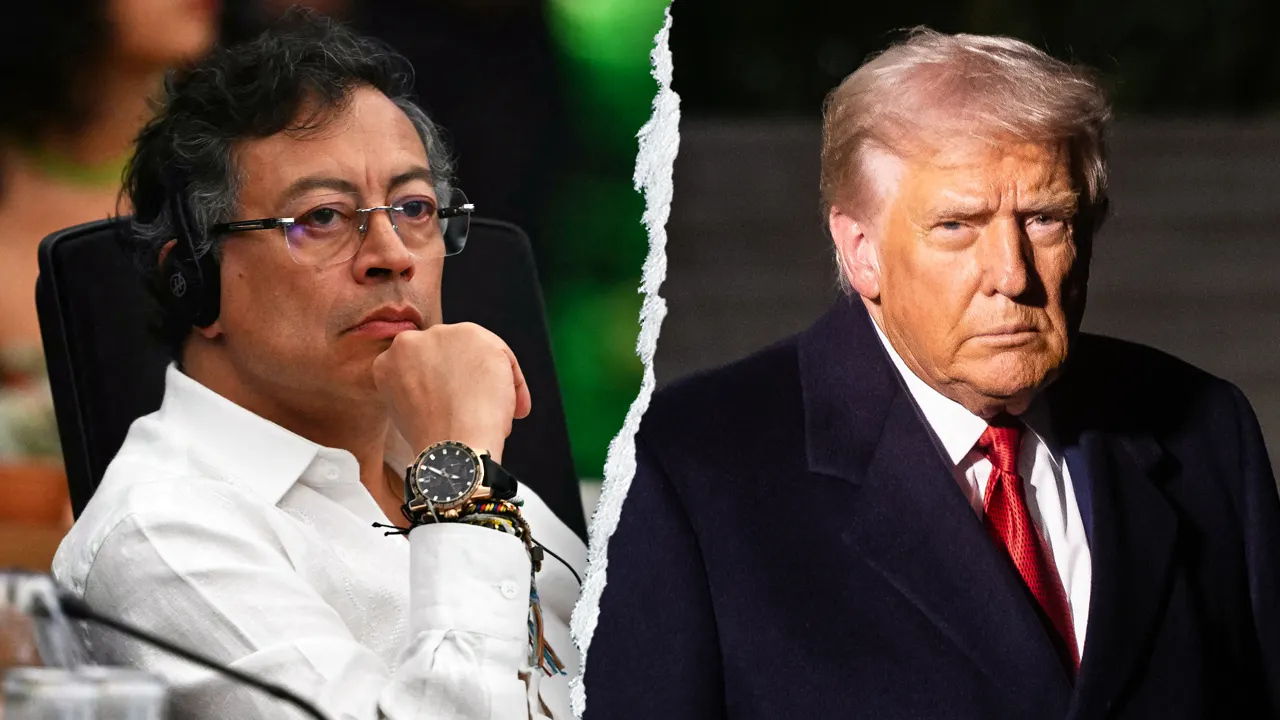
Colombian President Gustavo Petro escalated tensions with the United States this week, reportedly calling President Donald Trump a “barbarian” just days after ordering his country’s security forces to cease intelligence sharing with Washington over U.S. military strikes on suspected drug vessels in the Caribbean.
In an interview published Thursday by NBC News, Petro declared that Colombia would no longer “pass on the information because we would be collaborating with a crime against humanity.” The statement marks a significant deterioration in relations between the two longtime allies in the fight against drug trafficking.
A White House official responded forcefully to Fox News Digital on Thursday, reiterating Trump’s earlier characterization of Petro as “an illegal drug leader strongly encouraging the massive production of drugs, despite large scale payments and subsidies from the USA that are nothing more than a long term rip off of America.”
The official defended the controversial maritime strikes as actions taken “consistent with his responsibility to protect Americans and United States interests abroad” and pursuant to Trump’s constitutional authority as Commander in Chief.
The diplomatic rift has widened since Trump ordered military strikes on suspected drug-smuggling vessels in international waters off Colombia’s coast. The operation, which has involved drone strikes on boats and submersibles, has drawn criticism from human rights organizations and regional governments concerned about potential civilian casualties.
Petro announced the intelligence-sharing suspension earlier this week on social media, stating that “the fight against drugs must be subordinated to the human rights of the Caribbean people.” He directed Colombia’s military to immediately end “communications and other agreements with U.S. security agencies” until the U.S. halts its maritime strikes.
The conflict highlights fundamentally different approaches to drug control between the two nations. Colombia, which has endured decades of violence related to the drug trade, has under Petro’s administration moved toward more public health-oriented solutions. Meanwhile, Trump has pursued aggressive interdiction tactics, focusing on supply disruption through military means.
Secretary of State Marco Rubio has defended the operations, describing them as essential to national defense. “This is a counter-drug operation. The president has ordered it in defense of our country. It continues, it’s ongoing. It can stop tomorrow if they stopped sending drug boats,” Rubio told reporters Wednesday.
Rubio also pushed back against reports that the United Kingdom had similarly ceased intelligence sharing with the U.S. over concerns about the strikes. He firmly rejected the notion that other nations should dictate U.S. security policy, stating, “I don’t think the European Union gets to determine what international law is. What they certainly don’t get to determine is how the United States defends its national security.”
The Secretary of State also directed criticism at Venezuela’s government, calling it a “narco-terrorist regime” that allows drug trafficking groups to operate from its territory. The Trump administration recently ordered the USS Gerald R. Ford to head to U.S. Southern Command, a move that Venezuelan president Nicolás Maduro characterized as “fabricating a new eternal war.”
This diplomatic confrontation occurs despite billions of U.S. taxpayer dollars invested in Colombia’s counterdrug efforts over decades. The White House official claimed that “cartels are thriving under Petro’s failed policies” and that it was unsurprising that “President Petro is opposed to President Trump’s successful operations to halt the flow of drugs to our country.”
The dispute threatens to undermine decades of U.S.-Colombia cooperation on counter-narcotics operations, potentially creating significant intelligence gaps as both countries pursue divergent approaches to addressing the hemispheric drug trade.
Fact Checker
Verify the accuracy of this article using The Disinformation Commission analysis and real-time sources.

16 Comments
This dispute underscores the delicate balance between national security, territorial integrity, and human rights that leaders must navigate in the global war on drugs. I’m curious to learn more about Colombia’s specific grievances and whether there are opportunities for compromise.
Agreed, finding that balance is never easy. Maintaining open channels of communication and a willingness to consider each other’s perspectives will be vital to resolving this impasse constructively.
This sounds like a heated disagreement over tactics in the long-running drug war. I’m curious to learn more about Colombia’s perspective and the specific concerns that led to suspending intelligence sharing. Finding a collaborative solution is critical.
Absolutely. Open communication and a willingness to understand each other’s positions will be key to resolving this dispute constructively. The drug trade affects both countries, so aligning priorities is important.
Interesting development in US-Colombia relations. While intelligence-sharing is important, the president’s concerns about human rights and the drug war deserve careful consideration. This dispute highlights the complexities of the narcotics issue in the region.
I agree, a nuanced approach is needed to balance security concerns and respect for sovereignty. Both sides should aim for constructive dialogue to find a way forward that works for all.
The ‘barbarian’ label seems quite strong. While the US drug interdiction efforts are controversial, I hope the two governments can engage diplomatically to address Colombia’s objections without escalating tensions further. Maintaining a working partnership is crucial.
I share your hope for diplomatic resolution. Rhetoric aside, the underlying issues around sovereignty, human rights, and the drug war need sober, nuanced discussion to find a path forward that satisfies both countries’ legitimate concerns.
The ‘barbarian’ characterization is certainly inflammatory, but the underlying issues around intelligence-sharing, drug interdiction, and national sovereignty deserve serious attention. I hope both sides can engage in good faith to find a mutually acceptable solution.
Absolutely. Even with strong rhetoric, there may be room for compromise if both governments are willing to listen to each other’s concerns and find creative ways to cooperate on shared interests around the drug trade.
Tensions over drug interdiction tactics are nothing new, but the breakdown in intelligence-sharing is concerning. I hope Colombia and the US can lower the rhetoric and focus on finding practical solutions that address both countries’ priorities in the fight against narcotics trafficking.
Agreed. Maintaining open lines of communication and a spirit of compromise will be crucial here. Both sides have valid interests at stake, so identifying areas of common ground and crafting a mutually agreeable approach should be the goal.
This dispute highlights the complex geopolitical dynamics at play in the global war on drugs. While the US and Colombia have long been allies in this effort, national interests and human rights concerns can sometimes come into conflict. I’m curious to see if diplomacy can bridge the divide.
Well said. Striking the right balance between security imperatives and respect for sovereignty is an ongoing challenge. With goodwill on both sides, I’m hopeful they can find a way to work together that satisfies the legitimate needs of each country.
This dispute certainly highlights the complexities and sensitivities around the global drug trade. While the US and Colombia have been close partners, national sovereignty and human rights concerns can understandably clash with security imperatives. I’m curious to see if diplomacy can help bridge the divide.
Well said. Given the long history of cooperation, I’m hopeful that both governments will approach this with pragmatism and good faith, seeking solutions that balance their respective priorities and strengthen their partnership in addressing the shared challenge of narcotics trafficking.