


Listen to the article
In a rare moment of bipartisan agreement, former Secretaries of State Hillary Clinton and Mike Pompeo voiced shared concerns about a potential shift in U.S. global strategy that would reduce America’s international presence in favor of a Western Hemisphere focus.
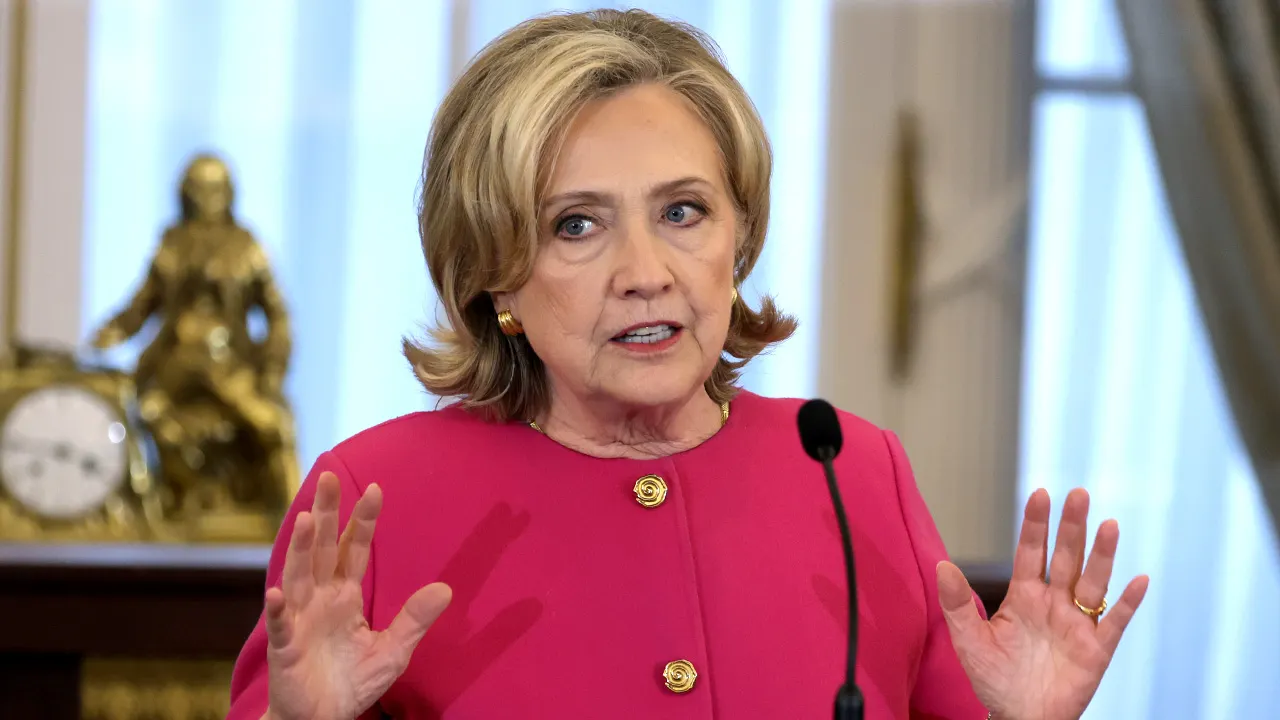
Speaking at a Columbia University event on Wednesday, Clinton revealed she had heard of internal Pentagon discussions promoting a “spheres of influence” model that would concentrate U.S. resources in the Americas while allowing Russia and China to dominate other regions.
“There seems to be a group within the Pentagon who are advocating for these spheres of influence,” Clinton said. “I think that’s a disaster. And I think it weakens us vis-à-vis our principal problem, which is the Chinese Communist Party.”
The comments come as the Pentagon has significantly expanded counter-narcotics and maritime security operations across the Caribbean and eastern Pacific, creating the largest U.S. military presence in the Southern Command region in decades. This redeployment reflects President Trump’s emphasis on prioritizing the Western Hemisphere at a time when the United States recently announced the withdrawal of a rotational infantry brigade primarily stationed in Romania, with some forces in Slovakia, Hungary, and Bulgaria.
Clinton, who championed the Obama administration’s “pivot to Asia” strategy during her 2009-2013 tenure as Secretary of State, warned that any retreat from Indo-Pacific engagement would create instability and project weakness to adversaries.
Pompeo largely concurred with his predecessor’s assessment, despite their well-documented political differences. “I agree with almost everything Secretary Clinton said there,” he noted. “I want American values to dominate the world for the next 250 years… I want to influence every sphere of influence.”
The former Trump administration official reserved particularly harsh criticism for China, even as U.S.-China relations have shown tentative signs of improvement following a recent meeting between President Trump and Chinese President Xi Jinping.
“We shouldn’t use the word competition and the Chinese Communist Party in the same sentence,” Pompeo asserted. “The Chinese Communist Party wants to cut our heads off. They killed 10 million people and didn’t lose a moment’s sleep when a virus was foisted around the world.”
Pompeo made the striking claim that China had authorized North Korea to send troops to support Russia in Ukraine, stating: “There are 13,000 North Koreans on the ground inside of that conflict today. They did not go there without Xi Jinping asking Chairman Kim to go.”
Both former diplomats expressed concerns about social media’s influence on public discourse and democracy. Clinton criticized congressional Republicans for remaining silent on presidential overreach, citing Trump’s repeated extensions of a deadline for TikTok to divest or face a U.S. ban.
“Their tongues must be totally bitten off because they don’t speak out,” Clinton said, warning that social media is now shaping—and sometimes distorting—public opinion, posing “a huge danger to democracy.” She characterized TikTok as being “controlled by the Chinese Communist Party” based on a bipartisan congressional determination.
Pompeo echoed this sentiment: “I’m worried about the fact that we’ve got social influencers on TikTok that are shaping your minds, and that that’s controlled by the Chinese Communist Party to a significant degree.”
The alignment between the two former officials comes despite their historically contentious relationship. During the 2020 election season, Pompeo had vowed to release more of Clinton’s emails from her time at the State Department, prompting Clinton to call his promise “pathetic.” Pompeo had also previously criticized Clinton over the Benghazi incident and alleged corruption.
Despite their political differences, the rare agreement between these two foreign policy veterans underscores bipartisan concern about the strategic implications of reducing America’s global footprint at a time of increasing competition with Russia and China.
Fact Checker
Verify the accuracy of this article using The Disinformation Commission analysis and real-time sources.

9 Comments
This is a concerning development if true. Reducing America’s global presence could embolden rivals like China and Russia. I hope the Pentagon considers the long-term strategic implications before pursuing any ‘spheres of influence’ approach.
As an investor in mining and energy companies, I’m closely watching this geopolitical development. A pullback in America’s global footprint could impact access to critical minerals and energy resources. I hope the Pentagon weighs these economic considerations carefully.
While I understand the desire to prioritize the Western Hemisphere, I share Clinton and Pompeo’s worries that this could backfire and weaken America’s position vis-à-vis China. Maintaining a robust international presence is crucial for deterring aggression.
I’m skeptical of this reported ‘spheres of influence’ approach. Ceding global leadership to rivals like China and Russia would be a serious strategic misstep with far-reaching consequences. The Pentagon must carefully consider the national security risks.
I’m curious to learn more about the Pentagon’s internal discussions and what’s driving this potential policy shift. Concentrating resources in the Americas while ceding influence elsewhere seems risky for U.S. global leadership.
As someone invested in mining and energy equities, this potential policy change is concerning. Reduced U.S. global engagement could disrupt access to critical resources and supply chains. I hope the Pentagon considers these economic implications.
This sounds like a concerning reversal of long-standing U.S. foreign policy. Shifting towards a ‘spheres of influence’ model risks creating power vacuums that rivals can exploit. I hope cooler heads prevail at the Pentagon.
This is a concerning development. Reducing America’s global leadership role and allowing rivals like China and Russia to dominate other regions would be a major strategic blunder. I hope the Pentagon reconsiders this misguided ‘spheres of influence’ approach.
As a student of geopolitics, I’m troubled by the prospect of the U.S. shifting to a ‘spheres of influence’ model. This would risk creating power vacuums that authoritarian regimes could exploit, undermining the global rules-based order. The Pentagon must weigh these grave implications.