


Listen to the article
Economy Takes Center Stage as Political Parties Prepare for 2026 Midterms
With the 2025 elections now in the rearview mirror, the political spotlight has shifted entirely to next year’s midterm elections, where Republicans will defend their narrow House majority and Senate control. This month’s election results have highlighted one crucial factor that will likely dominate the 2026 campaign: economic concerns, particularly affordability issues.
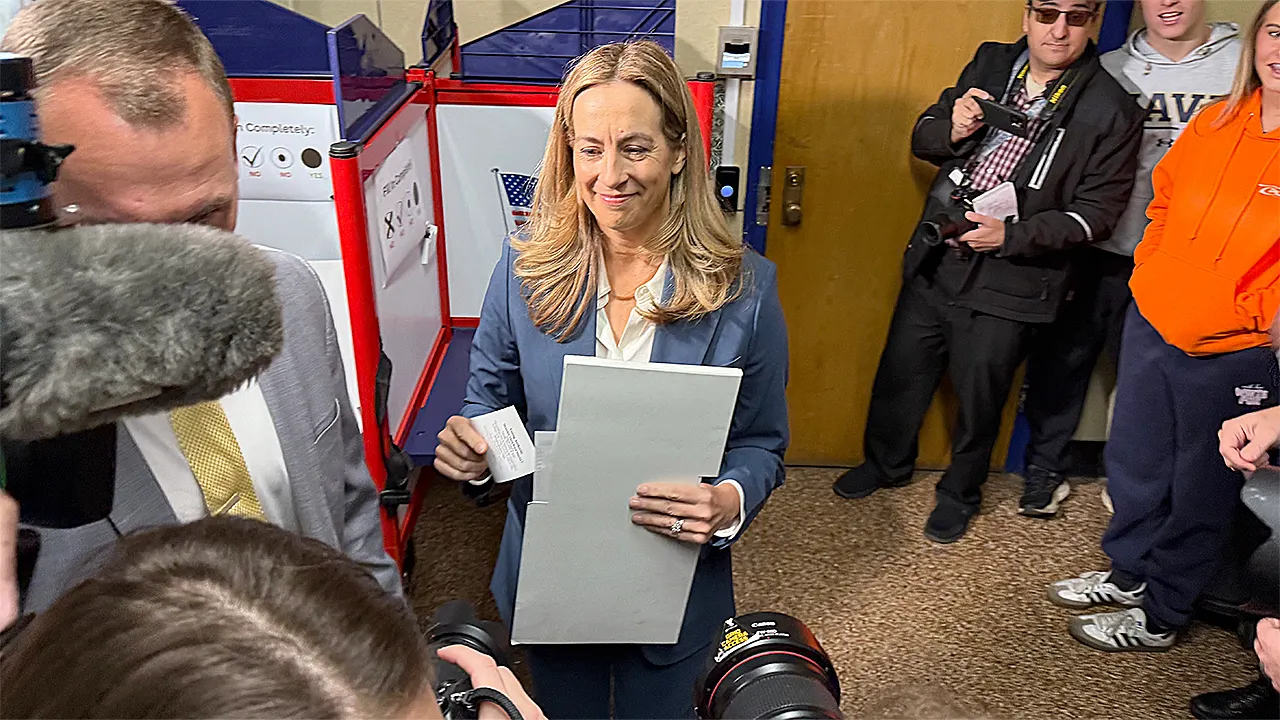
Democrats are celebrating what they call a “Blue Sweep” in the 2025 elections, with convincing victories in the only two gubernatorial races of the year. In both New Jersey and Virginia, Democratic candidates Rep. Mikie Sherrill and former Rep. Abigail Spanberger cruised to double-digit victories, overperforming pre-election polling expectations.
Democratic Governors Association Executive Director Meghan Meehan-Draper noted that both successful candidates “stayed laser focused on the economy” and “talked about it all day, every day.” The strategy appears to have resonated with voters in these blue-leaning states, potentially offering a blueprint for Democratic campaigns nationwide in 2026.
Voter data supports this analysis. According to the Fox News Voter Poll conducted from October 22 through Election Day, the economy ranked as the top concern for Virginia voters, with nearly half identifying it as their most important issue. These economically-focused voters broke significantly for Spanberger. In New Jersey, the economy was the second most pressing concern after taxes, and Sherrill won those voters by a 30-point margin.
The Democratic success extended beyond gubernatorial races. In New York City, Zohran Mandani, once considered a longshot socialist candidate, secured victory in both the Democratic primary and the mayoral election, largely campaigning on economic issues in America’s largest city.
Democratic National Committee Chair Ken Martin highlighted the party’s focus on pocketbook issues: “Democrats ran campaigns relentlessly focused on costs and affordability,” adding that candidates “are meeting voters at the kitchen table.”
Republicans, however, dismiss the Democratic victories as predictable outcomes in traditionally blue states and cities. House Speaker Mike Johnson downplayed the results, stating, “What happened last night was blue states and blue cities voted blue. We all saw that coming.”
Vice President JD Vance echoed this sentiment, calling it “idiotic to overreact to a couple of elections in blue states.” However, Vance acknowledged that economic affordability would be the metric by which voters judge the Trump administration in 2026, noting, “We’re going to keep on working to make a decent life affordable in this country.”
President Donald Trump has maintained that his administration is already delivering on economic promises. In a post-election interview with Fox News’ Bret Baier, Trump claimed, “We’ve done so much… Energy is way down… We’re going to have $2 gasoline. I did that. That brings everything else down. Groceries are way down.” The president suggested Republicans face more of a messaging problem than a policy challenge.
Perhaps most concerning for Republicans is the apparent reversal of gains they made with key Democratic voting blocs in 2024. According to the Fox News Voter Poll, Sherrill captured the female vote in New Jersey by a 25-point margin (62%-37%), improving on Kamala Harris’ 2024 performance. Similarly, Spanberger won women voters in Virginia by a 30-point spread (65%-35%).
The GOP’s 2024 inroads with Black and Latino voters also appeared to erode. In New Jersey, Sherrill outperformed Harris’ 2024 showing by 12 percentage points among Latino voters and by 15 points among Black voters. Spanberger made similar gains in Virginia, improving on Harris’ numbers by 8 points with Latino voters and 7 points with Black voters.
“Up and down the ballot, Black and Latino voters overwhelmingly broke for Democrats. Our candidates stayed laser-focused on the issue that matters most to voters, affordability,” said DNC Senior Spokesperson Marcus W. Robinson.
Looking ahead to 2026, both parties are staking out their positions. Martin sees the 2025 results as a preview of Democratic success next year, promising “a National Coordinated Campaign to win races up and down the ballot to provide a check on the out-of-control Trump administration and its Republican rubber stamps.”
The Republican National Committee offers a contrasting view. “Republicans are entering next year more unified behind President Trump than ever before,” said RNC National Press Secretary Kiersten Pels. “The party is fully aligned behind his America First agenda and the results he’s delivering for the American people.”
As the political calendar turns toward the midterms, how each party addresses economic concerns and affordability issues will likely determine which voting blocs they can secure in what promises to be another highly competitive election cycle.
Fact Checker
Verify the accuracy of this article using The Disinformation Commission analysis and real-time sources.

8 Comments
The results in New Jersey and Virginia provide an intriguing blueprint for Democratic campaigns in 2026. Focusing relentlessly on economic issues like affordability seems to have resonated with voters. But the broader national landscape will be different, so it remains to be seen if this strategy can be replicated successfully.
That’s a good point. State-level results don’t always translate to the national stage. Democrats will need to ensure their economic message resonates across diverse regions and constituencies.
I’m curious to see how the Democrats’ 2025 victories in New Jersey and Virginia translate to the broader national landscape. Replicating that economic-focused strategy could be a winning formula, but they’ll need to be nimble in addressing the unique concerns of different regions and voter blocs.
It will be interesting to see how the economy shapes the 2026 midterm battles. Voters are clearly focused on affordability and cost of living issues. Democrats will need to strike the right balance between celebrating their 2025 victories and addressing real economic concerns.
Agreed, economic issues like inflation and cost of living are likely to be the dominant focus. Both parties will need to demonstrate their plans to address these concerns.
With Republicans defending a narrow House majority and control of the Senate, the 2026 midterms are shaping up to be a fierce battle. Both parties will be laser-focused on the economy and which side can best address voter concerns around affordability and the cost of living.
The political dynamics heading into 2026 seem to be shifting, with economic issues taking center stage. Voters will be looking for concrete plans and solutions from both parties. It will be critical for candidates to demonstrate a clear understanding of the challenges facing American households.
Absolutely. Whichever party can best connect with voters’ economic anxieties and offer credible policy proposals is likely to have the advantage in the midterms.