


Listen to the article
Federal Reserve Officials Signal Resistance to December Interest Rate Cut
Two Federal Reserve officials publicly opposed another interest rate reduction at the central bank’s December meeting, signaling a potential shift in the Fed’s monetary policy approach amid conflicting economic signals.
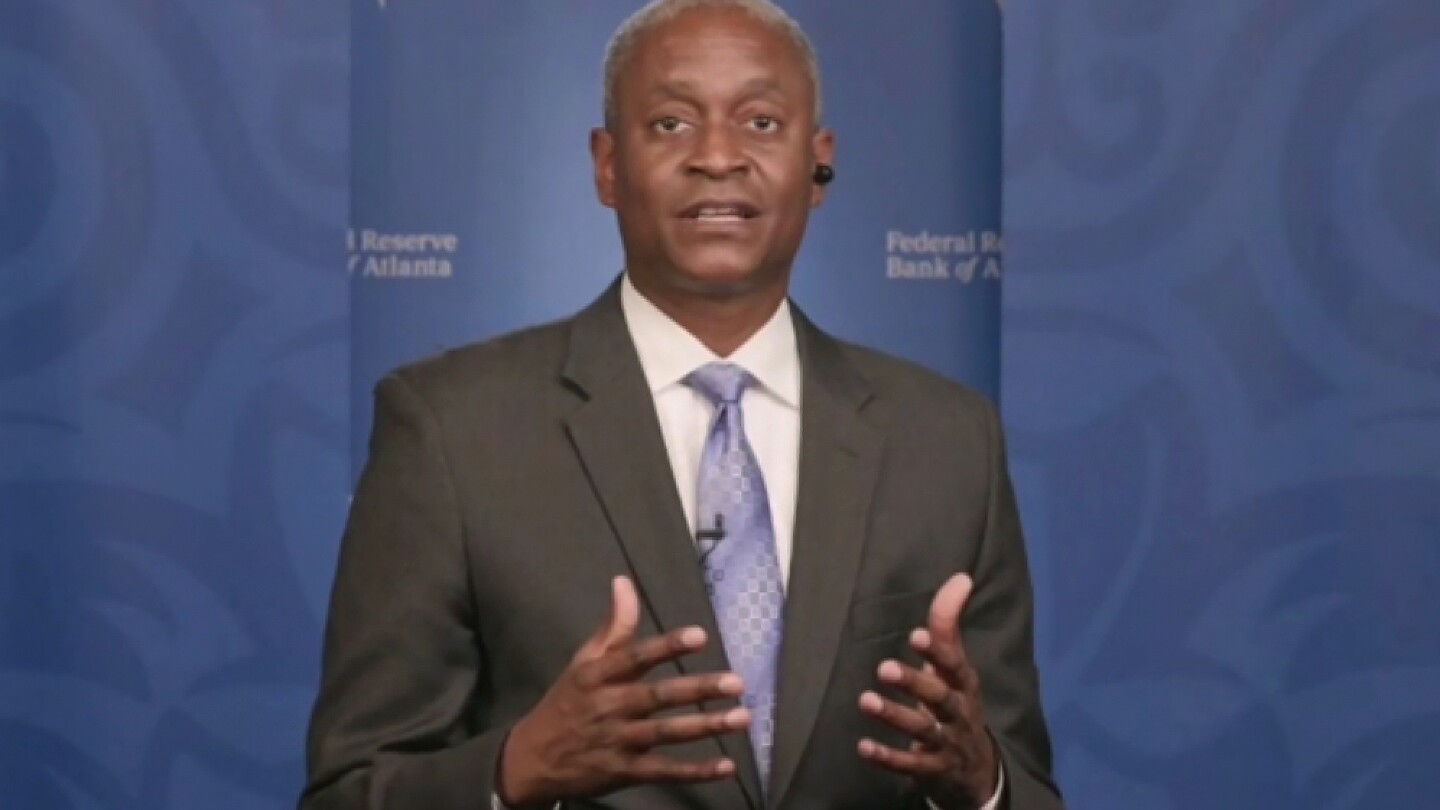
Susan Collins, president of the Federal Reserve Bank of Boston, and Raphael Bostic, president of the Atlanta Fed, both expressed reluctance toward a third consecutive rate cut, citing persistent inflation concerns and economic resilience.
“It will likely be appropriate to keep policy rates at the current level for some time… in this highly uncertain environment,” Collins said during a speech in Boston on Wednesday. Her stance marks a notable change from October when she had supported at least one additional rate cut.
The officials pointed to inflation that has remained stubbornly above the Fed’s 2% target for nearly five years as a primary concern. While the job market shows signs of cooling, with hiring nearly at a standstill, both officials noted that layoffs remain relatively low, suggesting the economy isn’t in urgent need of stimulus through lower interest rates.
Bostic emphasized his inflation worries, stating, “I favor keeping the funds rate steady until we see clear evidence that inflation is again moving meaningfully toward its 2% target.” He also referenced business surveys from the Atlanta Fed indicating many companies plan price increases next year, suggesting inflationary pressures may persist.
The Federal Reserve faces an unusual economic dilemma. Typically, weak employment data would prompt rate cuts to stimulate hiring and economic activity, while high inflation would call for holding rates steady or even raising them. The current environment presents both challenges simultaneously, complicating the Fed’s decision-making process.
Adding to the uncertainty is the ongoing government shutdown, which has disrupted the flow of economic data crucial to the Fed’s analysis. White House spokeswoman Karoline Leavitt indicated on Wednesday that October’s jobs and inflation reports might never be released, further hampering the central bank’s ability to gauge economic conditions.
“Formulating an economic outlook is challenging — and the limited data compounds the difficulty,” Collins acknowledged.
The statements from Collins and Bostic suggest a shift in sentiment among Federal Open Market Committee (FOMC) members. Chair Jerome Powell had already indicated after the Fed’s October meeting that another cut in December was not a “foregone conclusion,” noting divisions within the committee. The 19-member FOMC had narrowly supported three rate cuts for 2023 at their September meeting.
Market analysts are adjusting their expectations accordingly. David Seif, chief economist for developed markets at Nomura Securities, now predicts the Fed will skip a December rate cut and wait until March before reducing borrowing costs again. “There is a large segment of the Fed that is uncomfortable with a December cut,” Seif noted.
Collins expressed specific concern that additional rate reductions could potentially accelerate inflation by stimulating economic activity. “Absent evidence of a notable labor market deterioration, I would be hesitant to ease policy further, especially given the limited information on inflation due to the government shutdown,” she said.
The officials’ comments also touched on the potential inflationary impact of President Donald Trump’s planned tariffs. While some Fed officials, including Governor Stephen Miran, have suggested tariffs would only temporarily lift prices, Bostic took a more cautious view: “We cannot breezily assume inflationary pressures will quickly dissipate after a one-time bump in prices from new import duties.”
Bostic, who announced he will retire when his current term ends on February 28, 2026, reinforced his hawkish stance by stating he sees “little to no evidence that we should be sanguine about the forward trajectory of inflation.”
The Fed’s next rate decision is scheduled for December 17-18, giving policymakers time to assess any additional economic data that becomes available despite the shutdown constraints.
Fact Checker
Verify the accuracy of this article using The Disinformation Commission analysis and real-time sources.

8 Comments
It’s reassuring to see the Fed taking a measured approach and not rushing to cut rates further without a clear economic rationale. Maintaining policy stability in uncertain times is important.
The mixed signals from the economy make it challenging for the Fed to chart the right monetary policy path. Striking the right balance between growth and inflation will be crucial in the months ahead.
The Fed’s policy approach is becoming more nuanced as officials weigh factors like inflation and employment. With conflicting economic signals, they’re rightly cautious about making knee-jerk decisions on interest rates.
Agreed. The Fed will need to carefully balance its dual mandate of price stability and maximum employment. Maintaining flexibility in their policy response seems prudent given the uncertain economic environment.
The Fed’s hesitation on further rate cuts underscores the complexity of the current economic landscape. Policymakers will need to weigh a range of factors to determine the appropriate course of action.
Interesting to see some Fed officials pushing back on further rate cuts. Inflation and a resilient job market seem to be their key concerns. It will be important to see how the data and economic outlook evolve in the coming months before the December meeting.
While lower rates can stimulate growth, the Fed also has to be mindful of inflation risks. It’s a delicate balancing act, and I’m curious to see how they navigate this in the coming months.
The Fed’s resistance to further rate cuts suggests they are closely monitoring the data and not making decisions based on political pressure. This commitment to data-driven policy is encouraging.