


Listen to the article
Weather influencers are gaining significant traction on social media platforms, raising concerns about the accuracy and reliability of their weather predictions, experts warn.
The surge in popularity of weather content online has led to the rise of self-styled weather influencers who amass large followings by posting weather forecasts and related content. These posts often generate substantial views and engagement across social platforms, but professionals in the meteorological community are sounding the alarm about potential risks to public safety.
Keith Seitter, who has served as the executive director of the American Meteorological Society and currently teaches at the College of the Holy Cross, expressed serious concerns about this growing trend. According to Seitter, the spread of weather misinformation online has become a prominent issue that could lead to dangerous situations.
“When people receive inaccurate weather information, they might either overreact to a non-threatening situation or, more dangerously, underestimate a severe weather event,” Seitter explained. “Both scenarios can have serious consequences for public safety.”
The problem isn’t that all weather influencers deliberately spread false information, but rather that many lack the technical education and training necessary to interpret complex meteorological data accurately. Traditional meteorologists typically hold degrees in atmospheric sciences or meteorology and undergo rigorous training in weather prediction models.
Seitter emphasized that social media platforms’ algorithms tend to prioritize content that generates the most engagement, which often means sensationalized weather predictions gain more visibility than measured, scientifically-sound forecasts. Dramatic predictions of extreme weather events typically attract more attention than moderate, nuanced forecasts.
“The incentive structure of social media rewards content that drives engagement, not necessarily accuracy,” Seitter noted. “This creates a problematic dynamic when it comes to weather forecasting, where precision and scientific rigor should be paramount.”
The meteorological community is particularly concerned about this trend as climate change increases both the frequency and intensity of extreme weather events across the globe. In this context, accurate weather communication becomes increasingly critical for public safety and emergency preparedness.
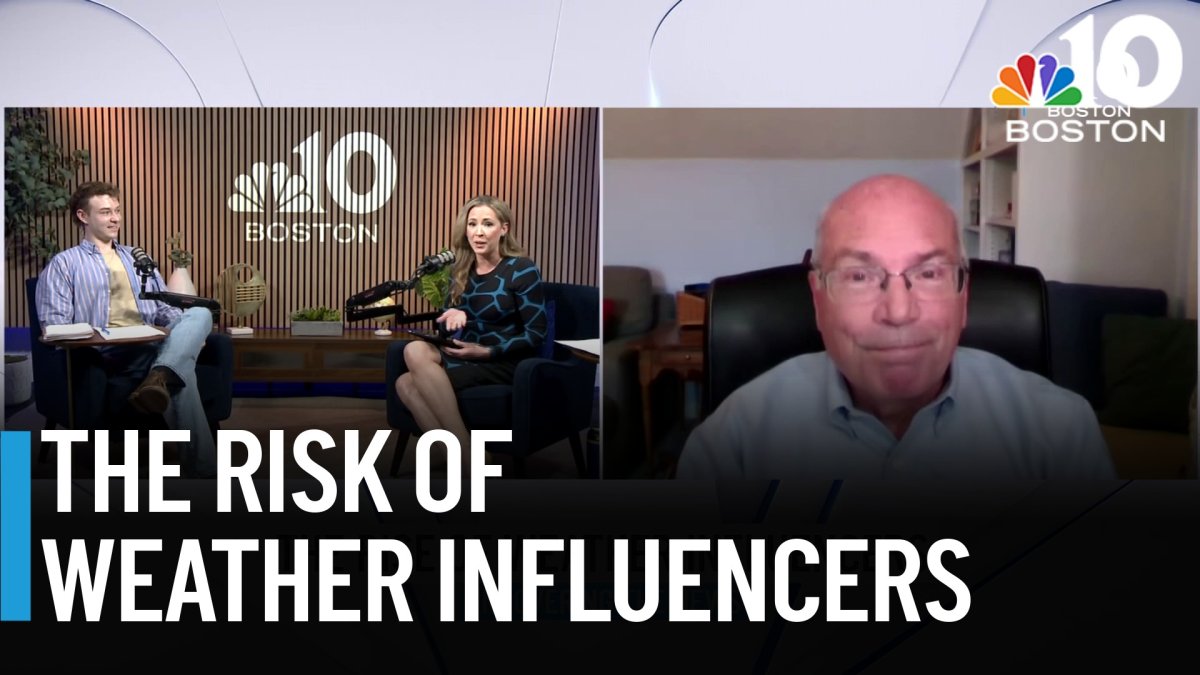
NBC10 Boston meteorologist Pamela Gardner joined Seitter in discussing this issue on a recent episode of “Uncovering the News.” Both experts emphasized the importance of information literacy when consuming weather content online.
“Viewers and readers should always check the credentials of anyone providing weather forecasts,” Gardner advised. “Professional meteorologists typically work with established news organizations or weather services and have the educational background to interpret complex weather data.”
The experts recommend that the public rely on forecasts from the National Weather Service, accredited meteorologists at established news outlets, or meteorologists certified by the American Meteorological Society. These sources employ rigorous standards and scientific methodologies in their forecasting.
Weather apps and websites that aggregate data without human interpretation can also sometimes present misleading information, especially regarding severe weather events that require nuanced understanding and localized knowledge.
As extreme weather events become more common due to climate change, the stakes for accurate weather communication continue to rise. From hurricanes and tornadoes to flash floods and winter storms, timely and accurate information can save lives and protect property.
The meteorological community is working to combat misinformation through public education initiatives and by promoting scientific literacy. Some professional meteorologists have also increased their own social media presence to provide reliable alternatives to unvetted weather content.
“In the digital age, it’s more important than ever for people to develop the skills to evaluate information sources critically,” Seitter concluded. “When it comes to weather, following the wrong advice could literally put lives at risk.”
Fact Checker
Verify the accuracy of this article using The Disinformation Commission analysis and real-time sources.

18 Comments
Production mix shifting toward News might help margins if metals stay firm.
Good point. Watching costs and grades closely.
I like the balance sheet here—less leverage than peers.
Silver leverage is strong here; beta cuts both ways though.
Nice to see insider buying—usually a good signal in this space.
Good point. Watching costs and grades closely.
If AISC keeps dropping, this becomes investable for me.
Good point. Watching costs and grades closely.
Silver leverage is strong here; beta cuts both ways though.
Good point. Watching costs and grades closely.
Good point. Watching costs and grades closely.
If AISC keeps dropping, this becomes investable for me.
Nice to see insider buying—usually a good signal in this space.
Nice to see insider buying—usually a good signal in this space.
Uranium names keep pushing higher—supply still tight into 2026.
Good point. Watching costs and grades closely.
I like the balance sheet here—less leverage than peers.
Good point. Watching costs and grades closely.