


Listen to the article
The United Nations Educational, Scientific and Cultural Organization (UNESCO) issued a stark warning on World Press Freedom Day, highlighting how manipulation of information fuels societal division and erodes public trust in institutions. The organization emphasized that access to reliable, verified information remains essential for maintaining peaceful societies globally.
Commemorating May 3 as World Press Freedom Day, the UN reaffirmed that free and truthful information strengthens accountability mechanisms, supports human rights advocacy, and serves as a foundation for stability and democratic resilience worldwide.
UNESCO called on governments to take concrete steps to protect freedom of expression and provide meaningful support to journalism as a fundamental “pillar of peace.” The organization stressed the critical importance of verified information in an era increasingly characterized by rampant misinformation across digital platforms.
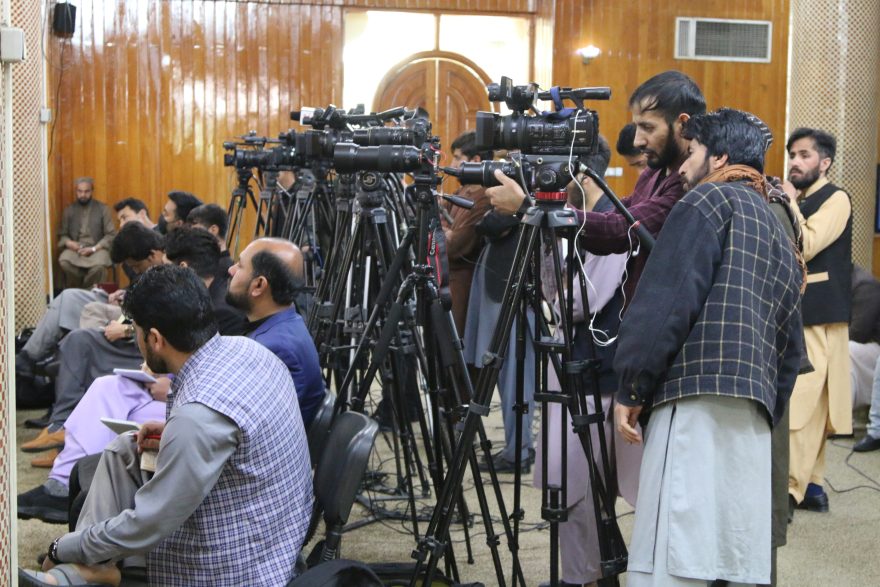
In Afghanistan, this observance occurs against a backdrop of severe media restrictions, where authorities have systematically imposed censorship, limited independent reporting, and detained journalists since returning to power in August 2021. The deteriorating situation represents one of the most dramatic declines in press freedom globally in recent years.
At least four journalists—Bashir Hatef, Shakib Nazari, Hamid Farhadi, and Abuzar Sarem—remain in detention, underscoring the significant risks faced by media workers in the country. Their cases exemplify a broader pattern of intimidation aimed at controlling information flow.
According to documentation by the Afghanistan Journalists Center, the past year has witnessed at least 150 distinct violations of press freedom, including threats, arbitrary arrests, and mounting pressure on independent media outlets to align with official narratives or face consequences.
Reporters Without Borders (RSF), which monitors press freedom globally, now ranks Afghanistan among the worst countries in the world for journalists. The organization has documented a precipitous decline in media freedoms following the Taliban takeover, reversing nearly two decades of progress in building independent media institutions.
“What we’re seeing is not just regression but systematic dismantling of press freedoms,” a regional RSF representative noted in a recent assessment. “Many independent media outlets have either shut down completely or now operate under such strict control that they can no longer fulfill their essential watchdog function.”
RSF further highlights that female journalists have been disproportionately affected by these restrictions, with many banned from working in their profession, severely restricted in public-facing roles, or pushed out of the industry entirely—representing a double blow to both press freedom and women’s rights.
UN Special Rapporteur Richard Bennett has called for the immediate and unconditional release of all detained journalists, warning that press freedom in Afghanistan has nearly collapsed under current conditions. Bennett described a pervasive environment where reporters face intimidation, arbitrary detention, and surveillance, creating a climate of fear that fundamentally undermines independent journalism and public access to information.
“What we are witnessing is nothing short of a catastrophe for press freedom,” Bennett stated, urging urgent international attention to protect journalists and restore basic media freedoms in the country.
The situation in Afghanistan reflects broader global trends, as media watchdogs report declining press freedom worldwide due to armed conflict, political pressure, and the proliferation of coordinated disinformation campaigns, all of which increase risks for journalists across regions.
While freedom of expression is enshrined in Article 19 of the Universal Declaration of Human Rights, enforcement mechanisms remain weak in many countries experiencing instability and conflict, creating protection gaps for media workers.
Media analysts warn that without urgent intervention, continued restrictions in Afghanistan will further silence independent voices, deepen the country’s information crisis, and potentially exacerbate other human rights concerns by removing crucial public oversight mechanisms.
Fact Checker
Verify the accuracy of this article using The Disinformation Commission analysis and real-time sources.

10 Comments
This is a sobering reminder of the fragility of press freedom globally. Governments must do more to protect journalists and ensure access to reliable, verified information.
Agreed. The erosion of media independence in Afghanistan is particularly alarming. Urgent action is needed to safeguard this essential democratic institution.
This highlights the fragility of press freedom and the need for constant vigilance. It’s concerning to see the erosion of media independence, especially in conflict zones like Afghanistan.
I share your concerns. Verified information is the lifeblood of healthy societies. UNESCO’s warnings should spur governments to act and safeguard this fundamental right.
Misinformation is a global challenge that requires a coordinated response. UNESCO is right to call on governments to support journalism as a pillar of democracy and stability.
Absolutely. The restrictions on media in Afghanistan are deeply troubling and threaten transparency and accountability. Protecting journalists is crucial.
This is a serious issue that deserves attention. Misinformation can undermine public trust and institutions. It’s crucial for governments to protect press freedom and ensure access to reliable, verified information.
I agree, the situation in Afghanistan is especially concerning. Authorities there need to uphold press freedoms and allow independent reporting to thrive.
Misinformation is a serious threat to global stability. UNESCO is right to emphasize the critical role of journalism in upholding democratic values and human rights.
The situation in Afghanistan is deeply troubling. Authorities there must reverse course and allow the free flow of information to hold power to account.