


Listen to the article
In the midst of the complex Middle East crisis, news media provides vital context despite digital challenges, argues media expert Dr. Lee Duffield. As the Israel-Palestine peace plan agreed upon on October 9th unfolded, traditional news organizations deployed their resources to navigate the mountain of complications for audiences seeking to understand the situation.
Despite facing tightening budgets due to lost advertising revenues, major news organizations continue their commitment to covering global events by utilizing quality personnel and advanced technology throughout the day. In Australia, commercial television networks leverage agreements with international agencies, while SBS emphasizes global news coverage. The ABC, particularly, bears responsibility for broadcasting in the national interest.
For many, social media has supplanted traditional news consumption. While these platforms allow users to follow preferred narratives and express opinions, they often create echo chambers that reinforce existing beliefs regardless of factual accuracy. Though social media offers direct access to statements from key figures, professional media services provide comprehensive context at minimal or no cost.
The Gaza coverage in October highlighted the challenges journalists face. One primary task was cutting through partisan narratives: pro-Palestinian voices often avoid discussing the October 7, 2023 attack, while Netanyahu’s government and supporters sidestep mentioning the 67,000 Gaza deaths. The proposed 20-point peace plan raised immediate concerns about Hamas’ demands for prisoner releases and questions about whether disarmament would leave them vulnerable to Israeli military action.
Additional complexities emerged around Donald Trump’s positioning in the peace process and whether this signals a potential shift in America’s unwavering support for Israel since 1948. Questions about American business interests in Arab Gulf countries as motivators for reconciliation efforts further complicated the narrative.
Professional media outlets adjudicate these complexities while establishing daily facts – a service particularly valuable for those seeking to inform their conscience, reconcile events with firmly-held views, or simply understand the situation.
The ABC’s coverage set high standards during the ceasefire implementation. Correspondent Matthew Doran distinguished himself through comprehensive field reporting, providing context and explaining verified events while maintaining balance and acknowledging the humanitarian crisis in Gaza. His analysis captured significant developments, including the booing of Netanyahu by Tel Aviv crowds, revealing political pressures facing the Israeli prime minister.
Eric Tlozek, a Middle East correspondent since 2018, sorted key points and emphasized human elements rather than merely repeating official statements. Global affairs editor John Lyons provided insightful analysis, focusing on gathering information from reluctant sources – often the essence of quality journalism. Additionally, ABC’s Insiders program offered reasoned discourse on developments in Gaza.
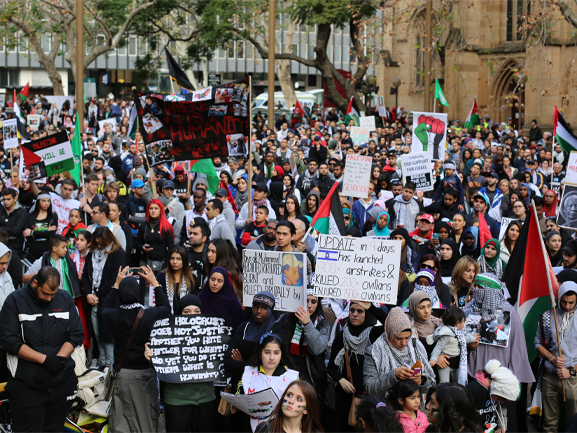
The ABC’s coverage of national pro-Palestinian demonstrations broke from traditional protest reporting by actually sharing protesters’ messages: distrust of Israel’s commitment to the process, belief that “ceasefire was not liberation,” demands for a Palestinian state, and calls for sanctions against Israel. Crowd estimates appeared conscientious, with Sydney rallies drawing about 10,000 people, compared to the 90,000-plus who crossed the Harbour Bridge on August 3 in a “march for humanity.”
Print media, despite declining influence, still offers value. Australian newspapers, particularly those in the News Corp group, face criticism for opinion-heavy content and distortions. However, regular journalists in depleted newsrooms continue providing decent news coverage using electronic resources, reflecting a cultural shift toward valuing valid information.
Two examples from Brisbane’s Courier Mail demonstrate comprehensive news coverage across diverse topics from Taylor Swift’s engagement to peace initiatives in Gaza, state political scandals to hospital errors – all processed into digestible formats for readers at a reasonable cost.
While digital platforms empower individuals to investigate specific issues, the breadth and comprehensiveness of professional journalism remains valuable for general awareness of world events. As Dr. Duffield suggests, there might still be merit in trusting professionals for broad news coverage, particularly when navigating complex global crises like the one unfolding in the Middle East.
Fact Checker
Verify the accuracy of this article using The Disinformation Commission analysis and real-time sources.

7 Comments
Quality journalism is more important than ever in today’s digital landscape. The article highlights the importance of media organizations using their resources to cover global events responsibly.
I agree that traditional news sources are essential to combat misinformation, even as social media becomes a primary news source for many. Fact-based reporting is crucial during complex crises.
It’s good to see major news organizations continuing their commitment to international reporting, despite budget challenges. Their fact-based coverage is crucial to combat misinformation.
Trusted media is essential to provide accurate and balanced coverage of complex global issues like the Gaza crisis. Social media alone can’t replace the depth and context of professional journalism.
The article raises a good point about the challenges faced by media organizations, yet their commitment to international coverage is commendable. Balanced reporting is vital to public understanding.
Relying solely on social media can create echo chambers that reinforce existing beliefs. Trusted media outlets play a vital role in presenting multiple perspectives and verifying information.
While social media offers direct access to statements, professional media services are better equipped to provide comprehensive context around these events. Balanced reporting is key.