


Listen to the article
Bipartisan Leaders Combat Election Misinformation in Wisconsin as Poll Reveals Growing Distrust
In a striking display of cross-party cooperation, former Democratic state Rep. Jason Fields and Republican activist Tim Higgins recently joined forces to address a troubling trend in Wisconsin: widespread skepticism about election integrity.
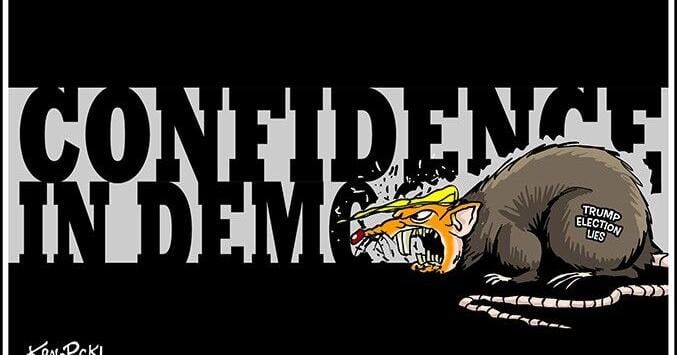
A recent Marquette University Law School poll revealed that one in four Wisconsin residents lack confidence their votes will be accurately counted. Even more concerning, 44% of respondents believe local election officials deliberately falsify vote counts at least occasionally.
“Let that sink in for a minute,” the bipartisan duo wrote in their Milwaukee Journal Sentinel column. “If the poll is correct, nearly half of our state is accusing election officials of fraud or incompetence or both. That statistic is striking and one that deserves all of our attention.”
Fields, now chief strategy officer for the Center for Black Excellence, and Higgins emphasized how Wisconsin’s highly decentralized voting system creates natural safeguards against widespread fraud – a point reinforced by election experts.
Madison City Attorney Mike Haas, who previously headed the Wisconsin Elections Commission, has been vocal about this reality. “It’s your neighbors who are conducting elections, not a bunch of shady characters invented by the fraud crackpots,” Haas stated in a post-2020 election speech to the State Bar.
Wisconsin’s electoral system relies on 72 county clerks and 1,850 municipal clerks. Many local clerks work part-time in smaller communities, while larger cities employ full-time professionals. This decentralization creates what Haas describes as a significant barrier to organized fraud, as any conspiracy would require the participation of numerous sworn officials across different jurisdictions.
“I know what voter fraud does and doesn’t look like in Wisconsin, because part of my job for 12 years was to search for it,” Haas noted. “Elections are more secure and accurate than ever before.”
The system isn’t perfect. In November 2024, Madison’s city clerk failed to count 193 absentee ballots in an election with over 160,000 voters. However, officials emphasize this represents a procedural error rather than evidence of fraud.
Fields and Higgins participated in last year’s Pillars of the Community project, which brought together diverse civic and community leaders from both parties to learn about election administration directly from officials. “The officials walked us through the process step by step, and we had the opportunity to ask all the tough questions we could think of,” they explained.
What they discovered was reassuring: a system with multiple safeguards against both deliberate fraud and human error, including paper ballot backups and post-election audits. Their recommendation to skeptical citizens is straightforward – visit local clerks’ offices to see the process firsthand.
The election integrity concerns in Wisconsin mirror a broader national trend of declining trust in institutions, fueled by what experts describe as an unprecedented ecosystem of misinformation. Social media, automated AI bots, unverified digital commentators, and even high-profile political figures contribute to the spread of false narratives.
This pattern extends beyond elections. Dr. Kiran Joshi, chief operating officer of Cook County’s Department of Public Health in Illinois, recently highlighted how health misinformation has led to declining vaccination rates and subsequent disease outbreaks. Utah recently reported 600 measles cases, a disease previously considered virtually eliminated in the United States. Most affected children had unvaccinated parents who had been influenced by anti-vaccination messaging.
The Brookings Institution has warned that this growing distrust represents a fundamental threat to American democracy. As Fields and Higgins demonstrate, addressing misinformation may require unlikely alliances and direct engagement with citizens to rebuild trust in core institutions.
Their collaborative effort highlights a potential path forward: bringing together diverse perspectives to examine systems firsthand and share factual information across partisan divides, potentially countering what has become, as one expert called it, “a sad commentary in what should be an enlightened time in our country.”
Fact Checker
Verify the accuracy of this article using The Disinformation Commission analysis and real-time sources.

13 Comments
It’s encouraging to see bipartisan leaders coming together to tackle this issue. Restoring trust in democratic institutions is vital for the health of our society.
Widespread distrust in election integrity is a worrying development that cannot be ignored. Bipartisan efforts to address this issue are a step in the right direction.
Decentralized voting systems can provide an important safeguard against large-scale fraud, but clearly more needs to be done to reassure the public and rebuild confidence in the system.
Absolutely. Effective communication and outreach by election officials, coupled with a commitment to transparency, will be crucial in restoring public trust.
Decentralized voting systems can help safeguard against large-scale fraud, as the article suggests. However, persistent distrust is still worrying and requires a concerted effort to restore public confidence.
Absolutely. Addressing the root causes of this distrust, whether through education or improved communication, should be a top priority for policymakers.
The statistics on public skepticism towards election integrity are truly staggering. This underscores the urgent need for a robust, fact-based response to combat the spread of misinformation.
Agreed. Maintaining public faith in the democratic process should be a non-partisan issue. Transparency and open dialogue are key to overcoming these challenges.
Bipartisan cooperation to address this problem is encouraging. Addressing the root causes of public skepticism towards election integrity should be a top priority for all stakeholders.
Agreed. Restoring confidence in the electoral process is essential for the health of our democracy. Fact-based, transparent approaches are key to overcoming this challenge.
This is a concerning trend that undermines faith in democratic institutions. We must address misinformation and conspiracy theories through factual, bipartisan outreach to rebuild trust in the electoral process.
Agreed. A well-functioning democracy requires citizens to have confidence in the integrity of elections. Combating misinformation with transparency and cooperation is crucial.
The article highlights the significant challenge of combating misinformation and restoring faith in democratic institutions. This is a critical issue that deserves the attention of policymakers and civic leaders.