


Listen to the article
Gambia Inaugurates West Africa’s First Disinformation Response Centre with ECOWAS Support
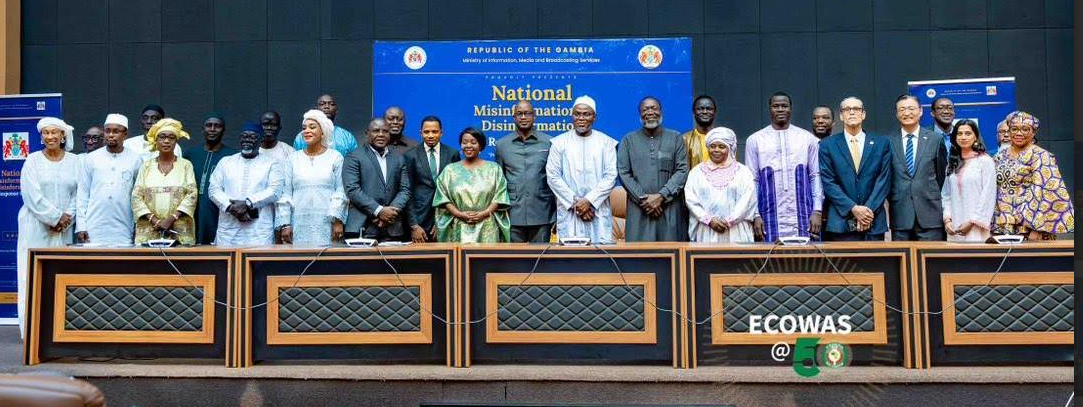
The government of The Gambia, in partnership with the Economic Community of West African States (ECOWAS) Commission, has established West Africa’s first National Misinformation and Disinformation Response Centre. The landmark facility was officially inaugurated on April 25, 2026, in Banjul, marking a significant step in the region’s fight against false information.
This pioneering initiative aims to protect the integrity of the information ecosystem, restore public confidence in media, and shield democratic processes from the increasing threats posed by digital manipulation and false narratives that have plagued the region in recent years.
During the inauguration ceremony, The Gambia’s Vice President Muhammad Jallow emphasized the centre’s importance not only for his country but for West Africa as a whole. He was joined by ECOWAS Commission President Omar Alieu Touray, who underscored the regional significance of this collaborative effort.
“This centre represents our commitment to ensuring citizens across West Africa have access to accurate information in an era where falsehoods can spread at unprecedented speeds,” Touray stated during the ceremony.
The facility will serve multiple functions designed to combat the spread of misinformation. Among its core responsibilities will be supporting early warning systems that can identify emerging disinformation campaigns before they gain significant traction. Additionally, the centre will conduct real-time fact-checking of news and claims circulating in traditional and social media.
A crucial aspect of the centre’s mandate involves facilitating cross-border collaboration among West African nations. This regional approach acknowledges that disinformation campaigns frequently transcend national boundaries and require coordinated responses from multiple countries to be effectively countered.
Government officials were quick to address concerns about potential censorship, explicitly stating that the centre is not designed to suppress free speech or legitimate criticism. Rather, they described it as a mechanism to ensure citizens have access to accurate, verified information upon which they can base their decisions and opinions.
The establishment of this centre comes amid growing concerns about the impact of misinformation on West African democracies. Recent elections throughout the region have been marred by coordinated disinformation campaigns, some allegedly orchestrated by both domestic and foreign actors seeking to influence outcomes or sow discord.
Media experts note that The Gambia’s selection as the host country is significant. The nation has undergone substantial democratic reforms since the 2017 departure of former President Yahya Jammeh, who had ruled for 22 years. Under President Adama Barrow’s administration, The Gambia has worked to strengthen democratic institutions and press freedom.
“This initiative represents an important acknowledgment that healthy democracies require not just free speech, but also accurate information,” said Fatou Jobe, a regional media analyst. “The challenge will be implementing systems that combat false information without inadvertently restricting legitimate journalism or dissenting views.”
The centre is expected to collaborate with fact-checking organizations, media outlets, technology companies, and civil society groups across West Africa. It will also develop educational programs aimed at improving media literacy among citizens, helping them better distinguish between reliable and misleading information.
ECOWAS officials indicated that if successful, the model could be replicated in other member states, creating a network of centers working in coordination to address misinformation challenges across the entire region.
As digital platforms continue to evolve and information spreads ever more rapidly, the establishment of this centre reflects a growing recognition among West African governments that protecting information integrity requires dedicated resources and regional cooperation.
Fact Checker
Verify the accuracy of this article using The Disinformation Commission analysis and real-time sources.

13 Comments
It’s great to see The Gambia and ECOWAS taking a proactive approach to mitigate the impacts of disinformation. Establishing a dedicated regional hub is a smart move.
Protecting the integrity of information ecosystems is vital for preserving democratic institutions. This new center in West Africa is a welcome initiative in that regard.
I’m curious to learn more about the specific strategies and capabilities this new center will employ to identify and respond to misinformation campaigns in the region.
Yes, the details of their approach will be interesting to follow. Effective collaboration between national governments and regional bodies like ECOWAS will be key.
I hope this center will adopt a comprehensive, evidence-based approach to identifying and responding to misinformation threats in the region. Rigorous data analysis and fact-checking will be key.
Absolutely. A data-driven, transparent methodology will be essential for building public trust in the center’s work and findings.
This is an important step in the fight against misinformation in West Africa. Establishing a dedicated center to monitor and counter false narratives will help protect democratic processes and restore public trust in media.
Agreed. Combating the spread of disinformation is crucial for maintaining an informed and engaged citizenry.
This is a significant development, but the success of this center will depend on its ability to adapt to evolving misinformation tactics and maintain strong partnerships with stakeholders across the region.
This is an important step, but addressing the root causes of misinformation – such as lack of media literacy and digital infrastructure gaps – will also be critical for lasting solutions.
Good point. Investing in digital literacy programs and infrastructure upgrades across West Africa should complement the work of this new response center.
While this center is a positive development, I wonder how it will coordinate with other national and international efforts to combat misinformation. Alignment and information-sharing will be crucial.
Agreed, cross-border cooperation will be essential for this center to be effective in addressing a challenge that often transcends national boundaries.