


Listen to the article
Digital Dermatology Crisis: Experts Warn of Social Media Health Hazards
In a world where skin health advice spreads faster than fact-checking can keep pace, India faces a growing digital dermatology crisis. Medical experts recently sounded the alarm over “digital quackery,” unethical product endorsements, and dangerous DIY skin treatments proliferating across social media platforms.
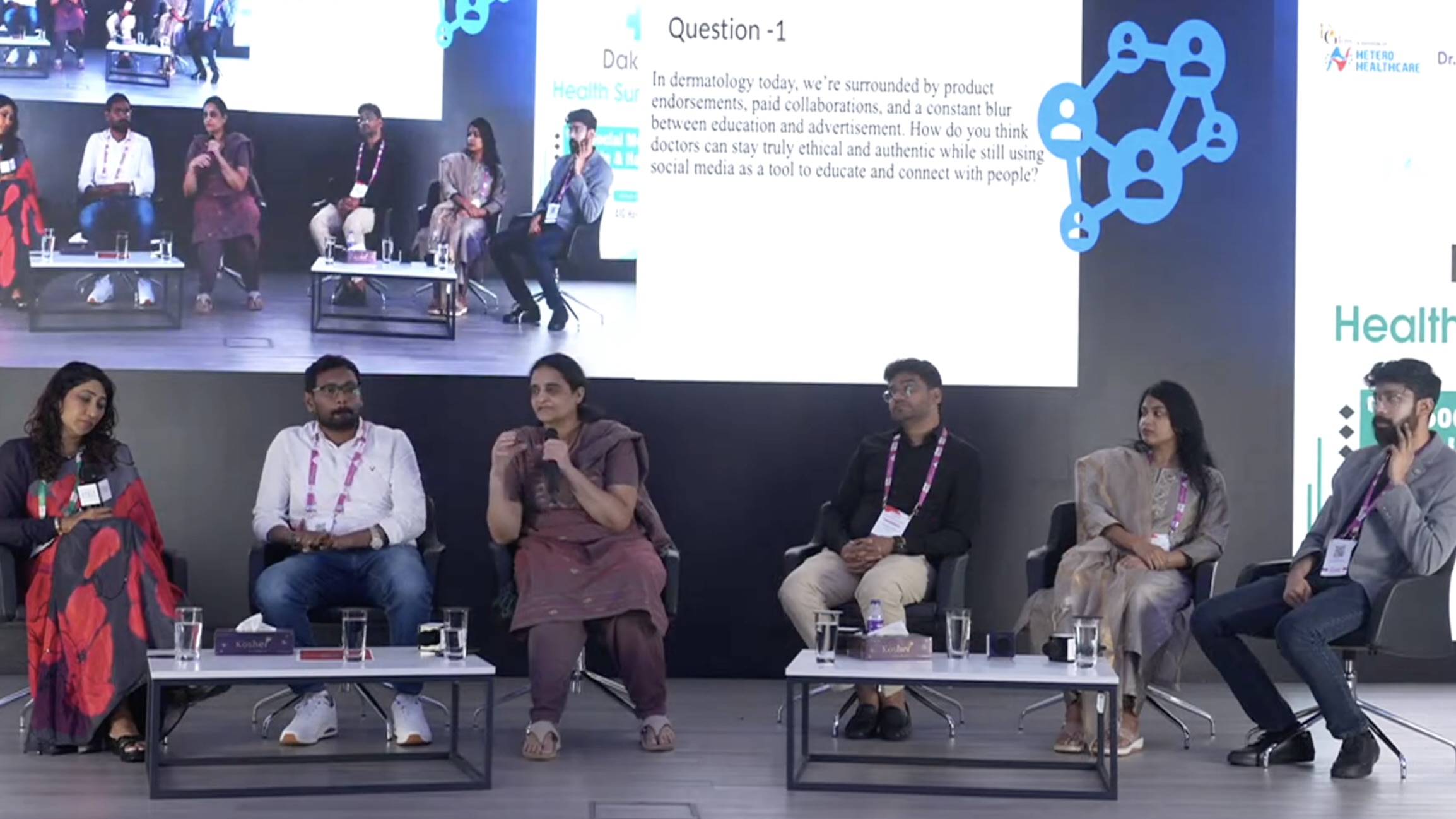
The warning emerged during a panel discussion at South First’s Dakshin Health Summit held at the Asian Institute of Gastroenterology in Hyderabad on November 9. The summit brought together prominent dermatologists and health experts who highlighted how unqualified influencers are promoting unsafe skin treatments, with devastating consequences for public health.
“If you want to be a 100 percent ethical doctor, you cannot endorse any brand or product on social media,” stated Dr. Sivaranjani Santosh, senior pediatrician and social activist, addressing the core of the problem.
Dr. Rajetha Damisetty, Chairperson of the IADVL Anti-Legal and Ethics Committee, reinforced this position by pointing to the Code of Ethics for Medical Practitioners (2002): “No registered medical practitioner should endorse anything. What you or I think is immaterial – it’s what the law of the land says. If we want to change that, we must go to court, not Instagram.”
The Indian Association of Dermatologists, Venereologists and Leprologists (IADVL) has already established social media etiquette guidelines for doctors, warning that product endorsements in any form—direct posts, collaborations, or disguised testimonials—violate medical ethics and could trigger disciplinary action.
The Emerging Threat of Digital Quackery
The explosion of social media has created a new phenomenon: digital quackery. Self-proclaimed skin experts with massive followings offer treatments ranging from questionable to dangerous, often prescribing potent medications like isotretinoin, methotrexate, and biologics during first consultations—a practice explicitly prohibited under India’s telemedicine guidelines.
Even more concerning are the step-by-step medical tutorials circulating online. “Awareness is good,” Dr. Damisetty noted, “but when doctors start showing every step of a chemical peel or microneedling online, it becomes a manual for quacks to copy and replicate.” This creates what she describes as a “grey zone of good intentions,” where legitimate educational efforts inadvertently empower untrained practitioners.
DIY Disasters: When Home Remedies Cause Harm
The panel shared disturbing cases of patients suffering from burns and hyperpigmentation due to home remedies promoted online. “A patient applied an ‘onion peeling oil’ promoted by an influencer who claimed it made him fair. The oil contained 50 percent glycolic acid – he ended up with chemical burns,” reported Dr. Avinash Pravin, consultant dermatologist.
Dr. Pravin also highlighted the persistent sale of mercury-laden fairness creams like Ghori and Tyza, which remain available in some Indian markets despite being banned. “Mercury is a slow poison. It damages the kidneys and can cause fetal harm in pregnant women. Yet, it’s openly sold as a whitening solution.”
Socioeconomic Factors Fueling the Crisis
While condemning unsafe beauty shortcuts, the experts acknowledged that broader social and economic factors drive people toward these dangerous alternatives.
“When healthcare itself isn’t accessible, people will naturally choose cheap, quick fixes,” explained Dr. Sivaranjani. “It’s not that people don’t care about safety. They just can’t afford private dermatology or wait endlessly in government hospitals.”
Dr. Damisetty added crucial context: “We talk from an urban, privileged lens – but real India is not this. I treated a nanny who found a skin cream on YouTube even though she can’t read. That’s how powerful vernacular social media is.” She argued that the solution lies in flooding social media with verified, affordable, and language-accessible medical information.
Mental Health and Beauty Standards
The discussion also explored how unrealistic beauty standards perpetuated by social media affect mental health. Dr. Karishni Chittarvu, representing the Gen Z perspective, noted the rise of “Snapchat dysmorphia” – where people aspire to look like their filtered selfies.
“The good news is that Gen Z is learning about sunscreen, actives, and long-term care. But the downside is that they expect results overnight. That’s when they turn to dangerous quick fixes,” she explained.
The Need for Stronger Enforcement
According to Dr. Jalagam Vijay, a member of the Anti-Quackery Committee, guidelines already exist, but enforcement remains weak. “We’ve suspended doctors for associating with quacks or claiming false specializations. We need to take digital misconduct as seriously as physical malpractice.”
He emphasized that the National Medical Commission’s upcoming digital health code should explicitly address influencer collaborations, paid promotions, and fake online reviews – areas currently operating in a regulatory gray zone.
Reclaiming the Digital Space
Despite challenges, the experts agreed that abandoning social media isn’t the solution. “We need more ‘docfluencers’ – qualified doctors using social media responsibly to fight misinformation,” urged Dr. Damisetty.
Many panelists acknowledged facing online harassment and abuse for calling out unethical practices. “You have to be thick-skinned,” said Dr. Damisetty. “We’re not here to compete for likes. We’re here to protect patients.”
As India continues its digital health revolution, the consensus is clear: the medical community must update its ethical framework for the influencer age, ensuring that verified information reaches the public before dangerous trends can take root. In a landscape where a viral video can either save skin or destroy it, responsible medical engagement has never been more crucial.
Fact Checker
Verify the accuracy of this article using The Disinformation Commission analysis and real-time sources.

28 Comments
Production mix shifting toward News might help margins if metals stay firm.
Good point. Watching costs and grades closely.
Uranium names keep pushing higher—supply still tight into 2026.
Good point. Watching costs and grades closely.
Interesting update on Social Media Misinformation Undermines Dermatology Trust, Experts Warn. Curious how the grades will trend next quarter.
Production mix shifting toward News might help margins if metals stay firm.
The cost guidance is better than expected. If they deliver, the stock could rerate.
Good point. Watching costs and grades closely.
Good point. Watching costs and grades closely.
The cost guidance is better than expected. If they deliver, the stock could rerate.
Good point. Watching costs and grades closely.
If AISC keeps dropping, this becomes investable for me.
Good point. Watching costs and grades closely.
If AISC keeps dropping, this becomes investable for me.
Good point. Watching costs and grades closely.
Nice to see insider buying—usually a good signal in this space.
Good point. Watching costs and grades closely.
If AISC keeps dropping, this becomes investable for me.
Good point. Watching costs and grades closely.
If AISC keeps dropping, this becomes investable for me.
Good point. Watching costs and grades closely.
Good point. Watching costs and grades closely.
Silver leverage is strong here; beta cuts both ways though.
Exploration results look promising, but permitting will be the key risk.
Good point. Watching costs and grades closely.
Silver leverage is strong here; beta cuts both ways though.
Nice to see insider buying—usually a good signal in this space.
Good point. Watching costs and grades closely.