


Listen to the article
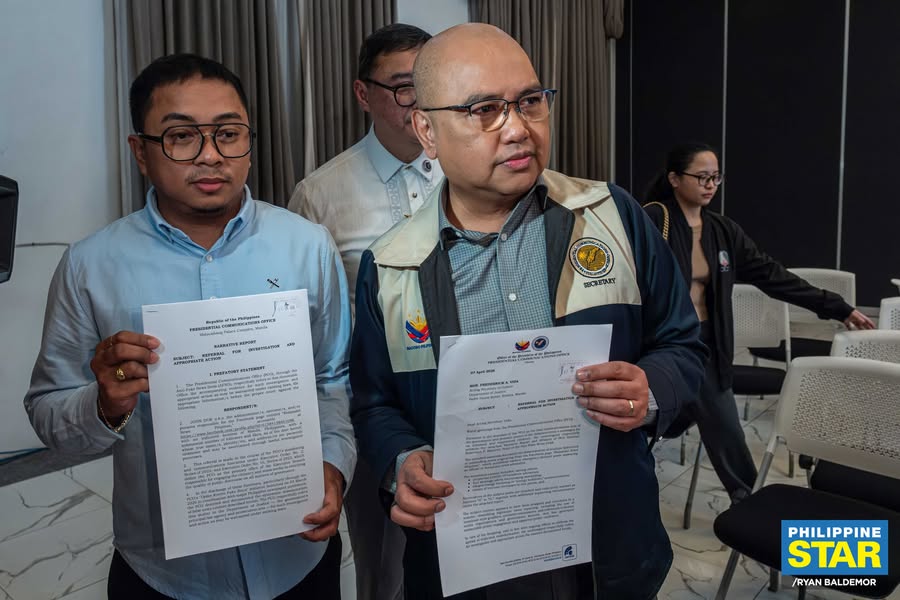
Presidential Communications Office Acting Secretary Dave Gomez took decisive action Tuesday, filing formal complaints at the Department of Justice in Manila against individuals accused of disseminating false information about the Philippines’ energy situation.
The legal action targets what officials describe as “fake news peddlers” who have allegedly spread misinformation that has caused public confusion and concern regarding the country’s energy security and infrastructure. This move represents an escalation in the government’s efforts to combat the spread of false information on critical national issues.
According to sources familiar with the complaints, the accused individuals allegedly circulated fabricated reports on social media platforms claiming imminent nationwide power outages and suggesting government mismanagement of energy resources. These claims reportedly gained significant traction online, prompting worried responses from citizens and businesses.
“The spread of misinformation about our energy infrastructure poses a serious threat to public order and national security,” a spokesperson from the Department of Energy said in a statement. “False claims about energy shortages can trigger unnecessary panic buying of fuel and supplies, and undermine public confidence in essential services.”
The Philippines’ energy sector has been a focal point of public interest in recent years as the country navigates the complex transition toward more sustainable energy sources while ensuring stable power supply across its many islands. The nation relies on a mix of coal, natural gas, geothermal, hydroelectric, and increasingly, solar and wind power to meet its growing energy demands.
Energy analysts note that the Philippines faces genuine challenges in its power sector, including aging infrastructure in some regions and the need for significant investment in new generation capacity to keep pace with economic growth. However, they emphasize that accurate public information is essential for productive discussion of these issues.
“There’s a critical difference between legitimate criticism of energy policy and deliberately spreading false information designed to create panic,” said Maria Santos, an energy policy expert at the University of the Philippines. “The former contributes to democratic discourse, while the latter undermines it.”
The Department of Justice has confirmed receipt of the complaints and indicated that a thorough investigation will follow. Under Philippine law, individuals found guilty of spreading false information that causes public alarm can face serious penalties, including fines and imprisonment.
This case highlights the growing challenge of misinformation in the digital age, particularly in sectors considered vital to national security and public welfare. The Philippine government, like many around the world, has been stepping up efforts to combat fake news through both regulatory measures and public education campaigns.
Civil society organizations have expressed mixed reactions to the filing. Some support the government’s efforts to combat harmful misinformation, while others caution against potential overreach that might stifle legitimate criticism or journalistic scrutiny of government policies.
“We must strike a careful balance between combating genuinely harmful misinformation and protecting freedom of expression,” said Roberto Cruz of the Philippine Press Institute. “The legal system must distinguish between malicious falsehoods and good-faith reporting or commentary, even when the latter contains errors.”
The Presidential Communications Office, under Acting Secretary Gomez’s leadership, has emphasized that these legal actions target specific cases of deliberate misinformation rather than general criticism of government energy policies.
As the case proceeds, it may establish important precedents for how the Philippines addresses the complex intersection of free speech, digital misinformation, and matters of national interest in an increasingly connected society where information—both accurate and false—can spread rapidly across multiple platforms.
Fact Checker
Verify the accuracy of this article using The Disinformation Commission analysis and real-time sources.

7 Comments
Energy security is crucial for any country’s economic and social stability. I appreciate the government’s efforts to combat the spread of false information that could disrupt these vital systems. Fact-checking and transparency will be key to addressing this issue effectively.
Absolutely. Proactive steps to counter misinformation are essential, especially on sensitive topics like energy supply. Maintaining public confidence in infrastructure is critical.
While I understand the government’s desire to crack down on misinformation, I hope they will also ensure due process and avoid overreach. Balancing national security with civil liberties can be challenging, but it’s important to get it right.
That’s a fair point. Any legal actions should be well-substantiated and follow proper procedures. Transparency around the process will be important to maintain public trust.
This is a concerning development. Spreading misinformation about critical infrastructure can undermine public trust and cause real harm. I hope the authorities are able to thoroughly investigate these claims and take appropriate action against any bad actors.
Energy infrastructure is a complex and sensitive topic. I applaud efforts to combat the spread of falsehoods, but hope the authorities will engage constructively with legitimate concerns or critiques, not just target perceived ‘misinformation peddlers’.
Curious to see what specific claims were made and the evidence behind the accusations. Misinformation is a serious problem, but the government’s response should be proportionate and grounded in facts.