


Listen to the article
Nigeria Launches UNESCO-Backed Media Literacy Institute to Combat Misinformation
The Federal Government has raised urgent concerns over the growing threat of misinformation and disinformation in Nigeria’s digital landscape, calling on citizens to strengthen their media literacy skills as essential protection against false narratives.
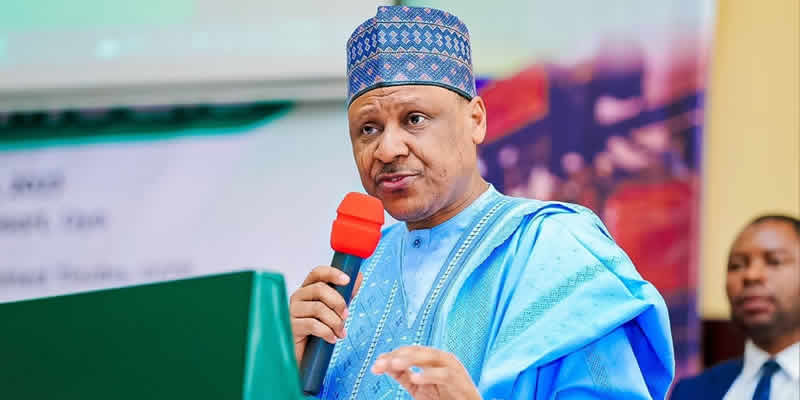
This warning came from Mohammed Idris, Minister of Information and National Orientation, during the conclusion of a two-day event marking the launch of the International Media and Information Literacy Institute at the National Open University of Nigeria in Abuja on Thursday.
The institute, inaugurated by President Bola Tinubu on Wednesday at the Presidential Villa, positions Nigeria at the forefront of global efforts to combat misinformation and foster responsible communication in an increasingly complex information environment.
The initiative gained significant international recognition in November 2025 when UNESCO designated it as the world’s first Category 2 institute of its kind during the organization’s 43rd General Conference in Samarkand, Uzbekistan. This classification places the institute under UNESCO’s auspices while allowing it to function independently.
Speaking at the event themed “Empowering knowledge societies through media and information literacy in the digital age,” Idris emphasized that critical assessment and verification skills have become indispensable in today’s technological landscape, particularly with the rapid advancement of artificial intelligence.
“In a world shaped by rapid technological change and the constant flow of information, the ability to think critically, verify facts, and engage responsibly is fundamental to the health of our societies and the strength of our democracies,” said Idris, who was represented by Dili Ezughah, Executive Secretary of the Nigerian Press Council.
The minister warned that misinformation’s consequences extend far beyond theoretical concerns, with real-world implications for governance, peace, and social cohesion across Nigeria. “The establishment of the institute comes at a time when the world is grappling with misinformation, disinformation, and the erosion of trust in institutions,” he added.
Nigeria’s hosting of this pioneering institution places the country at the center of a critical global agenda. The federal government has pledged continued support through partnerships with UNESCO and other stakeholders to ensure the institute delivers meaningful impact in combating information disorders.
Professor Uduma Uduma, Vice-Chancellor of the National Open University of Nigeria, described the institute’s establishment as a transition from concept to reality, reflecting Nigeria’s institutional capacity and alignment with global educational objectives.
He highlighted what he termed an “epistemic paradox” in the digital era, where increased access to information has not necessarily resulted in greater understanding. “Media and information literacy is no longer an academic accessory; it is essential for responsible existence in today’s world,” Professor Uduma stated.
Former Minister of Information and Culture, Lai Mohammed, also addressed the gathering, characterizing misinformation as a major threat to Nigeria’s national security and unity. He reiterated his long-standing advocacy for regulating social media platforms, emphasizing that such measures should not be misinterpreted as censorship but as necessary safeguards for public interest.
Sharon Omotosho, Director of the newly established institute, presented a comprehensive strategic roadmap aimed at positioning the center as a global hub for research, policy development, and collaboration in media literacy. The institute will focus on research initiatives, advocacy campaigns, training programs, and strategic partnerships to build what she described as “a media and information literate world.”
Omotosho explained that the institute would also function as a global observatory to track evolving trends in information ecosystems and support evidence-based policy interventions across Africa and beyond.
The establishment of this institute comes at a critical time for Nigeria and the African continent, where digital penetration is rapidly increasing while regulatory frameworks and public awareness of information disorders remain underdeveloped in many regions. Media experts suggest that strengthening information literacy could serve as a crucial buffer against the political, social, and economic disruptions that often accompany unchecked misinformation.
Fact Checker
Verify the accuracy of this article using The Disinformation Commission analysis and real-time sources.

8 Comments
Combating misinformation is a global challenge, and I’m glad to see Nigeria taking a proactive approach. This institute could play a pivotal role in empowering citizens to navigate the complex information landscape. I hope the program is widely adopted and has a measurable impact.
This is a timely and important initiative. Equipping citizens with media literacy skills is crucial in the digital age to discern truth from misinformation. Kudos to Nigeria for taking proactive steps to combat the spread of false narratives.
I agree, media literacy education is essential for empowering people to be critical consumers of information. This institute could serve as a model for other countries grappling with similar challenges.
As someone who follows developments in the mining and commodities sector, I’m curious to see how this media literacy initiative might help address misinformation around extractive industries. Transparent and factual reporting is crucial in that space.
That’s an excellent point. Misinformation around mining, energy, and natural resources can have significant real-world consequences. This institute could help ensure more informed public discourse on those critical topics.
While media literacy education is important, I wonder about the broader sociopolitical context in Nigeria and the potential challenges the institute may face in truly combating entrenched disinformation narratives. Nonetheless, this is a step in the right direction.
The launch of this media literacy institute is a welcome development. In an era where misinformation can spread like wildfire online, fostering responsible communication and critical thinking is paramount. I’m curious to learn more about the specific curriculum and outreach plans.
That’s a good question. The article mentions the institute gained UNESCO recognition, so I’d imagine the curriculum will draw on international best practices in media literacy education.