


Listen to the article
Nigerian Government Calls for Collaborative Efforts to Combat Misinformation
The Nigerian Government has urged stronger collaboration among media organizations, government institutions, and other stakeholders to tackle the growing threat of disinformation and misinformation in the country. During Monday’s World Press Freedom Day commemoration in Abuja, officials emphasized that collective action is essential to safeguard public trust and maintain national stability.
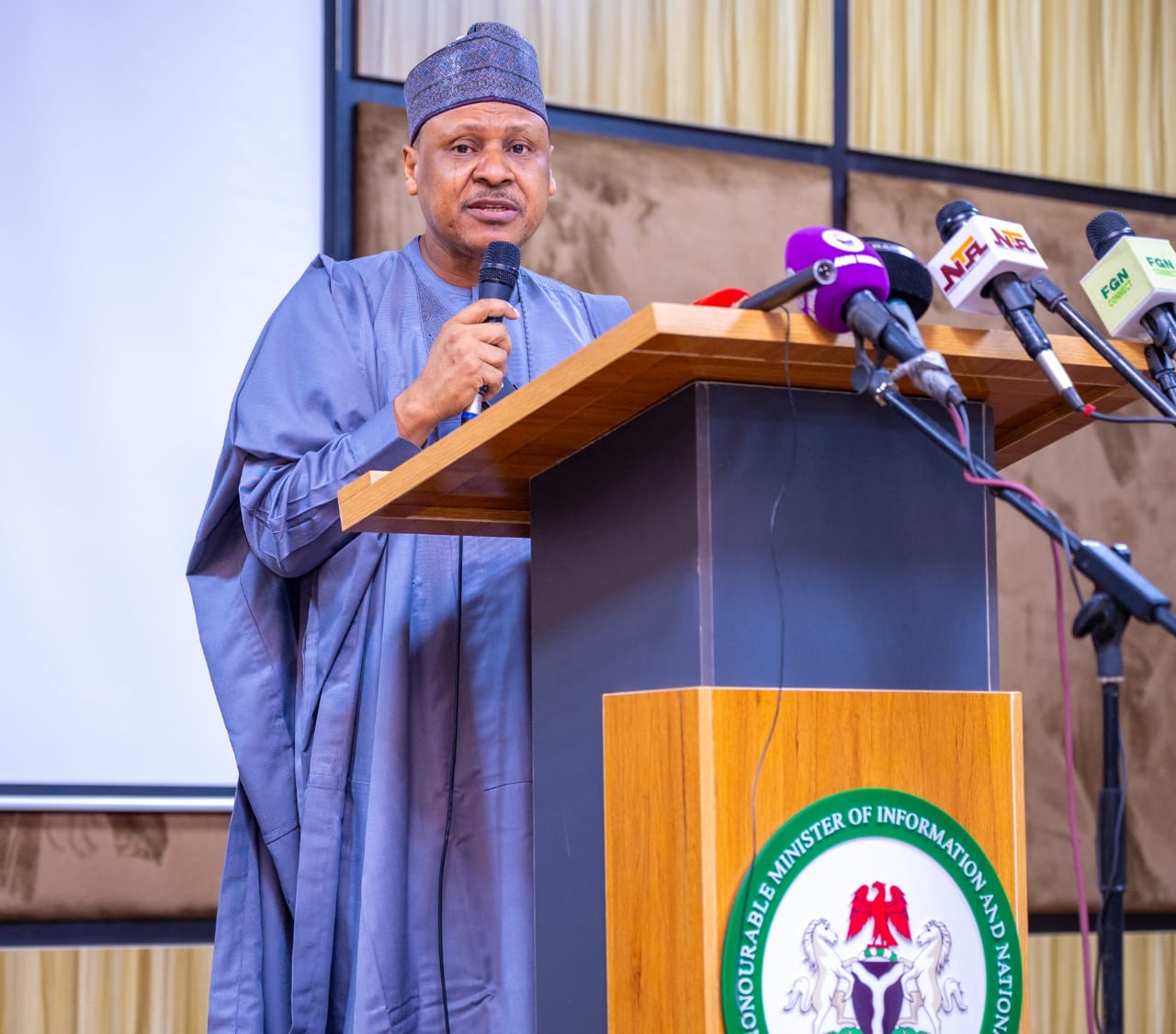
Minister of Information and National Orientation, Mohammed Idris, speaking at the event held at Radio House, highlighted the administration’s focus on partnerships to address these challenges. “This administration has prioritised collaboration with media stakeholders and international partners to promote responsible journalism, counter disinformation and misinformation,” Idris stated.
The Minister reaffirmed that press freedom remains a fundamental right guaranteed under Nigeria’s Constitution, with the Federal Government fully committed to its protection. He took a firm stance against any form of intimidation or attacks directed at journalists, warning that such actions undermine the country’s democratic institutions.
Under President Bola Ahmed Tinubu’s leadership, the government has implemented several initiatives to enhance transparency and improve access to information, according to Idris. These include sustained engagement with media organizations, enforcement of the Freedom of Information Act, and investments in public communication platforms.
A significant development in Nigeria’s fight against misinformation has been the partnership with UNESCO to establish the International Media and Information Literacy Institute (IMILI) in Abuja. This initiative aims to build a more discerning public capable of critically evaluating information sources.
While advocating for press freedom, Idris also called on journalists to maintain high standards of professionalism, fairness, and ethics in their reporting. “The true test of press freedom lies not in our declarations, but in our actions, how safely journalists can do their work, how truthfully information is shared, and how responsibly it is consumed,” he emphasized.
The event also featured remarks from Dr. Binyerem Ukaire, Permanent Secretary in the Ministry of Information and National Orientation, who described the commemoration as a vital platform for strengthening institutional collaboration. She pointed to the complexities introduced by digital platforms and the need for coordinated responses to address misinformation and rebuild public trust.
“The expansion of digital platforms has introduced new complexities that require coordinated institutional responses, especially in addressing misinformation and strengthening public trust,” Ukaire noted.
The security of journalists received attention during the event, with Inspector General of Police (IGP) Olatunji Disu reaffirming the Nigerian Police Force’s commitment to protecting media professionals. Represented by Deputy Commissioner of Police Anthony Okon Placid, the Force Public Relations Officer, the IGP noted that this year’s theme, “Shaping the Future at Peace, Promoting Press Freedom,” aligns with the constitutional mandate of the police.
Nigeria’s focus on combating misinformation comes at a critical time when digital platforms have enabled the rapid spread of false information across the country. The proliferation of social media has created challenges for both journalists and authorities in maintaining information integrity, particularly during periods of political tension or social unrest.
Media experts have long warned about the potential consequences of unchecked misinformation in Nigeria’s diverse society, where ethnic and religious sensitivities can be easily exploited. The government’s push for collaboration represents an acknowledgment that no single entity can effectively counter the problem alone.
The establishment of the IMILI institute in partnership with UNESCO signals Nigeria’s recognition of the importance of media literacy as a long-term solution. By equipping citizens with the skills to identify credible information sources, the country hopes to build resilience against deliberate disinformation campaigns.
As Nigeria continues to navigate these challenges, the balance between protecting press freedom and combating harmful misinformation remains delicate, requiring ongoing dialogue between government, media practitioners, and civil society organizations.
Fact Checker
Verify the accuracy of this article using The Disinformation Commission analysis and real-time sources.

10 Comments
Responsible journalism and fact-based reporting are vital to maintaining public trust. Nigeria’s focus on partnerships to promote these values is a welcome development.
Absolutely. Strengthening media accountability and transparency will be crucial in this endeavor.
As a major economy in Africa, Nigeria’s efforts to tackle misinformation could have positive regional implications. Sharing best practices with neighboring countries could amplify the impact.
Good point. Regional cooperation on media literacy and combating disinformation would benefit the entire West African bloc.
Misinformation can have far-reaching consequences, especially in developing countries. Nigeria’s proactive approach to address this challenge is commendable and could set an example for others to follow.
Agreed. Tackling misinformation requires a multifaceted strategy involving the government, media, and civil society.
Protecting press freedom is essential, and the Nigerian government’s stance against intimidation of journalists is commendable. Collaboration between the media and authorities can strengthen democratic institutions.
True, a free and independent press is a cornerstone of democracy. Fostering an environment where journalists can operate safely is crucial.
Addressing misinformation is crucial for Nigeria’s stability and democracy. Partnering with the media is a prudent step, but it will require sustained effort and vigilance to be effective.
I agree, misinformation can be very damaging. Robust fact-checking and public education will be key to combating it.