


Listen to the article
Syria and France Explore Media Cooperation Amid Digital Challenges
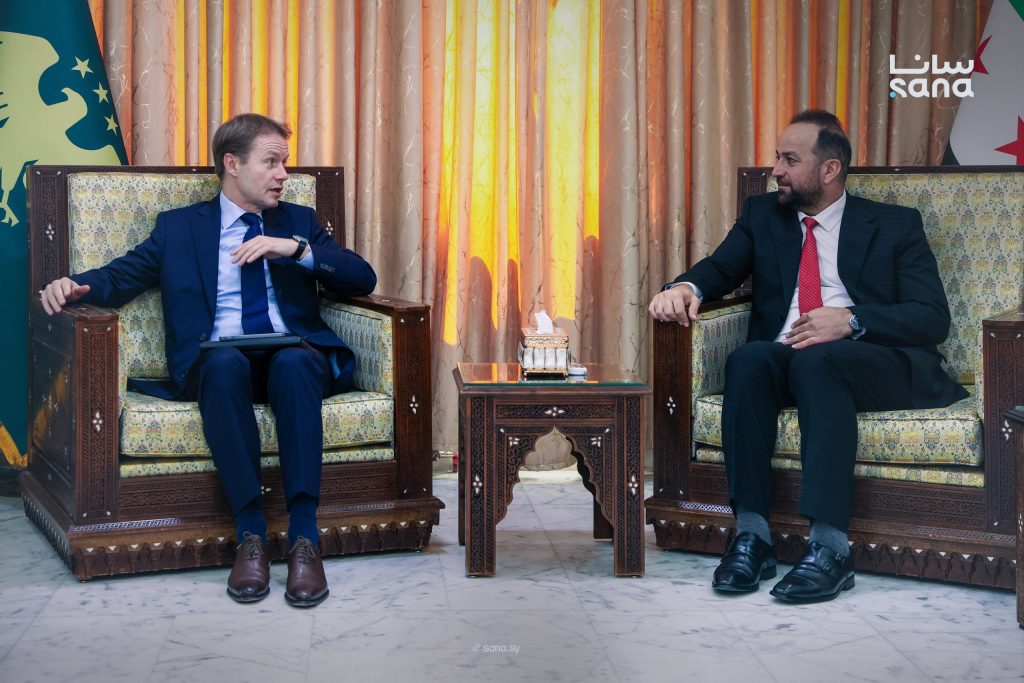
Syrian Minister of Information Hamza al-Mustafa met with Jean-Baptiste Faivre, Chargé d’Affaires of the French Embassy in Damascus, on Tuesday to discuss strengthening bilateral cooperation in the media sector. The meeting, held at the Ministry of Information building, focused on developing media relations that would serve the mutual interests of both nations.
During the talks, al-Mustafa provided an overview of recent developments in Syria’s media landscape, emphasizing that 2024 will be dedicated to reorganizing media operations and enhancing communication strategies throughout the country. This restructuring comes as Syria continues its efforts to rebuild various sectors following years of conflict that severely damaged its infrastructure and institutions.
“We are implementing comprehensive plans to modernize our media sector,” al-Mustafa explained during the meeting. These plans include establishing a Government Communication Center that will coordinate official messaging across ministries and government bodies.
The minister outlined a vision for decentralizing media operations by developing local media outlets and granting provincial media directorates expanded authorities. This approach aims to transform each directorate into a central media entity within its respective governorate, complemented by the launch of local platforms focused on addressing citizens’ concerns and covering local news.
The Syrian media landscape faces significant challenges in the digital realm, with al-Mustafa highlighting that the country confronts daily misinformation campaigns targeting its social fabric. In response, the ministry has established a specialized unit dedicated to combating digital misinformation, tasked with monitoring such campaigns and countering them through rigorous digital and field verification processes.
“These campaigns represent a serious threat to national stability and public perception,” a ministry source later explained. “Our new verification mechanisms will help separate fact from fiction in real-time.”
Additionally, the ministry has created a unit to monitor media and digital engagement across various platforms and issues. This initiative aims to build preventative media capacity capable of addressing misinformation campaigns before they gain traction.
Al-Mustafa emphasized the ministry’s interest in strengthening media capacity-building programs and expressed willingness to expand cooperation with France to provide specialized training for Syrian media professionals. Such international partnerships could provide valuable expertise and resources to modernize Syria’s media infrastructure.
For his part, Faivre expressed appreciation for the facilities provided by the Syrian government to international media outlets, particularly French media organizations operating in the country. He affirmed France’s readiness to enhance communication with Syria and develop a comprehensive program for media cooperation between the two nations.
The meeting represents a potential warming in French-Syrian relations, which have been strained since France suspended diplomatic ties with Damascus in 2012 following the outbreak of civil war. While France maintains a diplomatic presence in Syria, full normalization of relations has yet to occur.
Media experts note that this cooperation could signal a gradual shift in Western engagement with Syria. “Media collaboration often serves as a precursor to broader diplomatic normalization,” said regional analyst Ibrahim Kalin in a statement to regional press agencies.
The talks come amid broader efforts by the Syrian government to develop its media sector, counter digital misinformation, and expand international cooperation to modernize media operations. These initiatives reflect Damascus’s ongoing attempts to reintegrate into the international community and rebuild institutions damaged during the prolonged conflict.
Media development remains crucial for Syria as it works to address both domestic and international communication challenges. The potential cooperation with France could provide valuable technical expertise and training opportunities for Syrian media professionals at a time when accurate information dissemination is vital for the country’s stability and recovery efforts.
Fact Checker
Verify the accuracy of this article using The Disinformation Commission analysis and real-time sources.

20 Comments
The minister’s remarks about enhancing communication strategies across various government bodies are intriguing. Improved internal coordination could bolster the effectiveness of official messaging and outreach.
That’s a good point. Streamlining communication channels within the government could help ensure a more coherent and impactful public information strategy.
I’m curious to learn more about the Government Communication Center that will coordinate official messaging. Centralized coordination could improve information sharing, but it’s important to balance that with press freedom.
Good point. The center will need to strike a careful balance to ensure effective communication without unduly restricting media independence.
It’s encouraging to see Syria taking proactive steps to modernize its media sector. Building stronger ties with France could open up new opportunities for knowledge sharing and technological advancements.
Absolutely. Collaborative efforts between the two countries could lead to innovative solutions and best practices in the evolving digital media landscape.
Rebuilding the media sector is a crucial step in Syria’s post-conflict recovery. Fostering stronger ties with France could provide valuable technical expertise and resources to support these efforts.
Definitely. Cross-border collaboration on media development initiatives could be mutually beneficial for both countries.
It’s encouraging to see Syria and France exploring ways to collaborate on media development. Cross-border partnerships can bring valuable expertise and resources to support the modernization of media systems.
Agreed. International cooperation in this field could help foster a more resilient and inclusive media environment in Syria as it continues its post-conflict recovery.
I’m curious to learn more about the specific plans for establishing the Government Communication Center. The structure, mandate, and oversight mechanisms of such a body will be crucial in determining its effectiveness and impact.
Agreed. Transparency around the center’s operations and its relationship with independent media outlets will be key to maintaining public trust.
Interesting to see Syria and France exploring media cooperation. Strengthening bilateral ties in this sector could benefit both nations as they navigate the digital age and post-conflict challenges.
Agreed. Modernizing Syria’s media landscape and establishing a centralized communication strategy sounds like a prudent step.
The minister’s emphasis on 2024 as a dedicated year for media reorganization suggests a sense of urgency. I wonder what specific milestones or reforms they hope to achieve within that timeframe.
Good question. Setting a clear timeline could help drive progress, but the government will need to ensure realistic goals and transparency around the process.
The minister’s plans to decentralize media operations and develop local outlets are encouraging. That grassroots approach could help amplify diverse voices and perspectives across Syria.
Absolutely. A more decentralized, community-focused media ecosystem could foster greater transparency and accountability.
The minister’s emphasis on rebuilding various sectors following the conflict suggests a holistic approach to national recovery. Strengthening the media ecosystem could be a vital component of this broader effort.
Absolutely. A robust and independent media landscape can play a crucial role in facilitating transparency, accountability, and civic engagement during the reconstruction process.