


Listen to the article
Living Through the Chaos: How Social Media Hysteria Distorts Crisis in Mexico
I stood in the soot-lined streets of London the morning of the July 7, 2005, bombings and started walking home because there was no other way to get there. It took me nearly 16 hours. The air tasted like metal. I held hands with a stranger for a while, neither of us knowing quite what to do.
Ten years later, almost to the day, I was having dinner near the Grand 16 Movie Theatre in Lafayette, Louisiana, when people started running and screaming from an active shooter inside. Police cars swallowed the street in blue and red light. I remember the sound of sirens folding into each other.
Having lived through real chaos and reported on hurricanes, terror alerts, and elections, I know what fear feels like in a city. I know what it looks like when things actually fall apart. That’s why what happened Sunday in Puerto Vallarta left me shaken in a way I didn’t expect.
The unrest was real and serious. A cartel leader, “El Mencho,” was killed elsewhere in Mexico, triggering violence in pockets of the country. Puerto Vallarta experienced vehicle fires and property damage. Authorities responded in force during tense hours.
But what followed wasn’t careful reporting or measured analysis. It was panic porn.
While I was at home calling sources, confirming details, and verifying photos and videos, social media erupted with a version of events that barely resembled reality. The Tecnológico de Monterrey’s Digital Media Observatory later estimated between 200-500 posts shared false or unverified information within 48 hours of the cartel kingpin’s capture.
An influencer posted a breathless video of himself being “extracted” by private jet, supposedly flanked by armored security vehicles. Close examination revealed they were just standard SUVs – shiny but not tactical. The drama was the point. His video racked up views as he transformed from terrified to important to rescued.
The New York Post reported security teams escorting millionaire clients onto ferries from Puerto Vallarta to Cabo. There’s just one problem: no such ferry exists – not seasonal, private, or secret. Yet this fabricated detail spread because it fit the narrative of Mexico as a war zone requiring extraction.
Another influencer staying in the gated, wealthy tourist area of Nuevo Nayarit claimed she was “trapped,” “stranded,” and “without food and water.” Nothing happened in Nuevo – no chaos, just holidaymakers enjoying their pools with open all-you-can-eat buffets.
Photos circulated that weren’t from here. Video clips were miscaptioned. Phrases like “city under siege” and “center of hell” moved faster than any verified fact ever could. I watched lies outpace truth in real time, repeatedly.
What hurts is that I’ve dedicated years to doing this work carefully – earning trust slowly, double-checking facts, locations, and timestamps, correcting myself publicly when wrong. That’s supposed to matter, but some days, I wonder if it does anymore.
We’re in an era where social media combined with AI means anyone can appear authoritative. Add dramatic music, a confident voice, urgent captions, and a quickly generated headline, and suddenly you’re credible.
This isn’t just a distant dateline to me. It’s home. I know the woman running the corner shop, the hotel manager fielding cancellations from guests who think tanks are rolling down the Malecón, and families whose livelihoods depend on whether someone in Ohio or Alberta decides Mexico is “too dangerous” this week. The lies don’t just damage abstract concepts like “reputation” – they harm real people.
Seven major media outlets contacted me. They knew from my work with Mexico News Daily that I wouldn’t sensationalize events, yet it became clear they hoped for something sharper that matched their already-circulating dramatic headlines. I declined all seven opportunities, knowing the nuance I’d bring wouldn’t fit neatly into segments built on urgency and fear.
Then the BBC World Service reached out. From the first conversation, their approach differed. They weren’t chasing panic but context. They wanted to discuss how we process events without feeding fear and made space for three of us in Mexico to speak honestly. That conversation reminded me why I became a journalist.
I’ve realized I may never be widely read or famous – not because I lack skill, but because I refuse to trade accuracy for amplification in a system that rewards the latter.
I’m angry because I love this place, and loving somewhere means defending it when misrepresented. I’m angry that I spent precious hours fact-checking viral nonsense instead of focusing on deeper reporting. I’m angry that geography seems optional for some outlets, that corrections whisper while lies shout, and that Mexico is so often flattened into a caricature.
After the London bombings, no one asked if the entire United Kingdom should be avoided indefinitely. After mass shootings in the United States, people don’t declare the whole country off-limits. But let something happen in Mexico, and suddenly a nation of nearly 130 million people becomes a single, ominous headline.
Sunday was indeed rough. It was tense and unsettling. But it wasn’t the apocalypse. Smoke clears, and algorithms move on.
Those of us who still care about truth will remain where we belong – like me in Mexico with my notebook, sunburned and stubborn, doing the slow, unglamorous work of getting it right.
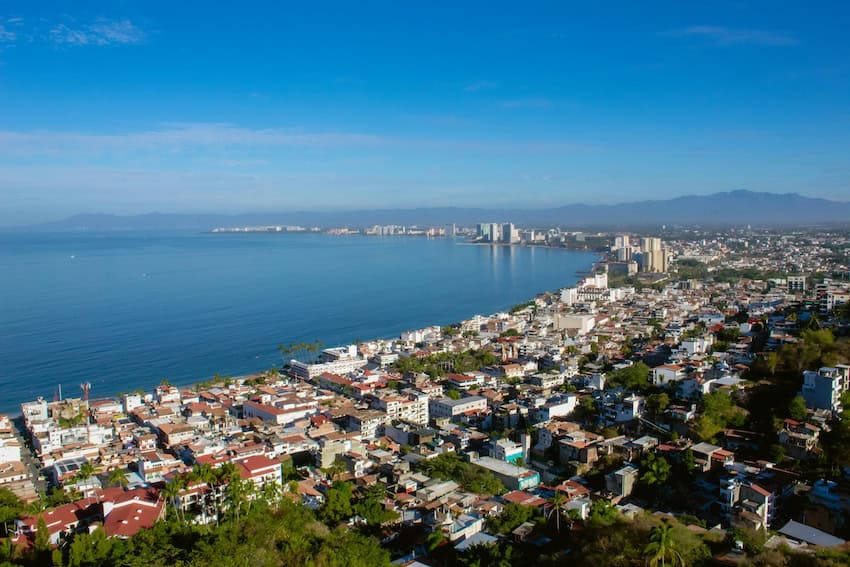
In the middle of all the noise, I watched this city do what it always does: neighbors checking on neighbors, business owners sweeping up soot and opening their doors anyway, friends sending messages saying, “We’re okay. Come for coffee.” Life asserting itself.
The beach appears every morning. Children are back on bicycles outside my door. The corner shop opens on time. I’ll be back out there in the sand, talking with those who stayed, who didn’t turn their fear into content, and who understand that loving a place means standing by it when it’s misunderstood.
I’ll be here, because this is my home. And the truth deserves someone willing to stay for it.
Fact Checker
Verify the accuracy of this article using The Disinformation Commission analysis and real-time sources.

10 Comments
Reporting on the ground must provide valuable perspective beyond the social media hype. Understanding the true nature of the crisis and the local impacts is important.
Experiencing real chaos and unrest firsthand must be deeply unsettling. The contrast between the reality and the social media narratives is concerning.
The article raises important questions about the role of social media in shaping perceptions of crisis events. Fact-based reporting is essential to counter misinformation.
It’s concerning to hear about the violence in Mexico triggered by the death of a cartel leader. Authorities must work hard to restore order and protect the public.
Absolutely, the public safety should be the priority in such volatile situations. Reliable information and a coordinated response are crucial to minimize harm.
Disturbing to see how social media can distort the real crisis in Mexico. Reporting on the ground must be challenging, with the constant risk of misinformation spreading rapidly online.
Interesting to learn about the writer’s personal experiences with crisis situations. That lived perspective can offer crucial insights into the complexities of such events.
The article highlights the challenges of separating fact from fiction during crisis events. Responsible reporting and fact-checking are essential to inform the public accurately.
It’s a shame to see how social media can distort the realities of a crisis in Mexico. Relying on credible local sources is key to understanding the true impacts.
Maintaining public order and safety should be the top priority for authorities during volatile situations like this. Misinformation can further exacerbate the challenges.