


Listen to the article
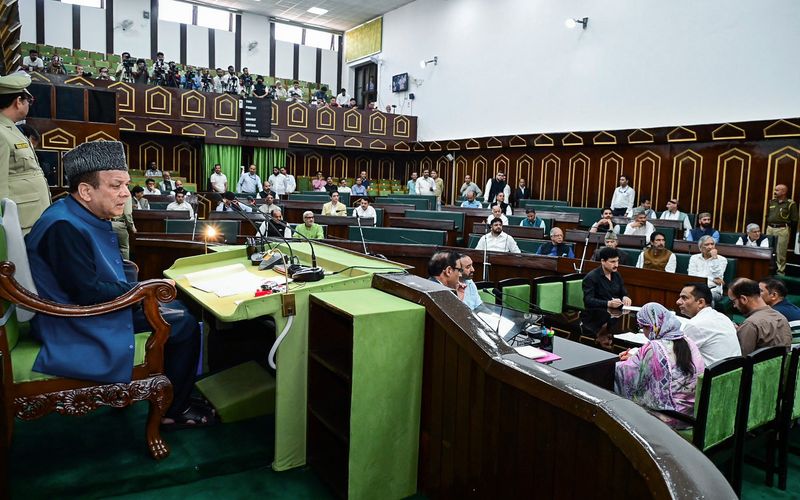
In a significant move to combat disinformation, the Jammu and Kashmir Legislative Assembly has initiated steps toward creating legislation addressing the proliferation of fake news in the region. Speaker Abdul Rahim Rather on Friday instructed the government to draft a comprehensive bill tackling the growing concern of misinformation circulating throughout the Union Territory.
The issue was brought to the Assembly’s attention by BJP legislator RS Pathania, who highlighted how the expanding influence of social media has created an environment where unverified news sources flourish. Pathania pointed out that numerous digital portals and social media pages operating in Jammu and Kashmir have contributed substantially to the spread of false information.
“Many channels and platforms have sprouted without any accountability mechanism,” Pathania noted during the discussion. He emphasized that the lack of rigorous fact-checking protocols has enabled fake news and misleading content to circulate widely among the public.
The call for regulation received cross-party support. Congress MLA Iftikhar Ahmed from Rajouri urged the government to implement punitive measures against individuals who manage social media platforms that disseminate misinformation. Ahmed proposed establishing minimum educational qualifications for those entering journalism to enhance professional standards and credibility in media reporting.
Deputy Chief Minister Surinder Choudhary acknowledged the delicate balance between regulating information and preserving fundamental rights. “While freedom of expression is a constitutional right, we must remember that Jammu and Kashmir remains a sensitive region,” Choudhary stated. He stressed the potential economic consequences of misinformation, noting, “Even a single news story can adversely impact tourism, which is vital to our economy.”
Choudhary assured the Assembly that the government would take firm action against those responsible for spreading falsehoods.
The move comes at a critical time for Jammu and Kashmir, which has experienced significant political and administrative changes following the abrogation of Article 370 in 2019. The region’s sensitive geopolitical position makes it particularly vulnerable to misinformation campaigns that could potentially inflame tensions or undermine public order.
Media experts note that the proliferation of unregulated digital news sources has created unique challenges for the region. With smartphones and internet access becoming increasingly common, even in remote areas, the potential reach of misleading content has expanded dramatically in recent years.
The proposed legislation would place Jammu and Kashmir among a growing number of regions worldwide seeking to regulate digital information spaces. However, critics of such measures often express concerns about potential overreach and the impact on press freedom.
The Information and Broadcasting Ministry has previously identified fake news as a national concern, with particular attention to border regions where misinformation can have security implications. The proposed bill in Jammu and Kashmir would likely complement existing national frameworks while addressing region-specific concerns.
Tourism stakeholders in the region have welcomed the discussion, noting that Jammu and Kashmir’s economy relies heavily on visitor perception. Industry representatives point out that unfounded negative stories about safety or political instability can trigger cancellations and deter potential tourists, causing significant economic harm to local businesses.
The timeline for drafting and introducing the bill remains unclear, though Speaker Rather’s directive suggests it has been prioritized. The Assembly is expected to consult with legal experts, media organizations, and civil society representatives to ensure the proposed legislation effectively addresses misinformation while safeguarding legitimate journalistic activities.
As the government proceeds with drafting this legislation, observers will be watching closely to see how it balances security concerns with the democratic principles of press freedom and the public’s right to information.
Fact Checker
Verify the accuracy of this article using The Disinformation Commission analysis and real-time sources.

11 Comments
This is a complex issue with no easy solutions. While I support efforts to combat fake news, we must also be mindful of protecting free speech and press freedom. The proposed legislation should strike a careful balance.
That’s a fair point. Any regulations must be carefully crafted to avoid infringing on legitimate journalistic activities. Transparency and due process will be crucial to ensuring the law is applied fairly.
Proliferation of fake news is a serious concern that undermines public trust and democratic processes. I hope the proposed legislation will be robust, fair, and effective in combating this challenge.
Crafting such legislation will require careful balancing of various interests and rights. It’s crucial that the law is implemented in a manner that upholds press freedom and free speech while curbing the spread of verifiably false information.
This is an important and timely move by the Jammu and Kashmir Legislative Assembly. Fake news has become a pervasive problem, and targeted legislation is necessary to hold bad actors accountable. I’m curious to see the details of the proposed bill.
Fake news poses a serious threat to civic discourse and democracy. I hope this proposed legislation will provide a robust framework to identify, penalize, and deter the spread of false information. Fact-checking protocols are essential.
Absolutely. Unregulated social media platforms have become a breeding ground for misinformation. Proactive measures are needed to restore public trust in news and information.
This is an important step to combat the growing problem of fake news. Establishing clear legislation and accountability measures is crucial to protect the public from misinformation. I’m glad to see bipartisan support for this initiative.
Agreed. Fake news can have serious consequences, especially in sensitive regions like Jammu and Kashmir. Regulation is needed to ensure news sources are verified and held responsible.
Fake news is a global problem, so I’m glad to see Jammu and Kashmir taking proactive steps to address it. Establishing clear legal frameworks and accountability measures is an important first step.
Agreed. Misinformation can have severe consequences, especially in regions with complex political dynamics. This legislation could set a valuable precedent for other parts of the world.