


Listen to the article
Indigenous Services Minister Patty Hajdu has called out Conservative politicians for what she describes as spreading misinformation about Indigenous property rights, heightening tensions in an already contentious policy area.
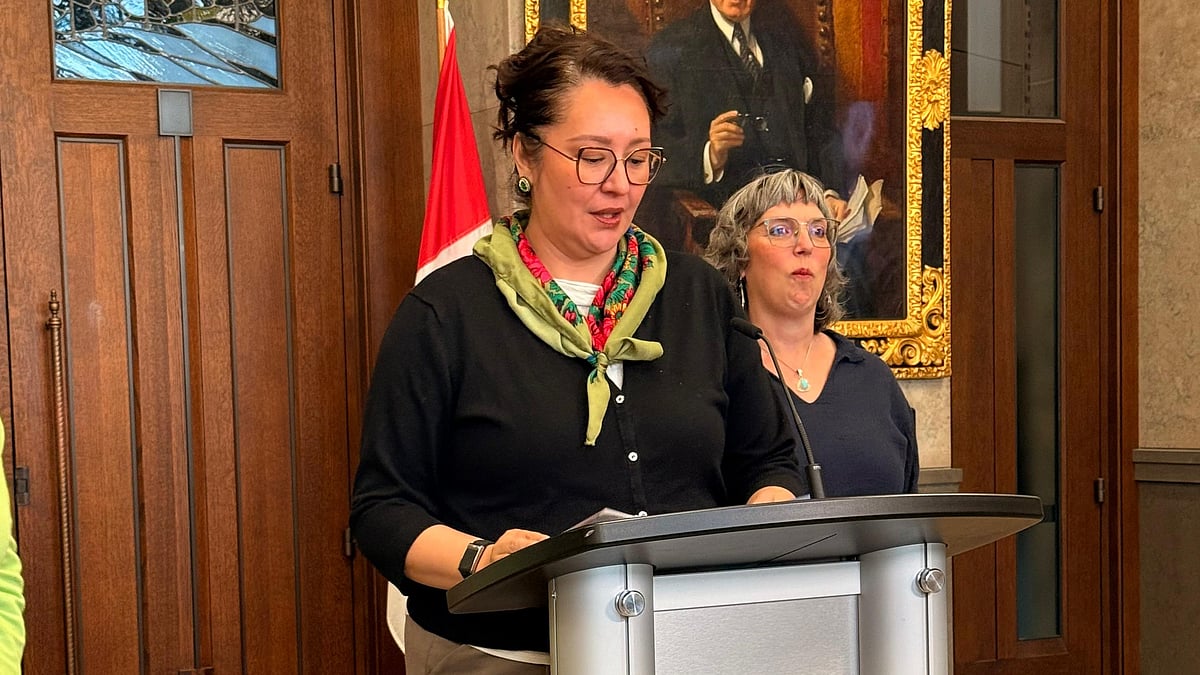
During a media appearance, Hajdu criticized Conservative Party members for creating confusion around the government’s approach to Indigenous land management and ownership structures. She specifically addressed claims that recent federal initiatives would eliminate property rights for certain groups, calling these assertions “completely false” and politically motivated.
“What we’re seeing is a deliberate campaign to misrepresent government policies regarding Indigenous land rights and self-governance,” Hajdu said. “This type of misinformation damages the reconciliation process and creates unnecessary fear among Canadians.”
The minister’s comments come amid ongoing national discussions about how to modernize the relationship between the federal government and First Nations communities, particularly regarding property management on reserves. Current systems under the Indian Act have long been criticized for limiting economic development and individual property rights for Indigenous peoples.
Conservative leaders have raised concerns about proposed changes to land management frameworks, suggesting they could undermine individual property rights and create economic uncertainty. Opposition critics have pointed to specific legislative proposals they claim would centralize land control rather than empowering individual band members.
Hajdu countered these claims, explaining that government initiatives aim to create more autonomy for First Nations communities to develop their own property systems. “The goal is to move away from the paternalistic approach of the Indian Act toward systems designed by and for Indigenous peoples themselves,” she stated.
Indigenous economic experts have highlighted that outdated property management systems on reserves have historically hampered investment and wealth creation. Tom Flanagan, a professor of political science and author on Indigenous economic development, has noted that “without clear property rights, it’s difficult to attract investment or use land as collateral for business development.”
The property rights debate intersects with broader issues of Indigenous self-governance and economic sovereignty. Many First Nations leaders advocate for greater control over their territories while maintaining collective stewardship approaches that differ from Western individual property ownership models.
Chief Darcy Bear of Whitecap Dakota First Nation, whose community has implemented its own land management code, pointed out the benefits of Indigenous-led property systems: “When we took control of our land management, we saw economic development increase dramatically. The key is having the authority to create systems that work for our specific community.”
The federal government has invested in several programs aimed at transitioning interested First Nations away from Indian Act constraints, including the First Nations Land Management regime, which allows participating communities to develop their own land codes.
Political analysts suggest that property rights discussions have become increasingly polarized in Canadian politics. Grace Skogstad, a political science professor at the University of Toronto, notes that “land management approaches have become proxy battles for larger philosophical differences about collective rights versus individual rights.”
The dispute highlights the complexity of reconciliation efforts and the challenges of reforming systems established under colonial legislation. Indigenous communities themselves hold diverse views on the ideal balance between collective land stewardship and individual property rights.
Minister Hajdu emphasized that any changes to property systems would only proceed with the consent and participation of affected First Nations. “This is about creating options and removing barriers, not imposing new restrictions,” she said.
As the debate continues, Indigenous advocacy organizations have called for more nuanced discussions that move beyond partisan rhetoric and center Indigenous voices in policy development. They stress that property systems must respect both treaty rights and the economic aspirations of community members.
With federal elections on the horizon, observers expect Indigenous property rights to remain a contentious political issue, highlighting the ongoing challenges in Canada’s reconciliation journey.
Fact Checker
Verify the accuracy of this article using The Disinformation Commission analysis and real-time sources.

16 Comments
Modernizing the relationship between the government and First Nations is a sensitive but critical task. I hope all sides can approach this in good faith.
Absolutely. Balancing individual and collective rights, economic development, and self-governance is challenging but necessary for real progress.
The minister’s comments highlight the political tensions around this issue. I’m curious to learn more about the specific policy proposals and their potential impacts.
This debate touches on important issues of self-determination, economic development, and the legacy of colonialism. Thoughtful, evidence-based policymaking will be essential.
Well said. Maintaining an open, respectful dialogue while addressing historical injustices will be crucial for progress.
Reconciliation between Indigenous and non-Indigenous Canadians requires hard work and compromise on all sides. I hope this debate can be elevated above partisan politics.
Interesting developments around Indigenous land rights and property management. It’s important to have an open and evidence-based dialogue on these complex issues to promote reconciliation.
Agreed, accusations of misinformation on both sides rarely help. Constructive discussions focused on finding fair solutions are key.
The minister’s comments suggest this is a politically charged issue. I’m curious to learn more about the specific policy proposals and their potential impacts on Indigenous communities.
Agreed. Understanding the nuances and trade-offs involved will be key to finding a balanced, equitable approach.
This debate touches on fundamental questions of property rights, self-determination, and the legacy of colonialism. I hope rational, evidence-based policymaking can prevail.
Modernizing land rights and governance structures for Indigenous communities is a complex challenge. I hope all stakeholders can engage constructively to chart a path forward.
Strengthening Indigenous land rights and promoting economic opportunities are worthy goals, but the path forward requires nuance and compromise from all stakeholders.
Well said. Simplistic narratives from any side are unlikely to resolve these longstanding, complex issues.
Accusations of misinformation are common in sensitive policy areas like this. It’s crucial that all parties engage in good-faith dialogue to find durable solutions.
Absolutely. Cooler heads and open minds will be essential to make meaningful progress on this issue.