


Listen to the article
EU Convenes Media Professionals to Combat Misinformation Ahead of Ekiti Governorship Election
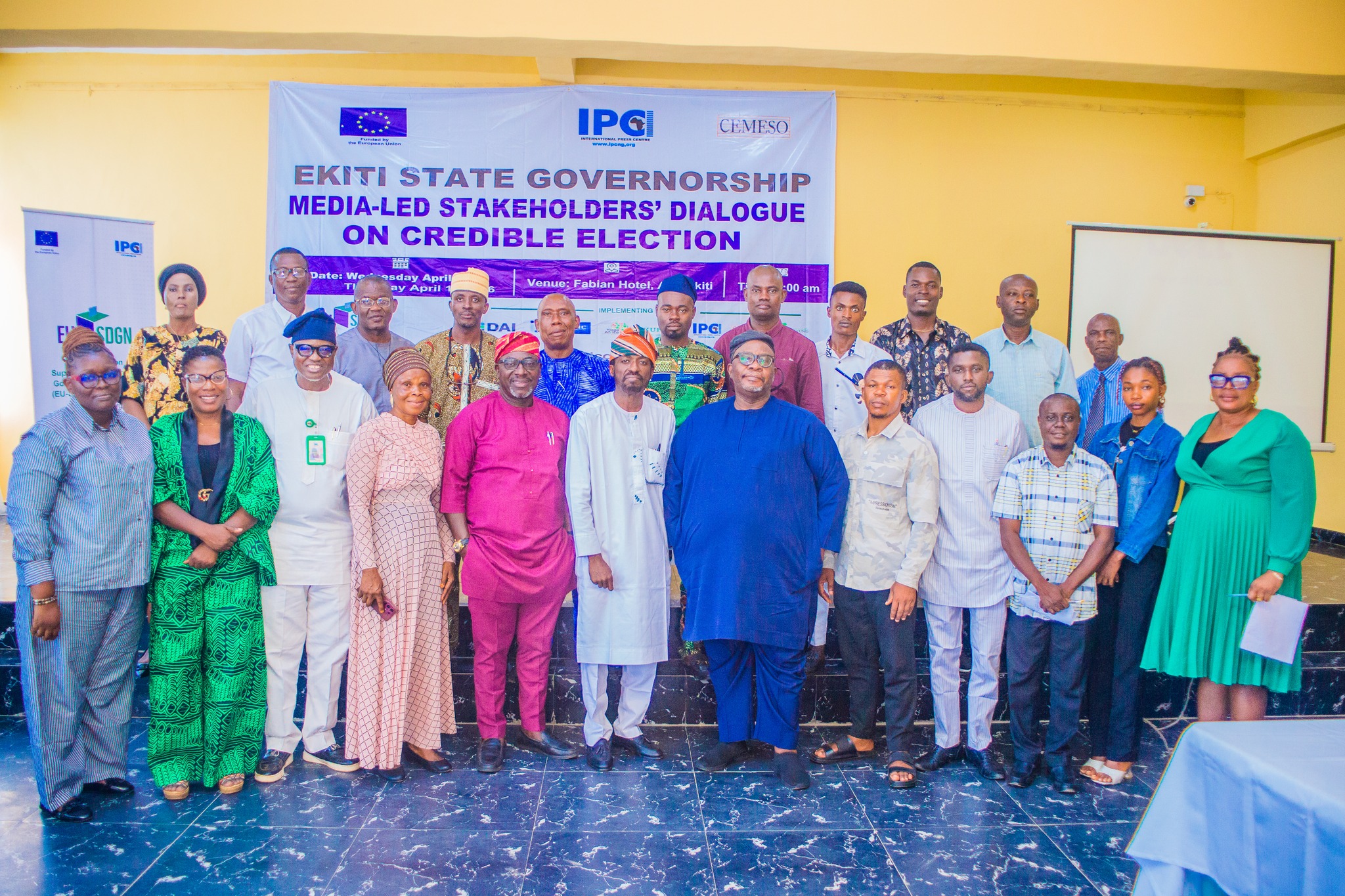
In a strategic move to safeguard electoral integrity, the European Union has gathered media professionals and key stakeholders in Ado-Ekiti to address the growing threat of misinformation ahead of the upcoming Ekiti State governorship election.
The one-day dialogue, organized under the EU’s Support to Democratic Governance Programme (EU-SDGN), brought together journalists, academics, and civil society representatives to strengthen media capacity for accurate, ethical, and conflict-sensitive reporting during the electoral period.
The timing of this intervention reflects growing concerns about the impact of false information on democratic processes in Nigeria, where digital platforms have accelerated the spread of unverified claims and politically motivated narratives.
Professor Adebola Adewunmi Aderibigbe from the Federal University Oye-Ekiti (FUOYE) challenged journalists to transcend routine event coverage and embrace a more deliberate approach to agenda-setting. He emphasized that media practitioners must prioritize issues directly affecting voters, including governance quality, public service delivery, and electoral credibility.
“The press has a responsibility to move beyond superficial reporting and focus on substantive issues that shape governance outcomes,” Aderibigbe noted during his presentation. The session explored how editorial decisions influence public perception and voter behavior, particularly critical in Ekiti’s politically charged environment.
Taiwo Obe of The Journalism Clinic led an interactive segment providing practical insights into newsroom decision-making. Through simulation exercises and collaborative activities, participants identified priority election stories, refined their storytelling approaches, and discussed effective deployment of digital tools to reach broader audiences.
The workshop placed particular emphasis on content timing, narrative framing, and platform selection. Participants were encouraged to produce content that balances engagement with evidence-based reporting—a critical consideration in an era where attention-grabbing headlines often supersede factual accuracy.
In one of the workshop’s most productive sessions, journalists presented election coverage plans they intend to pursue. These proposals demonstrated a collective commitment to balanced reporting, analytical depth, and solution-oriented journalism that could help voters make informed choices.
Obe stressed that constructive reporting approaches can significantly reduce tensions during electoral periods. “Forward-looking journalism that highlights potential solutions rather than amplifying divisions is essential to maintaining public trust in both the media and democratic institutions,” he explained to participants.
Lanre Arogundade, Executive Director of the International Press Centre (IPC), reinforced the importance of adhering to professional standards during election coverage. He urged journalists to prioritize inclusivity, strengthen verification processes, and avoid content capable of inciting conflict.
“Misinformation and disinformation remain significant threats to electoral credibility,” Arogundade warned. “In our increasingly digital media landscape, journalists must serve as information gatekeepers by ensuring content is accurate, contextual, and responsibly presented.”
The dialogue concluded with participants identifying likely coverage challenges and outlining practical strategies to navigate Ekiti’s complex political terrain while maintaining journalistic integrity.
This media engagement initiative forms part of broader EU efforts to strengthen democratic governance in Nigeria through the EU-SDGN program. The European Union has invested significantly in similar capacity-building exercises across Nigeria, recognizing the pivotal role that professional journalism plays in sustaining democratic institutions and electoral transparency.
Political analysts view the Ekiti governorship election as particularly significant, not only for the state’s governance but also as a potential indicator for Nigeria’s broader political climate ahead of the next general election cycle. Media coverage will likely influence public perception of electoral credibility and institutional performance.
As election day approaches, the effectiveness of this intervention will be measured by the quality of reporting that emerges from Ekiti’s media landscape and its impact on public discourse surrounding the electoral process.
Fact Checker
Verify the accuracy of this article using The Disinformation Commission analysis and real-time sources.

8 Comments
This is a timely and necessary initiative to address the threat of misinformation ahead of the Ekiti election. Accurate, ethical reporting is crucial for preserving the integrity of the democratic process.
I agree. The media must play a proactive role in combating the spread of false narratives and politically motivated claims during this critical period.
Kudos to the EU for convening this timely dialogue. Maintaining public trust in the electoral process is critical, and the media has a vital role to play in that effort.
The accelerated spread of unverified claims on digital platforms is a major challenge that needs to be addressed. I’m curious to learn more about the specific strategies discussed to tackle this issue.
Good point. Equipping journalists with the tools and skills to effectively fact-check and debunk misinformation on social media should be a key part of this initiative.
Strengthening media capacity for accurate and conflict-sensitive reporting is a wise investment in Nigeria’s democratic future. I hope this dialogue leads to tangible improvements in journalistic standards.
Professor Aderibigbe’s call for journalists to prioritize issues that directly affect voters is spot on. Covering the real concerns of the electorate should be the top priority.
Absolutely. The media has a responsibility to inform the public on the substantive governance and policy issues at stake, not just sensational headlines.