


Listen to the article
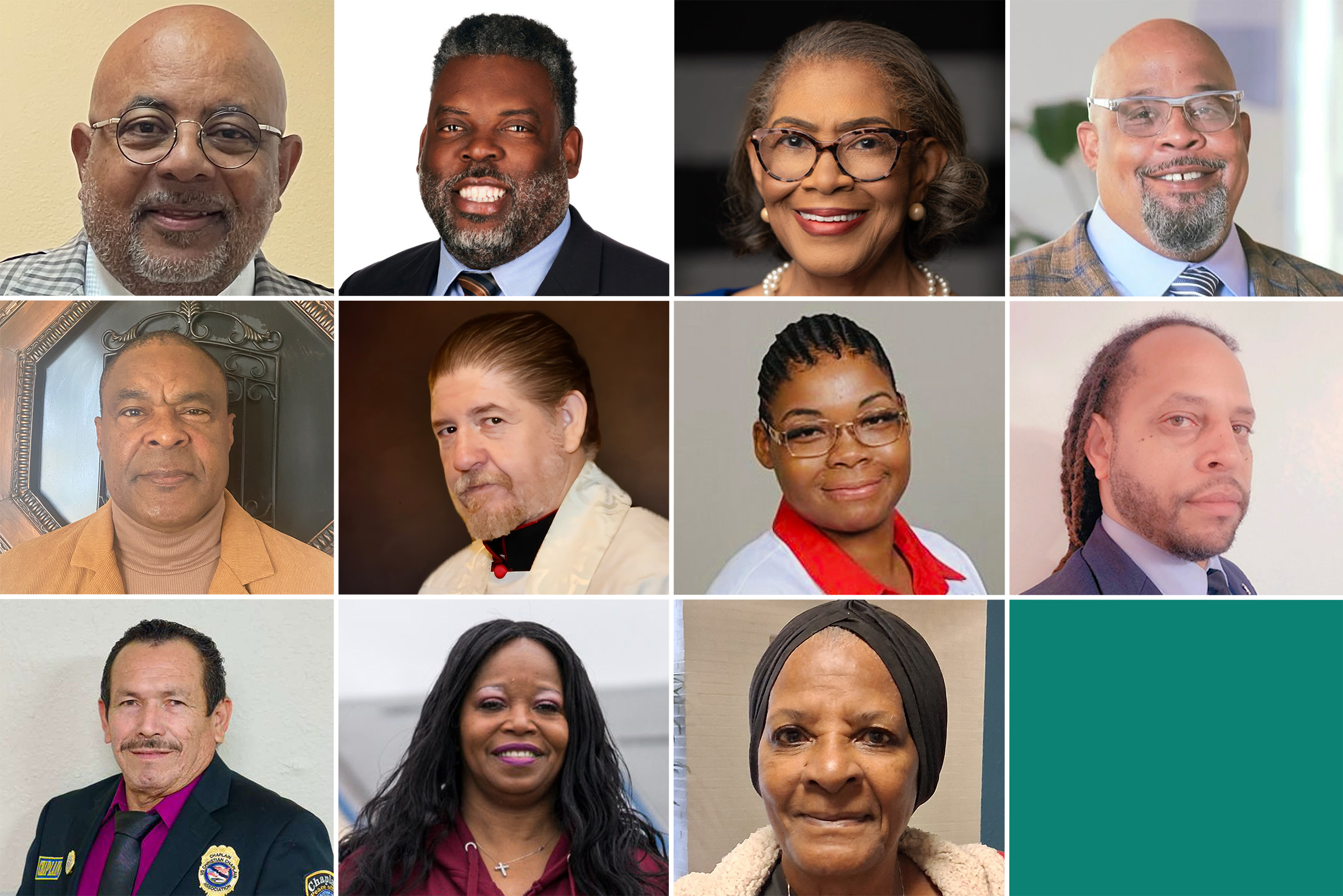
In a conference room at the Brighter Outlook multipurpose center in Stop Six, a diverse group of east Fort Worth community leaders gathered in early February. These Black and Hispanic community figures—ranging from pastors to activists—came together to discuss what Reverend Edward Justice described as “the second most important factor in maintaining quality of life”: health.
Since 2021, the Stop Six Community Corps has been working tirelessly to combat medical misinformation in east Fort Worth communities through direct, personal engagement. Though only a few of the group’s 11 members have formal medical backgrounds, they’ve collectively leveraged their standing as trusted community figures to provide reliable health information to their neighbors.
“We’ve convinced many individuals that this was a positive program that we were part of,” said Christene Moss, a retired nurse and former longtime Fort Worth Independent School District trustee.
The initiative began during the height of the COVID-19 pandemic when Linda Fulmer, executive director of Healthy Tarrant County Collaboration, noticed a concerning trend. While local government officials were dispensing health information, vaccine rates remained disproportionately low in communities of color. CDC data showed that from December 2020 to November 2021, only 47.3% of Hispanics and 46.3% of Black people nationwide had received the COVID-19 vaccine, compared to 59% of white people.
“We needed to have a way to have a group of people who are trusted in the community already become the messengers,” Fulmer explained. With an 18-month grant from Tarrant County Public Health, she recruited community leaders from Stop Six to help bridge this gap—a strategy that echoed similar initiatives implemented across the country during the pandemic, according to the American Health Association.
Each member of the Corps brings personal motivation to their work. Reverend Bruce Datcher, pastor of Ebenezer Missionary Baptist Church and the first person Fulmer approached, had a particularly compelling reason to participate. In late 2020, he was one of five North Texas ministers hospitalized with COVID-19—and the only one who survived.
“Ministers from across this country that were associates of mine died from COVID during that time,” Datcher recalled, noting the numerous funerals he attended during that period.
For Moss, addressing medical misinformation required acknowledging its roots in historical context. “Once you can break that barrier and they start listening to you, then I was able to convince others about the disease and how dreadful it was,” she said, referring to her efforts to encourage neighbors to get vaccinated.
Carlos Walker, director of FWISD Family Action Center, joined the initiative out of concern for the health disparities evident in east Fort Worth. “Just looking at data for this area, that was a concern for me,” he said, expressing his desire “to see how I could be a part of helping change that trajectory for people.”
The Corps members’ approach to dispelling misinformation varied based on their roles in the community. Justice played health videos on screens in his church, while Datcher and Reverend Sergio Diaz distributed flyers with clear true/false statements. Shuntoyia Shaw, a mobile phlebotomist, used her home visits to address misconceptions her clients held, and Doris Curvey, a retired educator, routinely checked with community members about their vaccination status.
Over the 18-month grant period, Corps members documented approximately 30,000 conversations about health-related topics. What began as an effort specifically targeting COVID-19 misinformation has evolved into a broader initiative addressing general health concerns and disparities in the community. Questions now range from seasonal issues like cedar fever and allergies to emerging health news.
Benito Leiva, North Texas coordinator of the U.S. Christian Chaplain’s Association, has witnessed growing trust within Hispanic neighborhoods in east Fort Worth. “Sometimes, Hispanics like to see results before committing,” Leiva observed. “Through the time that we’ve been in this program, we’ve seen more people listening.”
When the initial funding ended, Fulmer secured the project’s continuation in April 2024 through the National Institutes of Health Community Engagement Alliance (CEAL), a research network developed to support communities struggling during the pandemic. The Stop Six Community Corps is now one of six projects within the Texas CEAL Consortium.
Palak Desai, senior project coordinator at UNT Health Fort Worth’s Institute for Health Disparities, noted that since 2020, Texas CEAL teams have collaborated with 62 partner groups and reached over two million people. “Two million may not seem like a lot in Texas, but it’s still 2 million more than before. And that has shown that we’re actually making an impact on these people’s lives,” Desai said.
Looking ahead, Fulmer hopes the community work will continue beyond the project’s current end date in 2028. “It’s important to always have, particularly a community that tends to be disproportionately impacted by poor health, chronic diseases, social determinants of health, a network of people that the community knows they can turn to for information,” she emphasized.
The Stop Six Community Corps stands as a testament to the power of trusted voices in overcoming health disparities and misinformation—demonstrating that sometimes the most effective medical messengers aren’t medical professionals at all, but rather the familiar faces of community leaders who have earned their neighbors’ trust.
Fact Checker
Verify the accuracy of this article using The Disinformation Commission analysis and real-time sources.

14 Comments
I’m curious to learn more about the specific tactics and messaging the Stop Six Community Corps has used to engage residents and provide reliable health information. Tailoring the approach to the local context seems key.
That’s a great point. Understanding the community’s unique needs and dynamics is crucial for developing effective outreach strategies to combat misinformation.
Kudos to the Healthy Tarrant County Collaboration for identifying this critical need and supporting the Stop Six Community Corps’ important work. Combating misinformation requires a multi-pronged approach.
Absolutely, public-private partnerships like this can be very effective in reaching people at the community level. Addressing health misinformation head-on is so important.
It’s great to see these east Fort Worth leaders taking proactive steps to provide reliable health information to their neighbors. Accessible, trustworthy guidance is so crucial.
Agreed, this type of grassroots, community-based effort to address misinformation is really admirable. Empowering local voices is a smart strategy.
This is an interesting initiative to combat medical misinformation in the community. Building trust and providing reliable health information from respected local figures is a smart approach.
Agreed, community engagement is key to addressing public health challenges. Leveraging local leaders’ standing can be an effective way to reach people.
This is a great example of how targeted, community-based efforts can make a real difference in addressing public health challenges. Kudos to the Stop Six Community Corps for their important work.
Absolutely, this kind of on-the-ground, personalized approach is so valuable. Empowering local leaders to share reliable information with their neighbors is a smart strategy.
Kudos to the Stop Six Community Corps for their efforts. Tackling misinformation head-on, especially during the pandemic, must have been challenging but critically important work.
Absolutely, combating medical misinformation is so vital for community wellbeing. Their approach of personal engagement by trusted local leaders sounds very impactful.
It’s heartening to see community leaders taking such a proactive, grassroots approach to improving public health outcomes. Their dedication to serving their neighbors is admirable.
I agree, this kind of hyper-local, community-driven initiative can be incredibly powerful. Leveraging trusted voices to spread accurate information is a smart tactic.