


Listen to the article
Choose Columbus Director Addresses Concerns Over $5 Billion Data Center Project
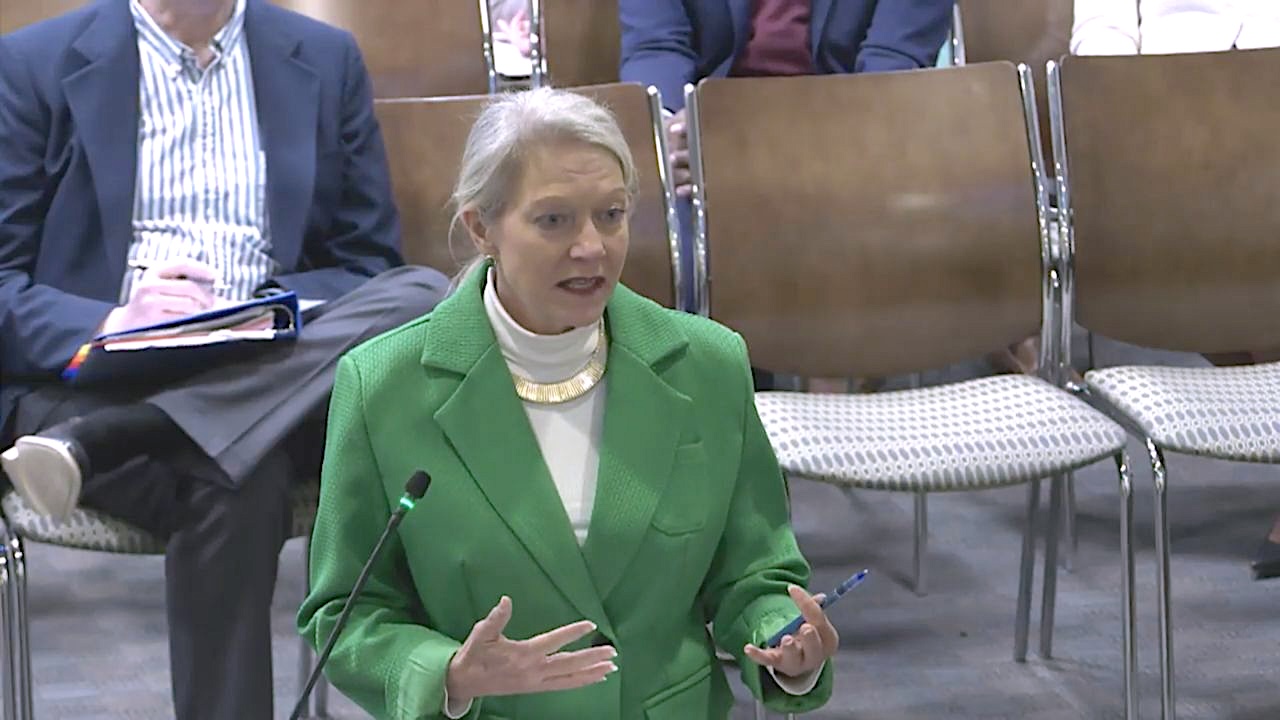
Missy Kendrick, Director of Choose Columbus, made a presentation at Tuesday’s city council meeting to address growing public concerns about a major data center development planned for the city. Responding to numerous citizens who voiced apprehension during the public agenda portion of the meeting, Kendrick worked to clarify misconceptions about the facility’s potential impact.
“In simple terms, a data center is a warehouse full of computers,” Kendrick explained to the audience, noting that Columbus has hosted similar facilities for five decades. The planned development, known as Project Ruby, represents a significant technological and economic investment in the region.
Kendrick emphasized that Project Ruby will not necessarily be an artificial intelligence data center, as some residents had speculated. She also clarified that the facility will draw its power from Flint Energies rather than Georgia Power, addressing concerns about strain on local electrical infrastructure.
Noise pollution, a common worry with data centers, was another topic Kendrick addressed. She noted that the nearest residential areas would be located approximately one mile from the facility. While acknowledging that early-generation data centers were known for creating noise disturbances and consuming large quantities of water, she explained that technological advancements have significantly reduced these impacts in modern facilities.
“I welcome every opportunity to speak with leadership or concerned citizens about the data center,” Kendrick stated in comments to Now Georgia. “I look forward to sharing that this project will not negatively impact the environment, our water capacity, nor our electricity supply. I have found that being accessible, and actually speaking with people and providing them with correct information goes a long way towards alleviating many of their concerns.”
The development company, Habitat Partners, has selected a site on Layfield Road in northeastern Columbus for the project. To further address community concerns, Kendrick is organizing town hall-style meetings, with the next public forum scheduled for March 6, 2026, at a location yet to be announced.
The economic scale of Project Ruby is substantial, with planned investment potentially exceeding $5.18 billion between 2027 and 2030. This multi-year capital investment will encompass land acquisition, construction, and equipment installation. According to information released by Choose Columbus, the project is expected to dramatically increase the county’s tax base, generating an estimated $68.7 million in annual property tax revenue by 2030 before depreciation.
Selvin Hollingsworth, Chairman of the Development Authority of Columbus, Georgia, highlighted the project’s significance: “This project represents one of the largest technology investments in our region’s history. Its economic and fiscal impacts will expand opportunity, enhance our tax base, and position Columbus as a competitive hub for future data-driven industries.”
Columbus Mayor Skip Henderson also expressed support for the development, focusing on its potential economic benefits. “Economic development is the fiscal heartbeat that drives any successful community. This project puts people from our region to work and provides sustainable revenues that will continue to enhance the quality of life for the residents of this community,” Henderson said.
The data center project comes at a time when many U.S. cities are competing to attract technology infrastructure investments, which can generate substantial tax revenue while typically requiring less public service support than other types of development. However, as the community response in Columbus demonstrates, these facilities also raise questions about resource usage, environmental impact, and compatibility with surrounding areas.
Through continued public engagement, local officials hope to build community understanding and support for what represents one of the most significant technology investments in Columbus’s economic history.
Fact Checker
Verify the accuracy of this article using The Disinformation Commission analysis and real-time sources.

12 Comments
A $5 billion data center investment sounds like a significant economic opportunity for Columbus. I hope the community can work together to ensure the project’s success while mitigating any potential downsides.
Noise pollution is a common issue with data centers, so I’m glad the director addressed that directly. Mitigation measures will be important to maintain quality of life for nearby residents.
Interesting that this data center will use power from Flint Energies instead of Georgia Power. I wonder if that was a strategic decision to reduce strain on the local grid.
I’m curious to learn more about the economic and technological benefits this data center could bring to the Columbus region. Striking the right balance between progress and community concerns will be key.
It’s good the director took the time to address citizen concerns directly at the city council meeting. Open dialogue and transparency help build confidence in these types of major projects.
Agreed, public engagement and addressing misconceptions upfront is crucial for a project of this scale.
Interesting to hear that Columbus has hosted similar data center facilities for decades. This project must build on that local expertise and infrastructure.
Yes, the city’s existing experience with data centers should help inform how this new project is managed and integrated into the community.
It’s good to see the Choose Columbus initiative addressing public concerns over this major data center project. Transparency and open communication are important for building trust in the community.
It’s good to see the Choose Columbus initiative taking a proactive approach to address community concerns. Transparent communication and a collaborative spirit will be key to the project’s success.
Clarifying the facts around power sources, noise pollution, and the nature of the facility is helpful in addressing misconceptions. Data centers are essential infrastructure, but their impacts need to be well-understood.
I’m glad the director clarified that this won’t necessarily be an AI data center, as that seems to have been a source of concern for some residents. Accurate information is important.