


Listen to the article
Food experts gathered in Dublin on Thursday to address the growing threat of food safety misinformation at a major conference organized by Ireland’s food regulator.
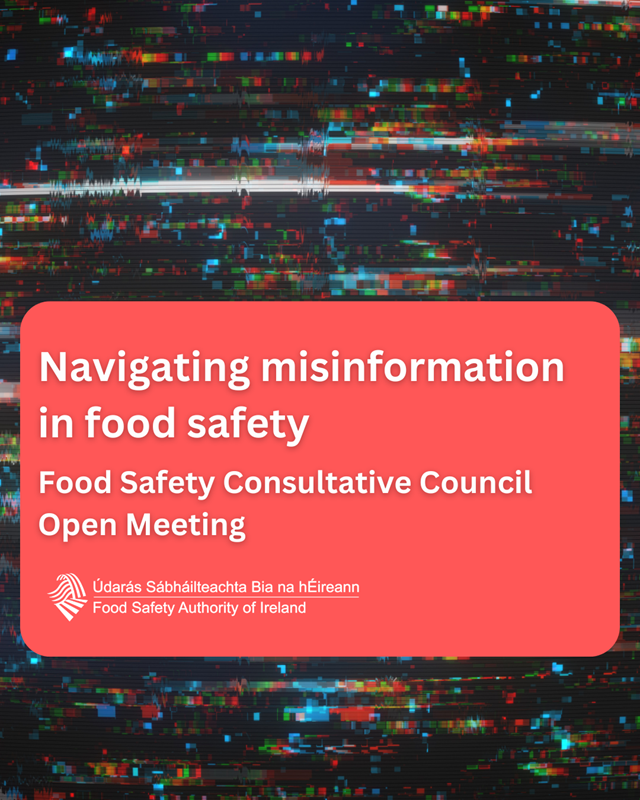
The Food Safety Authority of Ireland (FSAI) hosted over 250 attendees at the Convention Centre Dublin for its open meeting titled “Navigating Misinformation in Food Safety,” bringing together specialists from medicine, academia, and regulatory bodies to examine how false information spreads and impacts public health.
Journalist and entrepreneur Mark Little delivered the keynote address at the event, which was chaired by author and journalist Suzanne Campbell. The conference featured representatives from the FSAI, University College Dublin, and the Irish Cancer Society who explored the psychological factors driving misinformation and its real-world consequences for consumer confidence and behavior.
Greg Dempsey, Chief Executive of the FSAI, emphasized that while digital platforms offer valuable ways to engage with the public, they also create unprecedented challenges for food safety communication.
“In today’s digital environment, misinformation can spread faster and further than ever before,” Dempsey told attendees. “When it comes to food safety, inaccurate or misleading information can distort risk, create unnecessary fear, and, in some cases, influence behaviors that may put public health at risk.”
The timing of the conference reflects growing concern among food safety authorities worldwide about the proliferation of unscientific claims and conspiracy theories related to food production, ingredients, and safety measures. Recent years have seen a surge in online misinformation ranging from unfounded claims about food additives to dangerous home preservation techniques shared on social media platforms.
Food safety misinformation presents particular challenges because incorrect practices can lead to serious health consequences, including foodborne illness outbreaks. Public health officials have increasingly found themselves competing with viral social media content that often lacks scientific backing.
Dempsey stressed the importance of evidence-based communication: “As we navigate an increasingly complex information landscape, it is essential that food safety advice remains firmly grounded in science and communicated in a clear and transparent manner.”
The conference featured contributions from Professor Ciara Greene from the School of Psychology at University College Dublin, who likely addressed the cognitive aspects of misinformation spread, and Dr. Gary McGowan, who brings expertise as a doctor, physiotherapist, and trainer. Several FSAI specialists also presented, including Jane Ryder, Communications Manager; Jill Murphy, Senior Technical Executive; Rob Philips, Chief Specialist Environmental Health; and Gail Carroll, Director of Regulatory Affairs and Compliance Building.
Dr. Claire Kilty, Head of Research at the Irish Cancer Society, also contributed to the discussions, reflecting the broader health implications of food safety misinformation, particularly regarding claims about foods causing or preventing cancer.
“Addressing misinformation requires sustained effort, collaboration, and a strong commitment to protecting public trust,” Dempsey added. “The FSAI remains committed to ensuring that consumers have access to accurate, evidence-based information to support informed decisions.”
The meeting was organized by the FSAI’s Food Safety Consultative Council, which serves as a forum for debate on food safety issues and provides advice to the FSAI Board. The Council, chaired by Jamie Knox, Vice President Global Beverage Concentrate Operations at Keurig Dr Pepper, includes representatives from consumer groups, the food industry, inspectorates, and academia.
The Council meets quarterly to examine different segments of the food chain and evaluate existing and needed food safety initiatives. Its recommendations help shape the FSAI’s agenda and regulatory approaches to ensure consumer protection remains paramount in Ireland’s food safety system.
Fact Checker
Verify the accuracy of this article using The Disinformation Commission analysis and real-time sources.

9 Comments
Interesting to see how digital platforms can both enable and exacerbate misinformation. Proactive communication strategies will be important.
Absolutely. Leveraging digital channels while countering false claims will require a nuanced approach.
Food safety is such a sensitive and critical issue. Kudos to the regulators and experts for taking this threat seriously and convening this event.
The psychological factors driving misinformation are an important area to explore. Understanding human biases and behaviors will help craft more effective responses.
Curious to learn more about the specific strategies and best practices that emerged from this conference for combating misinformation in food safety.
Me too. Implementing effective solutions will require collaboration across industry, academia, and government.
This is an important topic that extends beyond just food safety. Misinformation can have devastating impacts across many sectors. Glad to see proactive efforts.
Combating misinformation in food safety is crucial for public health. It’s good to see experts gathering to tackle this challenge head-on.
Agreed. Spreading accurate, science-based information is key to maintaining consumer trust.