


Listen to the article
Medical Professionals Debate Engaging with Vaccine Skeptics
Two prominent vaccine advocates recently tackled a thorny question facing today’s medical community: Should doctors engage directly with those they consider “misinformation spreaders” on vaccine issues?
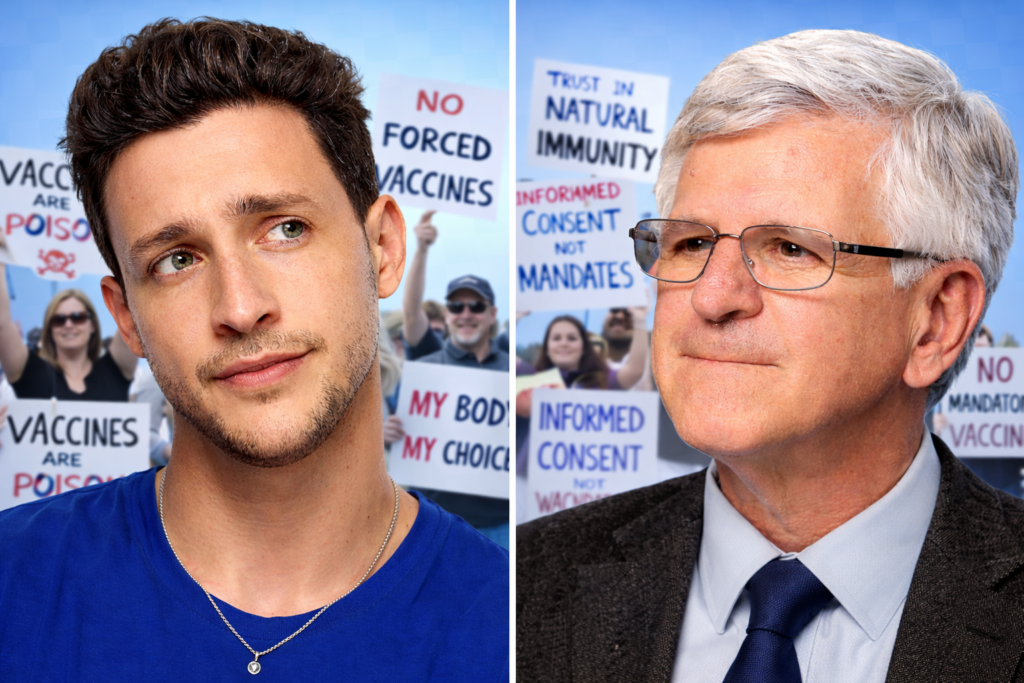
The discussion unfolded during a conversation hosted by Dr. Jeremy Faust of Brigham and Women’s Hospital, who brought together vaccine expert Dr. Paul Offit and social media health influencer Dr. Mikhail Varshavski, better known as “Dr. Mike,” to share their contrasting approaches to addressing vaccine hesitancy.
Offit, a well-known vaccine developer and former member of the FDA’s vaccine advisory panel, expressed reluctance to debate vaccine skeptics like Robert F. Kennedy Jr. He argued such engagements are counterproductive due to what he calls the “Gish gallop” strategy – a debate tactic where opponents overwhelm with numerous arguments, making thorough refutation impossible in limited time.
“It’s my idea of hell, frankly, like one of the circles of Dante’s Inferno,” Offit remarked about confronting groups of vaccine skeptics simultaneously. Instead, he prefers communicating through his Substack newsletter, where he can thoroughly address misconceptions without interruption or time constraints.
Offit emphasized that his writing allows him to influence public health officials globally – reaching decision-makers rather than attempting to convince entrenched skeptics directly. This approach reflects a growing strategy among medical professionals who focus on reaching persuadable audiences rather than the most vocal opponents.
By contrast, Dr. Mike recently took a more direct engagement approach, participating in a YouTube video titled “Doctor Mike vs 20 Anti-Vaxxers” on the Jubilee channel. This format placed him in direct conversation with vaccine skeptics, attempting to address their concerns face-to-face.
The contrasting approaches highlight a fundamental divide in how medical communicators address health misinformation in today’s fractured information landscape. While some experts believe direct engagement legitimizes fringe positions, others argue that refusing to participate leaves skeptics’ claims unchallenged in public forums.
This debate comes at a critical time when public health authorities worldwide struggle with growing vaccine hesitancy. The World Health Organization has identified vaccine hesitancy as one of the top ten threats to global health, with measles outbreaks resurging in areas with declining vaccination rates.
Medical communication experts point out that social media has fundamentally changed how health information – and misinformation – spreads. Platforms like YouTube, where Dr. Mike has amassed millions of followers, create new opportunities for health professionals to reach audiences directly, but also amplify voices that challenge scientific consensus.
Dr. Mike’s approach represents a generational shift in medical communication, embracing platforms where younger audiences consume information. His willingness to engage directly with skeptics reflects research suggesting that respectful dialogue can occasionally shift perspectives among those with moderate vaccine hesitancy.
Meanwhile, Offit’s strategy acknowledges the limitations of debate formats and prioritizes reaching influential decision-makers through detailed written analysis. His approach reflects concerns that public “debates” create false equivalencies between scientific consensus and fringe theories.
Public health communication researchers note that neither approach alone is sufficient to address the complex challenge of vaccine hesitancy. The most effective strategies likely combine multiple communication channels, tailored messages for different audiences, and an understanding that vaccine decisions are influenced by cultural, social and political factors beyond simple information gaps.
As public health challenges continue to evolve in a polarized information environment, the medical community’s ongoing conversation about effective engagement strategies remains crucial for preserving trust in evidence-based medicine.
Fact Checker
Verify the accuracy of this article using The Disinformation Commission analysis and real-time sources.
