


Listen to the article
Bangladesh Faces Deadly Measles Outbreak as Death Toll Rises to 166
At least 166 people have died in Bangladesh’s worst measles outbreak in decades, according to data published by the country’s Directorate General of Health Services (DGHS). The outbreak, which has already infected more than 19,000 people, marks the most severe measles crisis the South Asian nation has experienced in 20 years.
Amid the growing public health emergency, officials are working to dispel false information circulating online, including claims that the government has instructed hospitals and medical facilities to withhold reports of child deaths due to measles. These rumors have been amplified by the Awami League party of ousted premier Sheikh Hasina through social media posts.
“The information that we release everyday includes the confirmed death and the suspected death of measles,” Dr. Md Zahid Raihan, spokesperson for the DGHS, told AFP. “If we wanted to hide the number of total deaths, we would not include the suspected death. So, the claim does not have any basis.”
Since April 3, the DGHS, an agency under Bangladesh’s Ministry of Health and Family Welfare, has been publishing regular updates on the outbreak, including detailed data organized by the country’s divisions and provinces. These reports distinguish between suspected and confirmed measles infections.
Bangladesh’s measles vaccination campaign, originally scheduled for 2024, was delayed due to political unrest that led to the overthrow of Sheikh Hasina’s government. This disruption in the country’s immunization program has contributed to the current crisis.
Prime Minister Tarique Rahman ordered an urgent investigation in late March after health officials reported more than 600 measles cases across the country. Since then, local media outlets, including The Daily Star and The Business Standard, have provided consistent coverage of the outbreak based on government figures.
Dr. Md Mahbubul Hoque, Director of Bangladesh Shishu Hospital and Institute, the country’s largest children’s hospital, also refuted claims about government instructions to conceal fatalities. “The daily updates of the DGHS include our hospital’s data in its report. We also keep a copy as proof, but we do not publish it on our website,” he explained.
Measles, one of the world’s most contagious diseases according to the World Health Organization (WHO), spreads through respiratory droplets from coughs and sneezes. While it can affect people of any age, it most commonly targets children and can lead to serious complications including brain swelling and severe respiratory problems.
Health experts note that in many cases, testing for measles is either not conducted or patients succumb to the disease before tests can be administered. According to the WHO, the vast majority of measles-related deaths occur among unvaccinated or under-vaccinated children under five years old.
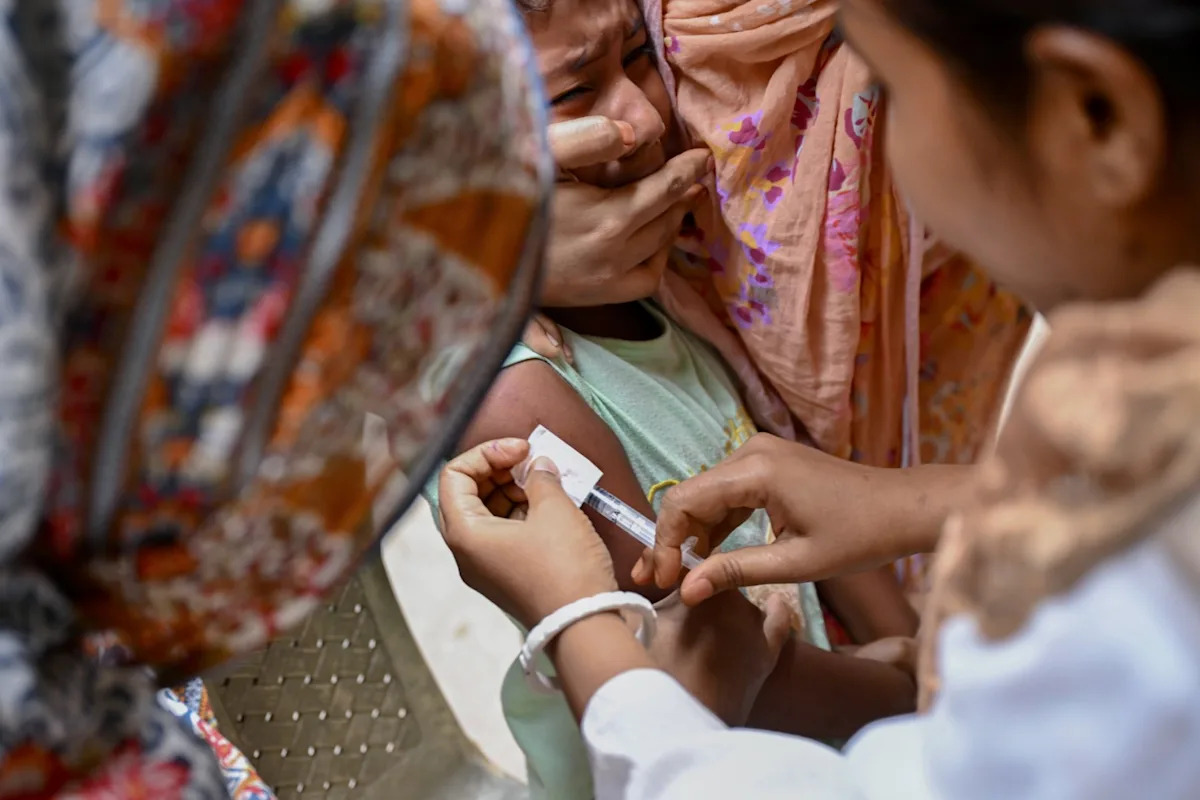
The Bangladesh government has launched emergency vaccination campaigns to contain the spread of the disease. Public health officials are working to reach vulnerable populations, particularly children in remote and underserved areas where vaccination rates tend to be lower.
This outbreak represents a significant setback for Bangladesh, which had previously made substantial progress in immunizing its population against preventable diseases. The current crisis highlights the fragility of public health infrastructure during periods of political instability and the critical importance of maintaining consistent vaccination programs.
As health authorities continue their response efforts, they face the dual challenge of treating existing cases while simultaneously working to prevent further spread through increased vaccination coverage and public education campaigns.
Fact Checker
Verify the accuracy of this article using The Disinformation Commission analysis and real-time sources.

6 Comments
Transparency from health authorities is essential during a public health crisis like this. I hope they continue to release regular data on the confirmed and suspected measles deaths.
Agreed. Providing clear and timely information is key to building public trust and ensuring an effective response.
It’s troubling to see misinformation being spread about this crisis. The authorities should do everything they can to counter false claims and ensure people have access to accurate, science-based information.
Measles is a highly contagious disease that can be devastating, especially for vulnerable populations. I hope the Bangladeshi government is able to quickly contain this outbreak and prevent further loss of life.
This is a complex situation with lives at stake. I commend the Bangladeshi government for their efforts to fight the measles outbreak and encourage them to remain transparent and vigilant.
The measles outbreak in Bangladesh is very concerning. It’s critical that the government provide accurate information to the public and dispel any misinformation that could undermine the response efforts.