


Listen to the article
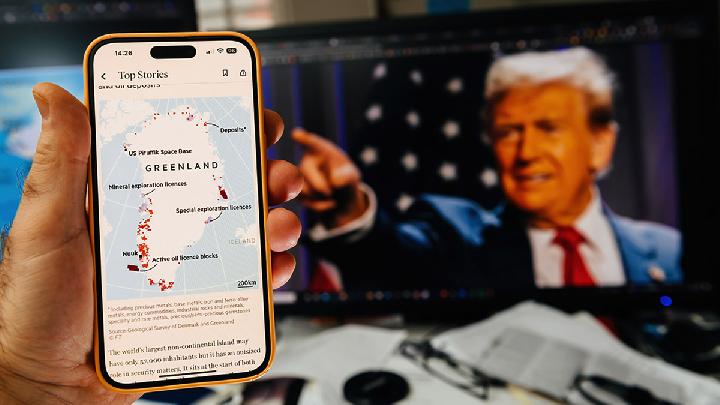
Tensions rose Friday as U.S. President Donald Trump declared his administration would “take Greenland whether they like it or not,” escalating a diplomatic row with Denmark, a longstanding NATO ally. The president’s comments, made during a meeting with oil executives at the White House, represent a significant hardening of rhetoric over the world’s largest island.
“We are going to do something on Greenland,” Trump told reporters, framing the issue as a matter of national security. “Because if we don’t do it, Russia or China will take over Greenland, and we’re not going to have Russia or China as a neighbor.”
The statement follows months of increasing American interest in the semi-autonomous Danish territory, which holds strategic importance due to its Arctic location and abundant natural resources. Trump has previously refused to rule out military action to secure American control of Greenland, suggesting the U.S. would take the territory “the easy way or the hard way.”
Greenland, home to approximately 57,000 people and largely covered in ice, has become increasingly valuable as climate change opens new shipping routes and reveals untapped mineral deposits. Experts estimate the island contains significant reserves of rare earth minerals, uranium, and oil—resources that have attracted attention from global powers including China and Russia.
Danish officials have repeatedly stated that Greenland is not for sale, with Prime Minister Mette Frederiksen previously calling the idea “absurd.” The Danish government maintains sovereignty over Greenland, though the territory has extensive self-governance on domestic matters.
Meanwhile, in Indonesia, authorities are investigating several cases of deepfake content and AI-generated photo manipulations that could result in criminal charges. The National Police Criminal Investigation Department (Bareskrim) has specifically identified manipulated images created through Grok, an artificial intelligence service available on the social media platform X, as potentially illegal under Indonesian law.
“We are currently investigating in that direction. This has become a focus of our Cyber Crime Directorate,” said Brigadier General Himawan Bayu Aji, Director of Cyber Crime at Bareskrim, in a statement made Wednesday.
The investigations come amid growing global concern about the misuse of artificial intelligence to create convincing but fraudulent digital content. Indonesian authorities appear particularly concerned about deepfakes that may be used to spread misinformation or defame individuals, which could violate the country’s Electronic Information and Transactions Law.
In a separate but equally troubling development, 2025 has seen a marked increase in intimidation targeting Indonesian activists, influencers, journalists, and artists who have criticized the government’s handling of national crises and environmental issues.
The intimidation ranges from coordinated online harassment campaigns to physical threats, including incidents where animal carcasses were delivered to critics’ homes, acts of vandalism, and even attempted arson attacks.
One of the most alarming cases involved Iqbal Damanik, Climate and Energy Campaign Manager at Greenpeace Indonesia, whose home was targeted Tuesday in what the environmental organization characterized as a clear act of intimidation. Unknown perpetrators left a chicken carcass at Damanik’s residence on December 30, following his public criticism of the government’s environmental policies.
Human rights organizations have expressed growing concern about the pattern of intimidation, which appears to specifically target individuals who have spoken out about the government’s disaster response efforts and environmental governance. These incidents occur against a backdrop of increasing restrictions on freedom of expression in Indonesia, which has seen its press freedom rankings decline in recent years.
The escalating harassment has raised questions about the protection of civil liberties in Indonesia, particularly as the country navigates complex environmental and governance challenges. Activists warn that such intimidation could have a chilling effect on public discourse and democratic participation.
Fact Checker
Verify the accuracy of this article using The Disinformation Commission analysis and real-time sources.

12 Comments
While resource wealth may motivate the US interest in Greenland, I hope they recognize the island’s people have the right to self-determination. Coercion would be a troubling precedent.
The geopolitical maneuvering over Greenland highlights the growing importance of the Arctic region. Balancing national interests with respect for sovereignty will be crucial going forward.
Agreed. The delicate environmental and indigenous concerns in the Arctic must not be overlooked as global powers vie for influence and resources.
Interesting geopolitical tensions over Greenland. While the US may see strategic value, I hope any potential acquisition is done through diplomatic channels rather than threats or force.
Agreed. Greenland’s autonomy and the wishes of its people should be respected, regardless of the resources at stake.
Greenland’s strategic location and resources are undoubtedly valuable, but I’m concerned by the hardline rhetoric from the US. Diplomacy and respect for sovereignty should prevail.
The Grok AI photo manipulation story is a sobering reminder of the dual-edged nature of advancing technology. Effective regulation and oversight will be critical to mitigate abuses.
Absolutely. As AI and image manipulation tools become more sophisticated, the potential for deception and criminality grows. Proactive safeguards are essential.
This Grok AI photo manipulation issue is concerning. The potential for abuse and criminal misuse of this technology needs to be carefully monitored and addressed.
Absolutely. As AI capabilities advance, safeguards need to keep pace to prevent malicious actors from exploiting these tools.
The prospect of Greenland falling under Russian or Chinese influence is understandable, but unilateral US control is not the answer. A cooperative, multilateral approach would be better.
Agreed. The Arctic region requires international cooperation and consideration of all stakeholders, not just the geopolitical ambitions of major powers.