


Listen to the article
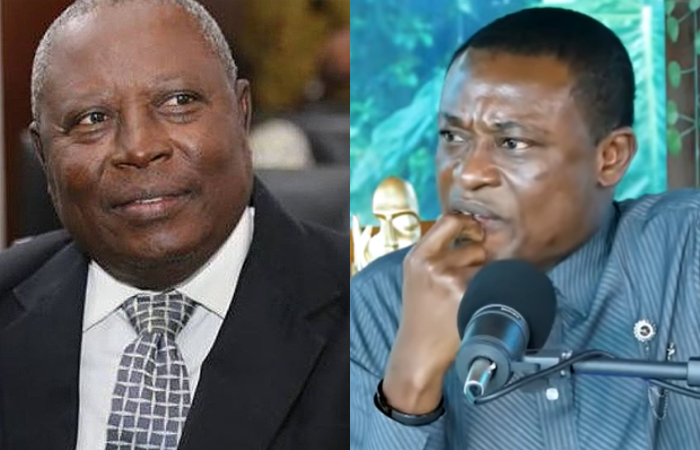
Martin Amidu, Ghana’s inaugural Special Prosecutor, has launched a scathing critique of his successor, Kissi Agyebeng, characterizing his tenure as one plagued by desperation, incompetence, and media manipulation.
In a strongly-worded opinion piece circulating in Ghanaian media, Amidu claimed that Agyebeng’s recent public statements, particularly a high-profile interview with popular talk show host KSM, were calculated moves to portray himself as a victim amid increasing calls for his dismissal from the anti-corruption office.
“As the calls for Kissi Agyebeng’s head to be guillotined increased, he grew desperate to position himself as the victim of persecution,” Amidu wrote. He cautioned that “he who rules by the media will be overthrown by the media,” suggesting that Agyebeng’s public relations strategy could ultimately backfire.
The criticism comes at a sensitive time for Ghana’s Office of the Special Prosecutor (OSP), an institution established in 2018 to independently investigate and prosecute corruption cases. The OSP was created as part of Ghana’s broader anti-corruption framework and was initially headed by Amidu himself, who resigned in November 2020 citing political interference.
Amidu’s critique extends beyond mere professional disapproval, questioning Agyebeng’s fundamental suitability for the role. “Kissi Agyebeng does not possess the high moral character and proven integrity to lead the fight against corruption in Ghana,” he stated bluntly. “He is dishonest to high heavens to be the Special Prosecutor of Ghana.”
The former Special Prosecutor further alleged that Agyebeng has been attempting to curry public favor through what he described as “gullible” sections of civil society organizations and media allies. According to Amidu, these efforts mask a failure to demonstrate the integrity and professionalism required of the position.
In a particularly damning accusation, Amidu suggested that both the previous Akufo-Addo administration and the current Mahama government have found it politically expedient to shield Agyebeng despite what he characterized as clear violations of the OSP Act. This implies a troubling political calculus that prioritizes political convenience over institutional integrity.
The public dispute highlights ongoing challenges in Ghana’s anti-corruption efforts. Since its establishment, the OSP has faced numerous obstacles including resource constraints, jurisdictional battles with other agencies, and questions about its operational independence.
Political analysts note that the effectiveness of anti-corruption institutions in Ghana has been hampered by political polarization, with accusations often viewed through partisan lenses. The OSP was specifically designed to operate independently of such influences, but Amidu’s allegations suggest the institution may not have fully escaped political entanglements.
The timing of these accusations is particularly significant as Ghana continues to grapple with governance issues that have contributed to its recent economic challenges, including a debt crisis that forced the country to seek International Monetary Fund assistance in 2022.
For his part, Agyebeng has previously defended his record, pointing to several high-profile investigations his office has undertaken. In the interview that apparently triggered Amidu’s response, Agyebeng had expressed frustration with what he described as institutional obstacles to the OSP’s work.
The controversy raises important questions about the future of Ghana’s anti-corruption architecture. The OSP was established with considerable public support and international backing as a specialized agency capable of prosecuting corruption cases free from political interference. These public disagreements between its first and second leaders risk undermining public confidence in the institution.
Neither the government nor Agyebeng has yet responded directly to Amidu’s latest accusations. However, this public clash between two figures who have both held Ghana’s premier anti-corruption position underscores the complex challenges facing efforts to combat corruption in the West African nation.
Fact Checker
Verify the accuracy of this article using The Disinformation Commission analysis and real-time sources.

16 Comments
This power struggle highlights the delicate balance that anti-corruption agencies must strike between public engagement and maintaining independence. Agyebeng has a difficult road ahead.
You’re right. Agyebeng needs to focus on delivering results and upholding the integrity of the OSP, rather than relying on media tactics.
The warnings from Amidu about media power are worth heeding. Agyebeng must be mindful of how he engages with the media to avoid undermining the OSP’s independence.
Amidu’s critique raises valid concerns about the risks of media power. Agyebeng would be wise to focus on his work and let his performance speak for itself.
This power struggle between Amidu and Agyebeng is quite fascinating. It speaks to the challenges of maintaining independence and public trust in anti-corruption agencies.
Absolutely. The public will be watching closely to see how Agyebeng navigates this delicate situation and upholds the integrity of the OSP.
This power struggle is a cautionary tale about the pitfalls of relying too heavily on media influence. Agyebeng must tread carefully to maintain the OSP’s credibility.
Absolutely. Transparency and integrity should be his top priorities, not media manipulation or self-promotion.
Amidu’s warning about media manipulation is a valid concern. Agyebeng must be cautious not to appear as if he is using the media to his own advantage.
You raise a good point. Agyebeng needs to focus on his work and let his actions speak for themselves, rather than relying too heavily on public relations.
The media’s role in shaping public perception is undeniable. Agyebeng must be mindful of how he navigates this landscape to maintain credibility and trust.
Agreed. He needs to strike a delicate balance between engaging with the media and avoiding the appearance of manipulation or self-promotion.
The power of the media is a double-edged sword, as this case highlights. Agyebeng must tread carefully in his public relations efforts to avoid further backlash.
Indeed, the media can make or break public figures. Agyebeng needs to strike the right balance between transparency and avoiding overexposure.
Amidu’s critique raises important questions about the role of the media in shaping public perceptions of anti-corruption efforts. Agyebeng must navigate this landscape carefully.
This power struggle highlights the importance of having strong, independent anti-corruption institutions that can withstand political pressures. Ghana’s OSP faces a crucial test.