


Listen to the article
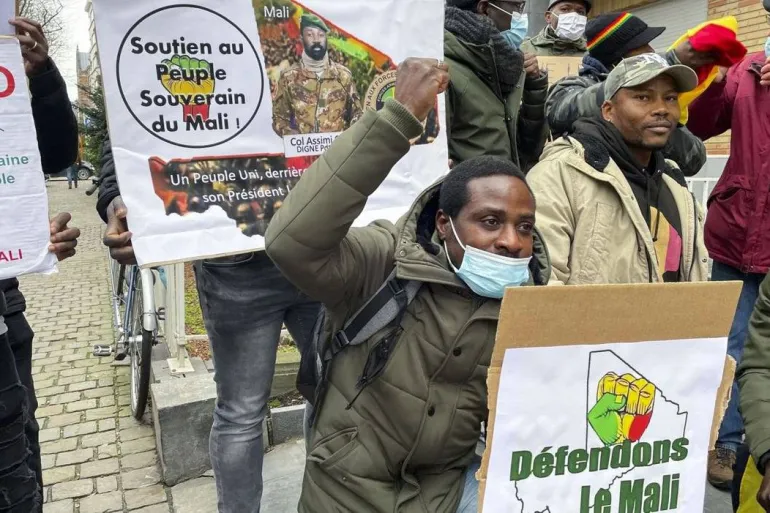
The Malian diaspora in France has issued a sharp rebuke against what it calls a “growing wave of biased media campaigns” targeting Mali, highlighting tensions in an already strained relationship between the West African nation and its former colonial power.
In a statement released Monday, the Coordination of the Malian Diaspora in France accused prominent French and European media outlets—including Radio France Internationale (RFI), Jeune Afrique, and Le Monde—of deliberately distorting coverage of Mali’s political and security landscape through “selective or sensationalized reports” designed to “shape public opinion and undermine Mali’s institutions.”
The diaspora organization expressed particular concern about what it perceives as reporting practices that “seriously undermine the fundamental right to free, fair, and balanced information.” According to the group, editorial decisions at these outlets appear “motivated by political or economic interests rather than journalistic integrity.”
“What we’re witnessing is a deliberate attempt to sow mistrust and weaken public confidence in Mali’s leadership,” the statement continued, suggesting that news coverage follows patterns that systematically cast Mali in a negative light.
The diaspora organization’s criticism comes against the backdrop of deteriorating Franco-Malian relations. In 2022, Mali’s military government expelled French troops that had been deployed in the country as part of Operation Barkhane, France’s counter-terrorism initiative in the Sahel region. This marked a significant shift in Mali’s international alignments, as the country pivoted toward Russia for security assistance and military equipment.
Since the expulsion of French forces, Mali has increasingly relied on the Wagner Group, a Russian private military company, to support its counter-insurgency operations against jihadist groups that have destabilized large portions of the country since 2012. This realignment has sparked concern in Western capitals about Russia’s growing influence in the strategic Sahel region.
Media analysts note that the information landscape surrounding Mali has become increasingly polarized, with competing narratives about the security situation, human rights concerns, and the legitimacy of the transitional government led by Colonel Assimi Goïta, who came to power through military coups in 2020 and 2021.
The diaspora group called for journalists to “report facts rather than influence opinion,” urging media professionals to recommit to ethical standards and factual accuracy in their coverage of Mali.
“We call on media professionals to uphold their responsibility to inform—not to manipulate—and on citizens to develop a critical mindset toward the sources and nature of the information they consume,” the statement emphasized.
This critique reflects a broader trend across several West African nations that have experienced recent coups, including Burkina Faso and Niger, where governments have also criticized Western media coverage and, in some cases, restricted the operations of foreign news organizations.
Media freedom advocates have expressed concern about this growing tension, noting that while media criticism is legitimate, accusations of bias can sometimes be used to justify restrictions on press freedom and silence critical reporting on sensitive issues.
The diaspora’s statement underscores the complex information environment surrounding the Sahel crisis, where journalism, politics, and geopolitical rivalries increasingly intersect. As Mali continues its political transition and counter-insurgency operations, the battle over narratives appears set to remain a significant dimension of its relationship with France and other Western nations.
Fact Checker
Verify the accuracy of this article using The Disinformation Commission analysis and real-time sources.

7 Comments
The Malian diaspora’s criticisms of biased media coverage seem justified. Outlets should strive for objective, impartial reporting that gives voice to diverse perspectives, rather than pursuing narratives that undermine Mali’s institutions. Transparency and journalistic integrity are crucial.
I agree. Responsible reporting is essential, especially on complex geopolitical issues. Media outlets must be vigilant about avoiding undue influence from political or economic interests.
The Malian diaspora’s criticisms of the media’s role in undermining public confidence in Mali’s institutions are concerning. Journalists must uphold the highest standards of integrity and resist any external influences that could compromise their reporting.
This is a complex issue that deserves nuanced discussion. While the Malian diaspora’s concerns about biased media coverage seem valid, it’s also important to understand the broader geopolitical context and varying perspectives. Objective, in-depth reporting is crucial.
It’s concerning to hear about the Malian diaspora’s perceptions of distorted and sensationalized media coverage of their home country. Maintaining free, fair, and balanced information is vital for a healthy democracy. This situation merits further investigation.
This is a concerning situation regarding the media coverage of Mali. It’s important that reporting is balanced and avoids sensationalism or political agendas. The Malian diaspora raises valid points about the need for fair, accurate journalism that serves the public interest.
The Malian diaspora’s statement raises important questions about the integrity and motivations behind media coverage of Mali. Balanced, fact-based journalism is critical, and any appearance of political or economic agendas is troubling. This warrants close scrutiny.