


Listen to the article
A former Ironman triathlete’s vision problems turned out to be the first sign of advanced lung cancer, defying his initial prognosis through experimental treatment that has extended his life by several years.
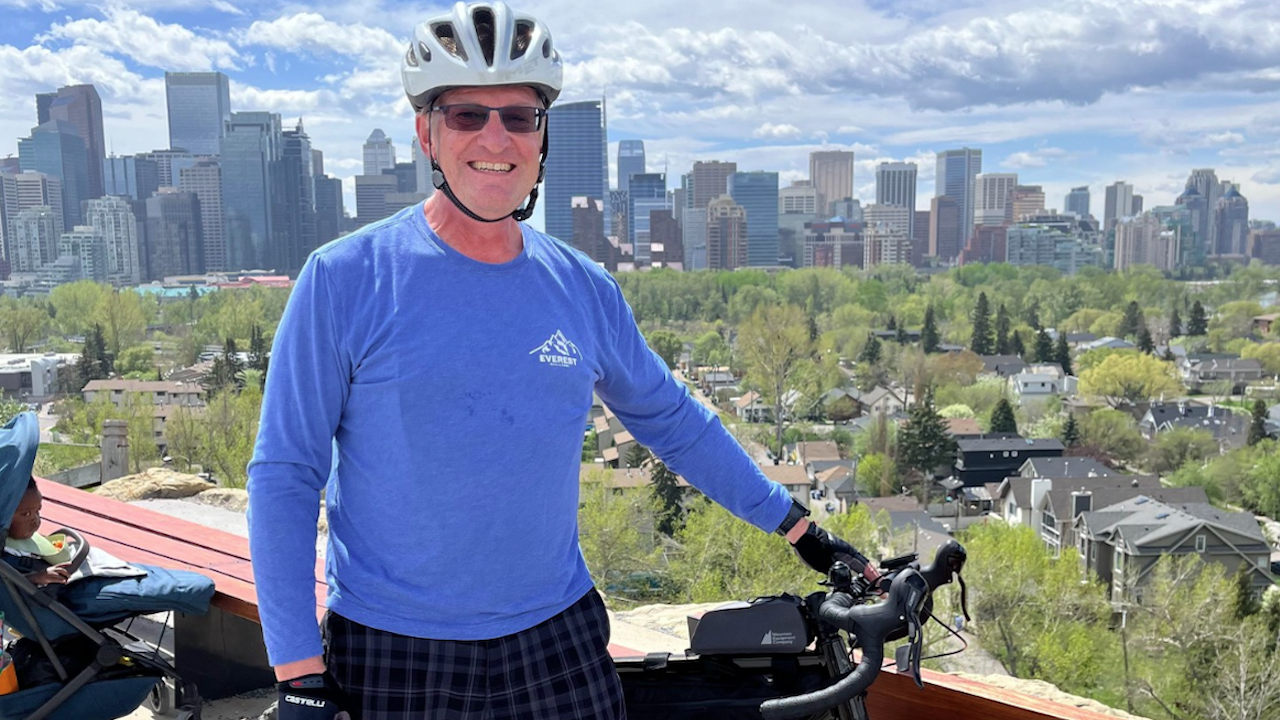
Dave Nitsche, 57, first noticed trouble with his left eye vision in 2019. “I went to the optometrist, and they said it was probably a detached retina,” the Canadian explained. After scans revealed fluid buildup and increasing pressure, doctors determined Nitsche had lost vision in the eye and ultimately removed it.
The shocking revelation came when a biopsy of the eye fluid revealed cancer cells. Further testing of fluid extracted from his lungs delivered the devastating diagnosis: stage 4 lung cancer.
Medical professionals were stunned that eye problems had stemmed from lung cancer, particularly since Nitsche had never smoked. Dr. Azam J. Farooqui, a hematology and oncology physician at Ironwood Cancer & Research Centers in Arizona, who didn’t treat Nitsche, confirmed the unusual nature of the case.
“Cancer can find its way to some very odd locations, but the eye is a very, very rare one,” Farooqui said. “Usually cancer will get there via a nerve channel or blood vessel, but it’s very uncommon.”
What made the diagnosis even more surprising was Nitsche’s athletic background and lack of typical symptoms. As a former triathlete who competed in multiple Ironman races, he was in excellent physical condition. “I was running quite a bit at the time,” he shared. “I had a little bit of back pain here and there, but lung cancer definitely wasn’t on my radar.”
Initially given just 12 to 24 months to live, Nitsche began a treatment journey that has defied expectations. His first therapy was afatinib, which he took for about three months. When doctors discovered the cancer had metastasized to his brain, he switched to Tagrisso (osimertinib), a medication designed to cross the blood-brain barrier.
Six years later, when those drugs stopped being effective, Nitsche began receiving Rybrevant (amivantamab), manufactured by Janssen Biotech in Pennsylvania. He receives this experimental treatment via IV infusion every three weeks in a supervised medical setting. After a year on the drug, his scans are showing remarkable improvement.
“Science is catching up to me perfectly with all these drugs that I’m on,” Nitsche said. “Now, we’ll just wait for the next thing to come along, and we’ll jump onto that. But for now, the Rybrevant is working perfectly.”
The treatment has proven relatively manageable compared to traditional cancer therapies. Nitsche reports experiencing primarily skin irritation and fingernail infections but says the drug is otherwise “very tolerable.” Dr. Farooqui agreed that Rybrevant tends to be more manageable than full-dose chemotherapy and other conventional lung cancer treatments.
According to FDA prescribing information, common side effects can include infusion reactions, muscle and joint pain, mouth sores, swelling, fatigue, nausea, bowel changes, vomiting, respiratory symptoms, and decreased appetite. In rare cases, serious effects may include lung inflammation, blood clots, severe skin reactions, and eye problems. Pregnant women should avoid the drug due to potential fetal risks.
“If somebody is having too many side effects, or if it is feeling too aggressive, we can do dose reductions,” Dr. Farooqui noted. “In my experience, we’ve had patients do really well on it, and we’ve been able to manage their side effects without any major concerns.”
Rybrevant has now received approval for treating certain types of non-small cell lung cancer in both the United States and Canada, with Nitsche reporting that several of his friends are also benefiting from the treatment.
“Doctors gave me a year to two years – they told me to get my affairs in order. And it’s been seven years now,” he said. “I’ll take it.”
Nitsche credits his endurance training and high fitness level with helping to extend his survival. He continues to stay active despite his diagnosis, adjusting his activities based on how he feels each day. “There are days that you feel strong and there are days that you’re a little weaker, but you just adjust accordingly,” he explained.
Now preparing for a 600-mile biking expedition in June to raise awareness for lung cancer, Nitsche has embraced his role as an advocate. He speaks openly about his experience and delivers an important message to others facing similar diagnoses.
“If you have lungs, you can get lung cancer – but at this point, for almost any type of cancer, a diagnosis is not a death sentence,” he said. “They’re doing so much research on it, especially with lung cancer… I’ve known people who have lasted 12 to 18 years, so for me, seven years is great. So I’ll just keep going.”
Dr. Farooqui emphasized the importance of patients “advocating for themselves and getting the most up-to-date therapy there is” – advice that Nitsche’s remarkable journey clearly illustrates.
Fact Checker
Verify the accuracy of this article using The Disinformation Commission analysis and real-time sources.

20 Comments
If AISC keeps dropping, this becomes investable for me.
I like the balance sheet here—less leverage than peers.
Good point. Watching costs and grades closely.
Exploration results look promising, but permitting will be the key risk.
Good point. Watching costs and grades closely.
Good point. Watching costs and grades closely.
Silver leverage is strong here; beta cuts both ways though.
Good point. Watching costs and grades closely.
Silver leverage is strong here; beta cuts both ways though.
If AISC keeps dropping, this becomes investable for me.
Good point. Watching costs and grades closely.
Good point. Watching costs and grades closely.
If AISC keeps dropping, this becomes investable for me.
Good point. Watching costs and grades closely.
The cost guidance is better than expected. If they deliver, the stock could rerate.
Nice to see insider buying—usually a good signal in this space.
Good point. Watching costs and grades closely.
Interesting update on Man’s Vision Problem Leads to Stage 4 Lung Cancer Diagnosis; New Drug Extends Survival. Curious how the grades will trend next quarter.
Good point. Watching costs and grades closely.
Good point. Watching costs and grades closely.