


Listen to the article
Poll Shows Growing Partisan Divide Over Election Trust in America
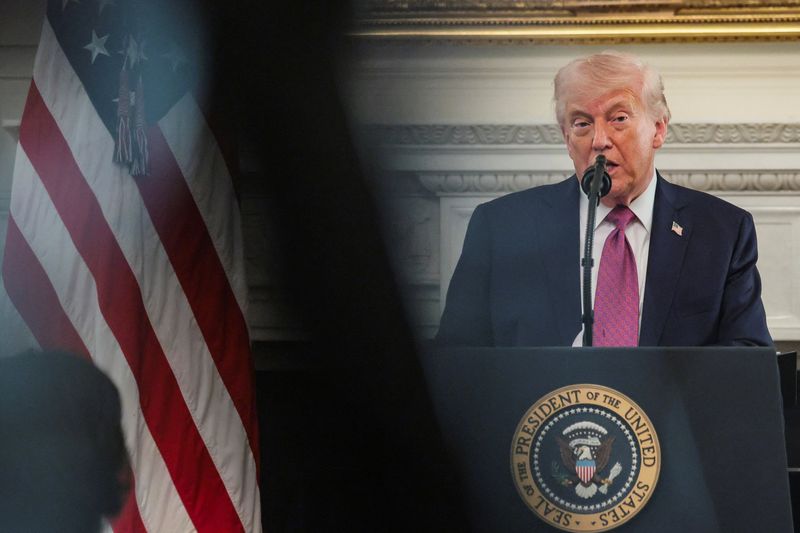
President Donald Trump’s sustained campaign to undermine confidence in U.S. elections has gained significant traction with Americans, according to a new Reuters/Ipsos poll, potentially creating a volatile environment for misinformation ahead of November’s midterm elections.
The six-day poll completed Monday revealed deep partisan fractures in how Americans view election integrity, with Republicans overwhelmingly expressing concerns about fraud despite a lack of evidence supporting such claims.
Nearly half of all respondents (46%) believe that non-citizens cast large numbers of fraudulent ballots in U.S. elections. This belief shows a stark partisan divide, with 82% of Republicans agreeing compared to just 18% of Democrats and 38% of independents.
Mail-in voting, which expanded significantly during the COVID-19 pandemic, remains a contentious issue. Approximately 53% of respondents expressed worry about fraudulent mail-in or absentee ballots, with 83% of Republicans concerned versus 33% of Democrats.
These findings suggest that years of messaging by Trump and his allies questioning election integrity have deeply resonated within Republican circles, particularly regarding non-citizen voting and mail-in ballot reliability. Multiple audits and academic research have consistently found instances of either type of fraud to be exceedingly rare.
The broader implication is troubling: many Americans appear primed to accept claims of electoral wrongdoing in November’s midterms, when Democrats are favored to win back the House of Representatives while control of the Senate hangs in the balance. This skepticism comes amid voter discontent over the war with Iran and persistent inflation.
Kelly Rader, research director at States United Democracy Center, a nonpartisan organization working to protect election integrity, attributes these poll results to the lasting impact of false claims propagated by Trump and his supporters.
“People are responding to them, particularly Republicans, because they’re listening to the leaders that they trust, and it’s creating this vulnerability in people to believe lies about the election,” Rader said. “It’s never fun to see these big partisan splits in beliefs like on non-citizen voting. But luckily, the system is built to withstand this, and states are ready for this year’s midterms.”
The online poll of 4,557 U.S. adults, which has a 2 percentage point margin of error, found broad bipartisan support for voter identification requirements. Overall, 77% of respondents backed requiring voters to show official ID, including 63% of Democrats and 95% of Republicans.
Despite this area of agreement, the poll did not address more controversial measures like the SAVE Act, which would require proof of U.S. citizenship to register or update voter registration for federal elections. While this legislation has passed the House, it faces significant challenges in the Senate as Democrats warn of potential voter disenfranchisement. Already, 23 mostly Republican-led states have adopted provisions similar to those in the bill.
The poll revealed that 63% of Republicans continue to believe Trump’s false claim that the 2020 election was stolen from him—a percentage that has remained relatively stable despite overwhelming evidence refuting widespread fraud allegations. In contrast, only 9% of Democrats and 21% of independents believe Trump lost due to wrongdoing.
One encouraging finding amid the partisan divisions is that a strong majority of Americans—including 79% of Democrats and 71% of Republicans—express confidence that their own ballots will be counted correctly in elections.
“These conspiracy theories about elections have not caused people to lose faith that their own vote will be counted as they intended,” Rader noted, adding that her organization’s research connects this confidence directly to voter turnout.
The poll also assessed attitudes toward security at polling places. While only 28% of Americans support deploying troops to voting locations, a majority of Republicans (62%) favor having federal law enforcement present, compared to just 23% of Democrats and 36% of independents.
These findings come as political tensions continue to simmer ahead of what promises to be a highly contested midterm election, with both parties viewing the results as crucial for determining the direction of the nation during the remainder of the current administration.
Fact Checker
Verify the accuracy of this article using The Disinformation Commission analysis and real-time sources.

9 Comments
This partisan divide over election integrity is troubling. Ensuring the legitimacy of elections should be a nonpartisan issue. I hope political leaders on both sides can work together to address any real security concerns.
This is concerning to see such a partisan divide over election integrity. Voters need to be able to trust the electoral process, regardless of political affiliation. Factual, nonpartisan information is key to restoring that trust.
While election fraud claims may energize some voters, they can also undermine faith in democracy. I hope political leaders on both sides will focus on improving election security and accessibility instead of sowing doubts.
I agree, the priority should be ensuring secure and fair elections that all citizens can participate in. Spreading unsubstantiated claims does more harm than good.
It’s concerning to see such stark partisan differences in perceptions of election integrity. Maintaining public trust in the electoral process is critical for the health of our democracy. I hope fact-based, nonpartisan efforts can help bridge this divide.
This poll highlights the need for objective, fact-based information about election security and processes. Unfounded allegations of fraud can undermine faith in democracy, which is harmful regardless of one’s political affiliation.
While it’s understandable for voters to have concerns about election integrity, it’s important those concerns are grounded in evidence, not partisan rhetoric. I hope leaders on both sides can work to restore public trust through transparent, nonpartisan reforms.
It’s important to rely on authoritative, nonpartisan sources when evaluating the integrity of elections. Unfounded allegations of fraud can erode public trust, which is detrimental to the democratic process.
Absolutely. Voters deserve accurate information to make informed decisions, not divisive rhetoric that polarizes the electorate.