


Listen to the article
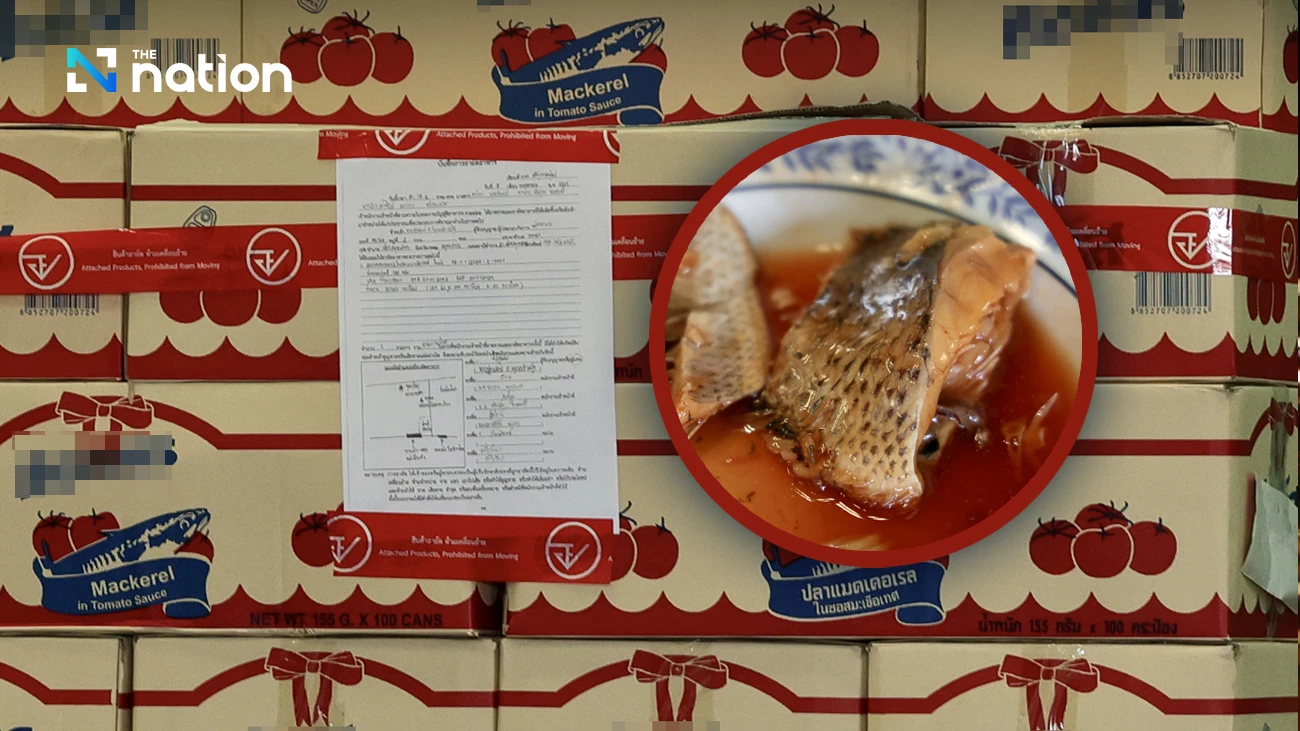
Thailand’s food safety regulators have suspended operations at a canned fish factory in Samut Sakhon province following allegations that the company’s products contained fish different from what was advertised on labels.
The inspection, which took place on May 6, 2026, came after social media posts went viral showing canned fish contents that reportedly did not match product descriptions. The controversy prompted swift government action to address growing consumer concerns about food mislabeling in the country.
Supamas Isarabhakdi, Minister attached to the Prime Minister’s Office, personally led a delegation of officials from multiple regulatory agencies to the facility. The inspection team included representatives from the Food and Drug Administration (FDA), the Samut Sakhon Provincial Public Health Office, and the Office of the Consumer Protection Board (OCPB).
“Consumer rights protection is an urgent priority for this government,” Supamas told reporters during the inspection. She emphasized that she wanted to witness the production process firsthand to better understand the situation that had sparked public outrage.
The controversy began when consumers shared images online appearing to show cans labeled as containing mackerel that actually contained tilapia or other fish species. The posts quickly gained traction on social media platforms, raising questions about quality control and transparency in Thailand’s seafood processing industry.
According to Supamas, the company had reportedly attempted to resolve the immediate crisis by offering compensation to the individual who initially posted the evidence and requesting the removal of the damaging content. However, she dismissed this approach as inadequate.
“This is only a short-term response to an individual case,” Supamas noted. “The wider issue is whether the product was ‘not as advertised,’ which would clearly violate consumer rights. If a label states that the product contains mackerel but the can instead contains tilapia or another type of fish, consumers are being misled over a key aspect of the product.”
Thailand’s seafood industry, particularly in Samut Sakhon province, forms a crucial part of the country’s economy. The province is often referred to as the country’s “seafood capital,” housing numerous processing facilities and employing thousands of workers, many of whom are migrant laborers from neighboring countries.
The incident highlights ongoing concerns about food labeling practices in Thailand, where regulatory oversight has been strengthened in recent years following several high-profile food safety scandals. Consumer advocacy groups have long pushed for stricter enforcement of labeling laws and greater transparency in food processing.
The temporary shutdown comes at a challenging time for Thailand’s seafood sector, which has already been facing international scrutiny over labor practices and sustainability concerns. Industry analysts suggest that addressing these quality control issues transparently will be essential for maintaining consumer trust and international market access.
While the name of the company has not been officially disclosed, sources familiar with the investigation indicate that it supplies canned fish products to both domestic and export markets.
The OCPB has stated that it will conduct a thorough investigation to determine whether there was a systematic practice of mislabeling products or if this was an isolated incident. If found to be in violation of Thailand’s Consumer Protection Act, the company could face significant fines and potential legal action.
The Ministry of Public Health has also announced plans to increase random sampling and testing of canned seafood products across the country to ensure compliance with labeling regulations and food safety standards.
As the investigation continues, consumer rights advocates have called for greater transparency in food production and stricter penalties for companies found to be misleading the public about their products.
Fact Checker
Verify the accuracy of this article using The Disinformation Commission analysis and real-time sources.

11 Comments
False labeling in the canned fish industry is a serious issue that warrants close scrutiny. I hope the regulators’ findings lead to meaningful reforms to strengthen oversight and product integrity.
This highlights the need for robust food safety regulations and enforcement to ensure product integrity. Consumers deserve accurate information about what they’re buying and consuming.
Absolutely. Mislabeling of food products is a concerning issue that regulators must take seriously to protect public health and consumer rights.
I’m curious to learn if this is an isolated incident or part of a broader pattern of mislabeling in Thailand’s canned fish sector. Rigorous auditing and enforcement will be crucial going forward.
This case underscores the importance of transparent and accountable supply chains in the food industry. Consumers have a right to know what they’re purchasing and consuming.
Well said. Robust traceability and truth-in-labeling practices should be the norm, not the exception, to build consumer confidence.
Curious to learn more about the specific details of this case and the findings from the regulatory inspection. Were there any indications of intentional fraud or simply careless labeling practices?
Good question. The details around the root causes and scale of the mislabeling will be important to assess. Hopefully the investigation provides clarity and leads to appropriate corrective actions.
Interesting case of suspected false labeling in the canned fish industry in Thailand. Transparency and consumer protection should be top priorities for regulators in the food sector.
Agreed. Misleading product labels undermine consumer trust and can have serious health implications. Swift action by authorities to investigate and address these allegations is important.
Kudos to the Thai authorities for acting quickly in response to the consumer complaints. Maintaining public trust in food safety is critical, so this proactive approach is commendable.