


Listen to the article
Iranian President Rebuffs Trump’s Allegations, Defends Security Forces
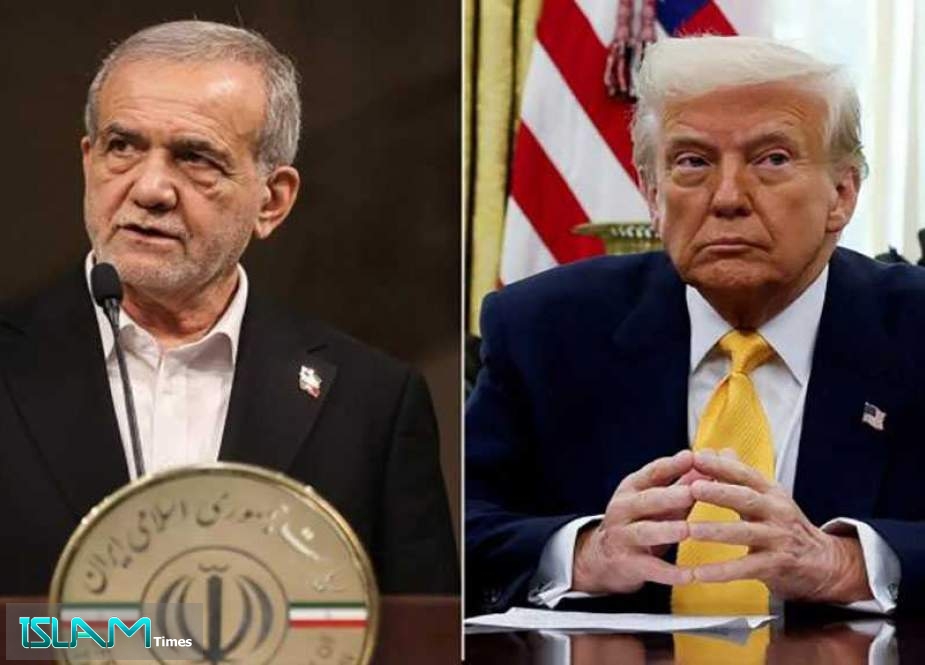
Iranian President Masoud Pezeshkian forcefully rejected accusations made by former U.S. President Donald Trump on Thursday, characterizing them as part of a long-standing pattern of hostile foreign propaganda targeting the Islamic Republic.
During an address to provincial officials in Iran’s northern Mazandaran province, Pezeshkian specifically countered Trump’s claim that Iran had killed 32,000 people, dismissing it as completely unfounded and misrepresentative of the country’s internal situation.
“We have published casualty lists with national ID numbers for verification,” Pezeshkian stated, offering transparency regarding the actual figures involved in recent domestic unrest. He emphasized that the narrative being pushed by foreign actors fails to acknowledge the sacrifice of Iranian security personnel.
“More than 2,000 members of our security and armed forces have been martyred while defending the country and its people,” the president noted, highlighting what Tehran views as a significant aspect of the conflict that goes unmentioned in Western characterizations.
Pezeshkian provided specific details about property damage during what Iranian authorities classify as riots rather than legitimate protests. According to his statement, over 350 mosques and 300 schools were set ablaze during recent unrest—actions he firmly characterized as terrorism rather than legitimate civil disobedience.
The exchange comes amid heightened tensions between Iran and the United States, with both nations continuing their decades-long diplomatic standoff. Trump, who withdrew the U.S. from the Iran nuclear deal in 2018 and imposed sweeping sanctions on Tehran, has maintained his hardline stance toward the Islamic Republic even after leaving office.
For Iran, Trump’s recent statements represent a continuation of what they perceive as American interference in their internal affairs. The Iranian government has consistently portrayed domestic unrest as being fomented or supported by foreign actors, particularly the United States and its regional allies.
Security analysts note that Iran has faced significant internal challenges in recent years, including widespread protests following the death of Mahsa Amini in police custody in September 2022, which triggered nationwide demonstrations against the country’s mandatory hijab laws and broader governance issues.
During his address, Pezeshkian also spoke of what he described as systematic attempts by adversaries to weaken Iran through targeting its intellectual capital. “Our enemies try to eliminate capable scientists and skilled personnel to weaken the country,” he said, likely referencing the assassinations of several Iranian nuclear scientists over the past decade, operations widely attributed to Israel, sometimes with alleged U.S. cooperation.
Despite these challenges, the Iranian president expressed confidence in the nation’s resilience, emphasizing that “national unity and cooperation prevent any power from paralyzing Iran.” This rhetoric aligns with Tehran’s longstanding narrative of resistance against external pressure, particularly from Western powers.
Regional experts point out that Pezeshkian, who took office in July 2024, has been working to balance maintaining Iran’s hardline stance against perceived foreign interference while also signaling potential openness to reduced tensions under certain conditions.
Pezeshkian concluded his remarks by emphasizing three principles he sees as essential for Iran’s continued sovereignty: unity among the population, adherence to justice in governance, and reliance on shared national values. These elements, he argued, are crucial for overcoming both internal challenges and external pressures while pursuing sustainable development for the nation of 85 million people.
As Iran continues to navigate its complex relationship with the United States and other Western powers, exchanges like this highlight the persistent communication gap and competing narratives that have characterized this geopolitical tension for decades.
Fact Checker
Verify the accuracy of this article using The Disinformation Commission analysis and real-time sources.

11 Comments
Pezeshkian’s response highlights the need for impartial, evidence-based reporting on these sensitive geopolitical issues. Relying on unsubstantiated claims can distort the public’s understanding of complex situations.
Well said. Responsible journalism that seeks to present the full context, rather than sensationalize, is crucial for an informed public discourse.
This seems like a complex geopolitical issue with competing narratives. I appreciate Pezeshkian’s efforts to provide clarity and acknowledge the losses on the Iranian side. Balanced reporting is crucial to understand the nuances at play.
Absolutely. Maintaining an objective, fact-based perspective is important when dealing with sensitive international disputes like this one.
I’m curious to learn more about the specific details Pezeshkian provided regarding the sacrifices of Iranian security personnel. That seems like an important angle that has been overlooked in the coverage so far.
Interesting response from President Pezeshkian. He makes a compelling case for transparency around the casualty figures and the sacrifice of Iranian security forces. It’s important to get the full picture rather than relying on unsubstantiated allegations.
I agree, Pezeshkian’s remarks provide more context that was missing from the initial reports. Addressing the situation with facts and figures is the right approach.
Pezeshkian’s response highlights the importance of verifying claims, especially when they come from political adversaries. His transparency around the actual casualty figures is a welcome contrast to the unsubstantiated allegations.
It’s good to see the Iranian president addressing these claims directly and providing concrete details. Constructive dialogue is crucial for resolving conflicts, even between nations with longstanding tensions.
Agreed. Open communication and a willingness to discuss the facts, rather than just trade accusations, is a more productive approach.
It’s encouraging to see the Iranian president addressing these allegations directly and providing transparency around the facts. Constructive dialogue is the best way to move forward, even between adversaries.