


Listen to the article
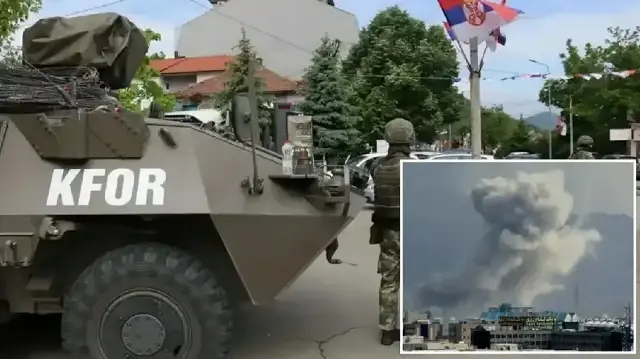
NATO forcefully dismissed claims on Thursday that its Kosovo facilities had been used to launch missiles at Iran, describing such reports as completely fabricated and part of broader disinformation efforts amid heightened tensions in the Middle East.
“These allegations are completely baseless,” KFOR stated in an official release addressing viral social media posts suggesting missile launches from Camp Bondsteel or other NATO installations in Kosovo. The alliance emphasized that such claims are entirely false and constitute dangerous misinformation.
The statement comes as NATO seeks to clarify its position amid the escalating conflict between Israel, the United States, and Iran. NATO Secretary-General Mark Rutte has explicitly stated that the alliance has no involvement in ongoing military operations against Iran, a point KFOR officials reiterated in their denial.
The US-Israeli military campaign against Iran, which began on February 28, has reportedly resulted in over 1,230 casualties, including Iran’s Supreme Leader. As the conflict intensifies, false narratives have proliferated across social media platforms, prompting NATO’s formal response.
KFOR, established under United Nations Security Council Resolution 1244, maintains a multinational peacekeeping force in Kosovo with a mandate to ensure security and stability in the region. The mission draws personnel from 28 countries, with the United States providing the largest contingent of approximately 600 troops.
“The United States continues to play a crucial role in supporting security and stability in Kosovo,” the statement noted, detailing American leadership of the Eastern Regional Command and contributions to daily security operations, community engagement initiatives, and reconstruction projects throughout Kosovo.
The American presence in Kosovo represents a significant security commitment in the Balkans, a region that experienced devastating conflict in the 1990s. Camp Bondsteel, established after the 1999 NATO intervention, serves as the main base for U.S. forces operating under the KFOR mandate and is one of America’s largest military installations in Europe.
Other major contributors to the Kosovo peacekeeping mission include Turkey, Germany, Italy, France, and the United Kingdom, while smaller nations such as Lithuania and Montenegro maintain more modest troop numbers. This multinational composition underscores KFOR’s international character and broad support across the NATO alliance.
The false claims about missile launches from Kosovo highlight the complex information environment surrounding international conflicts. Military analysts note that disinformation campaigns often accompany major geopolitical events, with social media accelerating the spread of unverified claims across borders.
Kosovo itself remains a politically sensitive region, having declared independence from Serbia in 2008, a move recognized by over 100 countries but disputed by others, including Serbia and its allies. KFOR’s continuing presence reflects the international community’s commitment to maintaining stability in this strategically important part of southeastern Europe.
Security experts emphasize that NATO’s peacekeeping mission in Kosovo operates under specific United Nations authorization with clearly defined objectives focused on the Balkan region. The alliance has carefully distinguished its regional security operations from broader geopolitical conflicts in the Middle East.
As tensions continue to unfold in Iran and the broader Middle East, NATO officials remain vigilant against further disinformation that could misrepresent the alliance’s activities or potentially inflame regional instability.
Fact Checker
Verify the accuracy of this article using The Disinformation Commission analysis and real-time sources.

6 Comments
It’s concerning to see the proliferation of these kinds of fabricated stories on social media. NATO’s prompt denial and clarification of its non-involvement is an important step in countering dangerous misinformation campaigns.
Absolutely, the spread of false information can have serious consequences, especially when it relates to military operations. NATO’s transparency helps uphold the integrity of reporting on these critical issues.
While I’m not surprised to see these kinds of false claims surfacing, I’m glad NATO is taking a firm stance and setting the record straight. Maintaining credibility and public trust is crucial, especially during times of heightened global tensions.
As concerning as these fabricated reports may be, I appreciate NATO’s prompt and direct response in refuting them. Debunking misinformation is essential to preventing the spread of dangerous narratives.
This seems like a clear attempt to spread disinformation and misleading narratives. I’m glad NATO is forcefully rejecting these baseless claims. Maintaining transparency and dispelling false reports is crucial during heightened geopolitical tensions.
NATO’s clear denial of any involvement in missile launches against Iran is an important clarification. In an era of rampant disinformation, it’s crucial for institutions to swiftly address and correct false claims.