


Listen to the article
Moroccan Authorities Refute False Census Claims Regarding Flood Evacuees
Authorities in Morocco’s Tangier-Tetouan Al Hoceima region have firmly denied circulating rumors that they are conducting a census of residents evacuated from the flood-ravaged city of Ksar El Kebir.
In an official statement released this week, the regional Wilaya described these allegations as “entirely unfounded,” addressing claims that have spread widely across social media platforms in recent months.
The false information suggested that local authorities in Tangier were registering evacuees from Ksar El Kebir who had sought refuge in Tangier following severe flooding. According to these rumors, evacuees were being instructed to report to local administrative offices as part of what was described as a mandatory “administrative procedure.”
“No such procedure has been implemented by the local authorities,” the Wilaya stated emphatically, urging citizens to verify information before sharing it further. Officials emphasized the importance of relying on official and reliable sources to prevent the spread of misinformation that could cause unnecessary confusion and anxiety among affected populations.
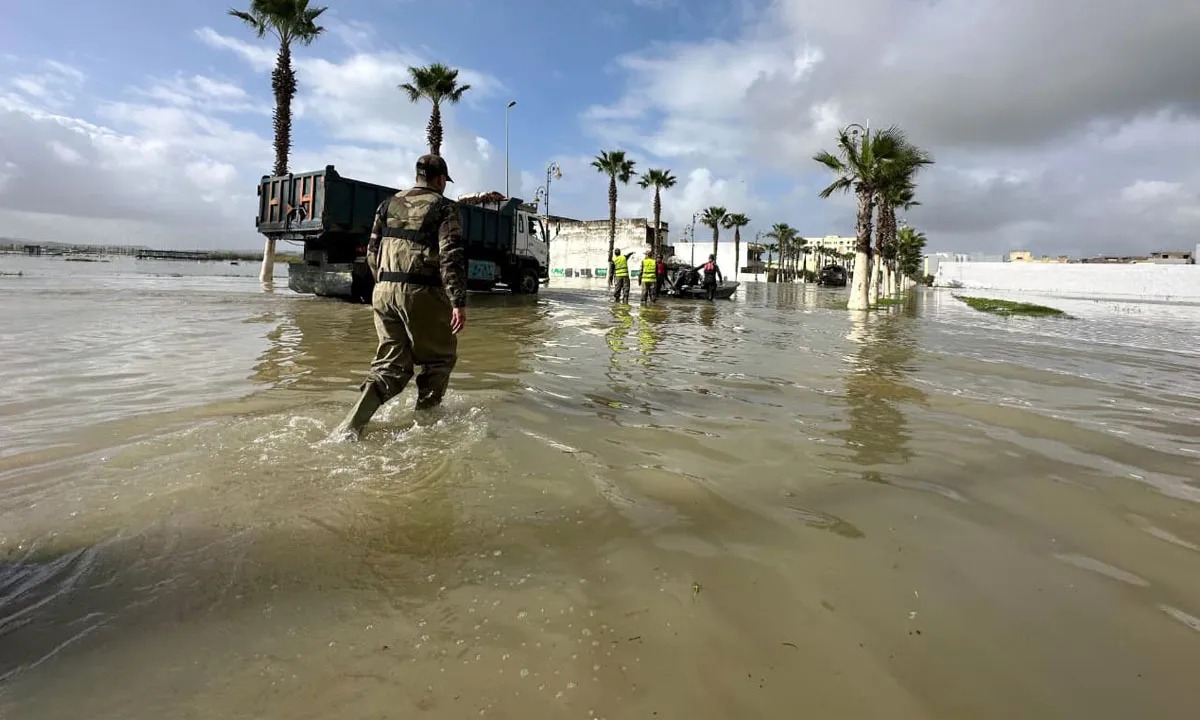
The denial comes amid Morocco’s ongoing response to significant flooding that has affected several regions of the country. Over 150,000 citizens have been evacuated from flood-hit areas in the past two weeks alone, representing one of the largest internal displacement operations in recent Moroccan history.
These evacuations form a central component of Morocco’s broader crisis mitigation strategy as the country grapples with the aftermath of extraordinary rainfall. The northwestern regions, including Tetouan and Ksar El Kebir, have been particularly affected by overflowing rivers that have inundated residential neighborhoods and damaged critical infrastructure.
The Moroccan government has mobilized significant resources to address the humanitarian aspects of the crisis. Authorities have pledged comprehensive solidarity initiatives to support flood-affected communities, including emergency housing, humanitarian aid distribution, and psychological support services for traumatized residents.
The flood response has involved coordination between multiple government agencies, including the Ministry of Interior, civil protection units, and local authorities. Military personnel have also been deployed to assist with evacuation operations in the hardest-hit areas.
Civil society organizations have emerged as crucial partners in the relief efforts. Numerous associations are implementing grassroots initiatives to support citizens temporarily displaced from their homes. These efforts include providing warm meals, essential supplies, and coordinating temporary accommodation for those who cannot return to their damaged residences.
Climate experts note that the intensity of these floods reflects broader patterns of increasingly extreme weather events affecting North Africa. Morocco, positioned between the Mediterranean Sea and the Atlantic Ocean, has experienced growing climate vulnerability in recent years.
“What we’re seeing in Morocco reflects global climate trends where previously rare weather events are becoming more common and more intense,” explained Dr. Mohammed Adnane, a climate scientist at Mohammed V University in Rabat. “These displacement patterns following extreme weather events may become increasingly normal.”
The flooding crisis represents a significant test for Morocco’s disaster response systems, which have been strengthened following previous natural disasters. The country has invested in early warning systems and emergency management protocols, though the scale of recent flooding has stretched these capabilities.
As recovery efforts continue, authorities maintain their focus on immediate humanitarian needs while beginning to address longer-term reconstruction requirements. The government has indicated that a comprehensive assessment of damage to housing, agriculture, and infrastructure will inform rebuilding efforts once floodwaters fully recede.
Fact Checker
Verify the accuracy of this article using The Disinformation Commission analysis and real-time sources.

16 Comments
This is an important reminder of the need for vigilance against the spread of misinformation, even from seemingly credible sources. Kudos to the Moroccan officials for their clear and decisive response.
It’s reassuring to see the Moroccan authorities taking such a direct and unambiguous stance against these unfounded rumors. Addressing misinformation is crucial for effective crisis response and recovery.
The regional Wilaya’s statement is a strong rebuttal of these false claims. Verifying information and relying on official sources is so important, especially during emergencies when tensions can run high.
Absolutely. Maintaining transparency and trust in government institutions is essential for supporting affected communities and managing the fallout from natural disasters.
Good to see the Moroccan authorities swiftly addressing these false claims about a flood evacuee census. Verifying information from official sources is crucial to prevent the spread of misinformation, especially during crisis situations.
This is a valuable lesson in the importance of responsible information-sharing, particularly during times of heightened uncertainty. Kudos to the Moroccan officials for their transparency and commitment to the facts.
It’s good to see the Moroccan government taking these false claims seriously and setting the record straight. Maintaining public trust is crucial during emergencies, and their response seems appropriate.
This underscores the ongoing challenge of combating the spread of misinformation, even in the face of clear, official denials. The Moroccan government’s response seems appropriate and necessary.
I’m glad the Moroccan authorities were proactive in refuting these false claims. Maintaining public trust is crucial, especially when communities are dealing with the aftermath of a natural disaster.
This is a good reminder of the need for transparency and clear communication from governments during emergencies. Providing accurate, timely updates can help quash harmful rumors and maintain public trust.
It’s concerning how quickly unsubstantiated rumors can spread on social media. I’m glad the regional Wilaya took the time to clearly refute these allegations and emphasize the importance of relying on official channels for reliable information.
It’s good to see the Moroccan authorities taking a firm stance against these unsubstantiated claims. Addressing misinformation head-on is an important part of effective crisis management.
Fact-checking and verifying information from reliable sources is crucial, especially when it comes to sensitive issues like crisis response. Kudos to the Moroccan officials for setting the record straight.
Absolutely. Misinformation can undermine emergency efforts and erode public confidence. Their clear statement helps maintain trust in the government’s handling of this situation.
I appreciate the Moroccan authorities’ proactive stance in refuting these unfounded rumors. Addressing misinformation quickly and decisively helps prevent unnecessary panic and confusion.
I appreciate the Moroccan authorities’ proactive stance in addressing these false claims. Spreading misinformation can cause real distress for affected communities, so their swift action is commendable.