


Listen to the article
Idaho Hunter Sentenced in Wyoming for Years of Wildlife Crimes
An Idaho Falls man will serve jail time and face hefty fines following an extensive multi-year investigation by the Wyoming Game and Fish Department into wildlife violations spanning from 2018 to 2021. Rodney Gilstrap was sentenced on September 24 for falsely claiming Wyoming residency to obtain hunting licenses and illegally harvesting multiple big game animals in western Wyoming.
The investigation began in 2019 when Game Warden James Hobbs received anonymous tips that Gilstrap was misrepresenting his residency status while actually living and working in Idaho. Wyoming offers significantly cheaper hunting licenses to residents, creating a financial incentive for non-residents to falsify their documentation.
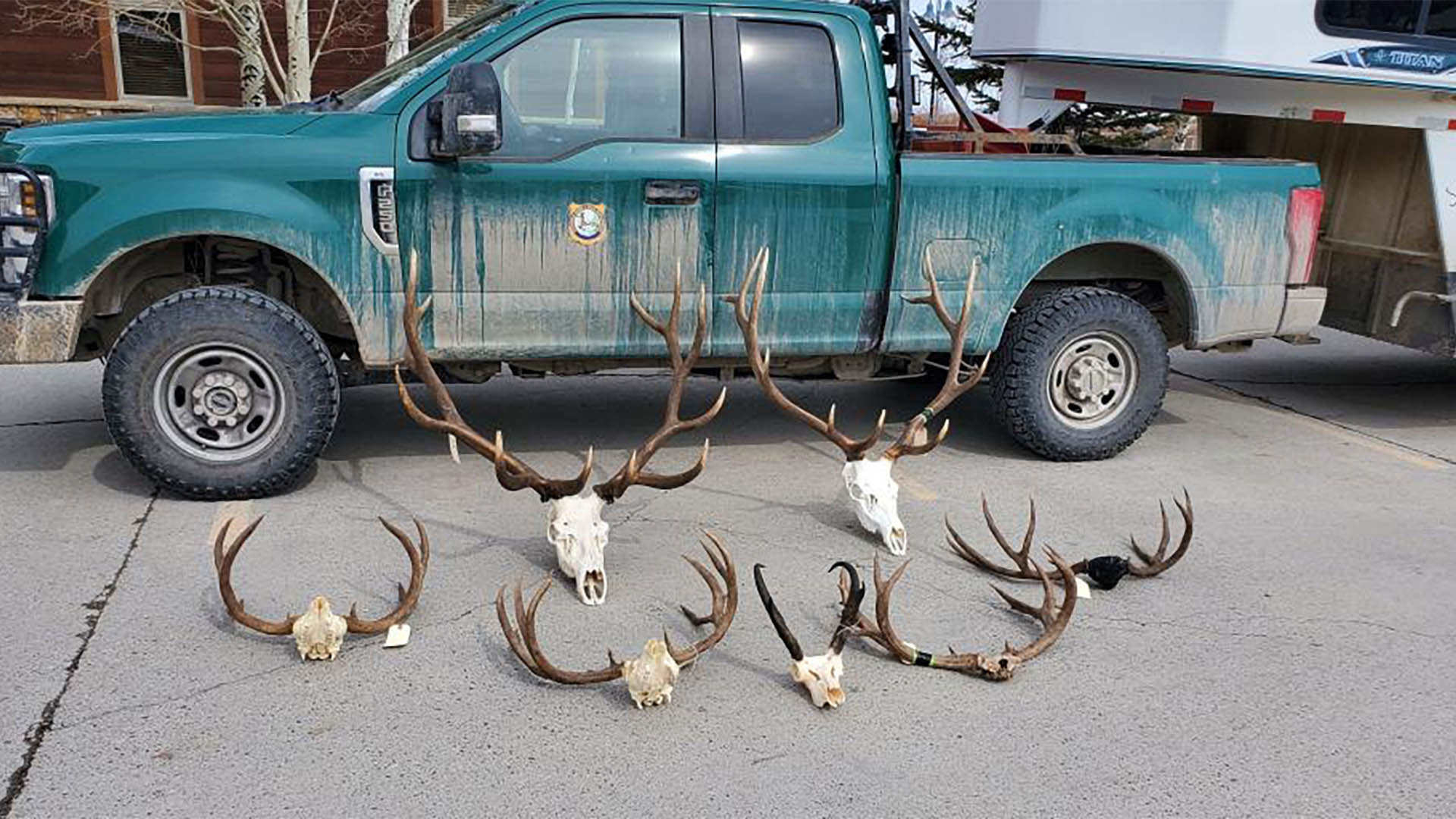
Wyoming wildlife officials partnered with the Idaho Fish and Game Department to execute search warrants at Gilstrap’s Idaho Falls residence in March 2022. The search yielded substantial evidence: four large mule deer heads and antlers, two bull elk heads and antlers, and one pronghorn buck head with horns. Investigators determined these animals had been killed in Wyoming using either illegally obtained resident licenses or no licenses at all.
In 2023, prosecutors charged Gilstrap with 22 wildlife crimes, including multiple counts of making false statements to obtain Wyoming resident licenses for deer, elk, black bear, and other game. The charges also covered the illegal killing of multiple animals without proper licensing.
After accepting a plea deal in 2024, Gilstrap pleaded guilty to six counts: three for making false statements to procure Wyoming resident deer and elk licenses, and three for killing deer and elk without proper licenses. The remaining charges were dropped as part of the agreement.
The court sentenced Gilstrap to 540 days in jail but suspended 519 days, leaving him with 21 days of actual incarceration. The sentence also includes three years of unsupervised probation, $10,000 in restitution to the Wyoming Game and Fish Department, and $17,905 in fines. Additionally, Gilstrap must forfeit all seized animal parts and faces an 18-year suspension of hunting and fishing privileges in Wyoming and all states participating in the Wildlife Violator Compact.
The Wildlife Violator Compact, which includes most U.S. states, ensures that hunting, fishing, and trapping violations follow offenders across state lines. This means Gilstrap’s suspension effectively bars him from legally hunting in most of the country for nearly two decades.
Gilstrap’s legal team challenged the ruling on multiple grounds, but Lincoln County District Court Judge Joseph Bluemel affirmed the original judgment and sentence in June. A subsequent motion for sentence reduction or modification was denied on September 24.
On November 7, Gilstrap reported to the Lincoln County Detention Center to begin serving his jail sentence on a modified work-release schedule. Under this arrangement, his 21-day sentence will be completed in September 2026.
Wildlife poaching and license fraud represent significant challenges for conservation authorities across the American West. According to wildlife management experts, these crimes not only undermine carefully managed hunting systems designed to maintain healthy wildlife populations, but also deprive states of revenue used for conservation programs.
The substantial penalties in Gilstrap’s case reflect Wyoming’s serious approach to wildlife crimes, particularly those involving trophy animals. State wildlife officials hope such consequences serve as a deterrent to others who might consider similar violations.
Fact Checker
Verify the accuracy of this article using The Disinformation Commission analysis and real-time sources.

10 Comments
It’s disappointing to see someone so blatantly abuse the wildlife laws and regulations. Hunting should be done fairly and responsibly, not through deceit. Hopefully this case sends a strong message to deter future wildlife crimes.
Absolutely. Wildlife conservation efforts rely on everyone following the rules. Hopefully the penalties serve as a deterrent and the funding from fines can support important habitat and population management programs.
While the penalties may seem harsh, wildlife crimes like this can have far-reaching impacts. Misrepresenting residency not only deprives state agencies of proper revenue, but also skews population data and management plans. Hopefully this case encourages greater vigilance from hunters and anglers.
Good point. Falsifying documentation undermines the entire system, making it harder for wildlife agencies to effectively manage and protect vulnerable species. Responsible sportsmen and women should report any suspected fraud to authorities.
Hunting and fishing licenses are an important revenue source for state wildlife agencies. When people cheat the system, it takes away from critical conservation and management efforts. Hopefully this serves as a wake-up call for others considering similar fraud.
Absolutely. Resident hunting licenses are subsidized by taxpayers, so non-residents exploiting the system are essentially stealing from the public. Strict enforcement is important to protect the integrity of these programs.
This case highlights the need for robust enforcement and information sharing between state wildlife agencies. Residency requirements exist for good reason – to protect local populations and ensure fair access for legitimate resident hunters. Kudos to the investigators for their diligence.
Well said. Cross-state collaboration is key to catching these types of repeat offenders. The evidence gathered from the search warrant was clearly crucial to building a strong case against this individual.
This is a clear case of wildlife fraud, taking advantage of resident hunting licenses in Wyoming while actually residing in Idaho. Falsifying documentation for cheaper hunting permits is unethical and damages the system for legitimate resident hunters.
Agreed. The evidence recovered from the search warrant indicates this was an ongoing, premeditated scheme to illegally harvest big game animals. Hefty fines and jail time seem like appropriate penalties.