


Listen to the article
Police Defend Maccabi Tel Aviv Fan Ban Amid Claims of False Intelligence
West Midlands Police is standing firm on its decision to ban Maccabi Tel Aviv supporters from attending a Europa League match at Aston Villa, despite allegations that the security assessment was based on questionable intelligence.
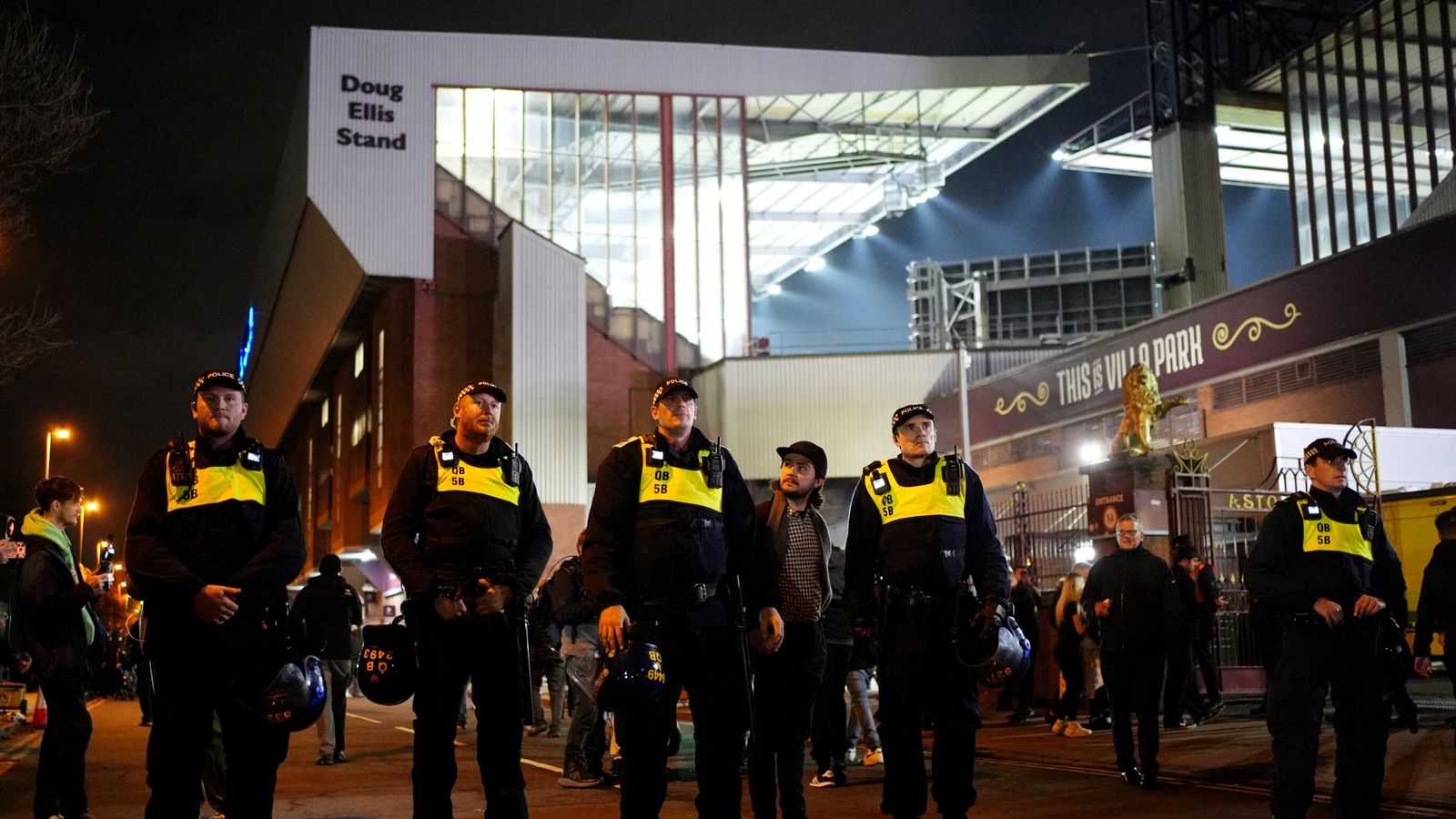
The November 6 fixture at Villa Park became controversial after Israeli fans were barred from attending, with police citing concerns about potential hooliganism from a “section” of Maccabi’s fanbase.
According to an investigation by The Sunday Times, West Midlands Police had compiled a confidential dossier claiming that during Maccabi’s previous match against Ajax in Amsterdam, Israeli fans had thrown “innocent members of the public into the river” and that 500-600 supporters had “intentionally targeted Muslim communities.” The report also stated that Dutch authorities had deployed 5,000 officers in response to these threats.
However, the Netherlands’ national police force has challenged these claims. Sebastiaan Meijer, spokesperson for the Amsterdam police division, told The Sunday Times he was “surprised” by the allegations in the British report. He specifically denied the claim that 200 traveling Maccabi supporters had links to the Israel Defense Forces (IDF), noting that such intelligence doesn’t exist and the claim is meaningless given Israel’s mandatory military conscription policy.
Meijer also refuted the assertion that Israeli fans were “highly organized, skilled fighters with a serious desire and will to fight with police and opposing groups,” stating that Amsterdam’s force “does not recognize” this characterization that was attributed to Dutch law enforcement.
The Dutch police added that the only documented case of a fan being in the river appeared to involve a Maccabi supporter who was told he could exit the water if he said “Free Palestine” while being filmed—a stark contrast to the narrative presented in the West Midlands Police assessment.
Prior to the Villa Park match, West Midlands Police Chief Superintendent Tom Joyce told Sky News that their decision was informed by previous incidents involving Maccabi supporters. “We’ve had examples where a section of Maccabi fans were targeting people not involved in football matches, and certainly we had an incident in Amsterdam last year which has informed some of our decision-making,” he said.
The fixture took place during a period of heightened tensions related to Israel’s military operations in Gaza. A safety advisory group (SAG) recommended the ban based on police advice, a decision that drew widespread criticism, including from Prime Minister Sir Keir Starmer, who described it as the “wrong decision.”
In response to The Sunday Times report, West Midlands Police issued a statement defending their position: “West Midlands Police’s evaluation was based primarily on information and intelligence and had public safety at its heart. We assessed the fixture between Ajax and Maccabi Tel Aviv in Amsterdam as having involved significant public disorder.”
The force added that they had met with Dutch police on October 1, where information about the 2023 fixture was shared. They concluded that Maccabi Tel Aviv supporters—specifically a subgroup known as the “Maccabi Fanatics”—posed a “credible threat to public safety.”
West Midlands Police also noted that their approach had been validated through a peer review conducted by the United Kingdom Policing Unit (UKFPU), the National Police Chiefs’ Council (NPCC), and subject matter experts on October 20, which “fully endorsed the force’s approach and decision-making.”
“We are satisfied that the policing strategy and operational plan was effective, proportionate, and maintained the city’s reputation as a safe and welcoming place for everyone,” the statement concluded.
The conflicting accounts between British and Dutch authorities raise questions about the intelligence-sharing processes between international law enforcement agencies and the standards of evidence required for such significant security decisions in international sporting events.
Fact Checker
Verify the accuracy of this article using The Disinformation Commission analysis and real-time sources.

18 Comments
The discrepancies between the UK and Dutch accounts are concerning and deserve further scrutiny. I hope the authorities can work together to thoroughly investigate the claims, verify the intelligence, and make decisions that uphold the principles of fairness and non-discrimination.
Well said. Restoring trust and ensuring that any security measures are proportionate and justified should be the top priorities. Transparent and collaborative decision-making will be crucial in resolving this issue in a fair and equitable manner.
This seems like a troubling situation with disputed claims and unclear security assessments. I hope the authorities can get to the bottom of what actually happened and make fair decisions that balance fan safety and rights.
Yes, it’s concerning to see conflicting reports and potentially misleading intelligence used as the basis for restricting fan attendance. Transparency and due process are important here.
The disputed claims and the police’s apparent unwillingness to back down are troubling. I hope an independent review can shed light on the validity of the intelligence and ensure that any security measures are proportionate and non-discriminatory.
Agreed. An objective, third-party investigation could help clarify the facts and ensure that the decision-making process is sound. Maintaining public trust in the authorities’ handling of such sensitive issues is crucial.
This situation highlights the challenges of balancing fan safety and civil liberties. While security concerns must be taken seriously, the apparent reliance on questionable intelligence is worrying. Transparent and impartial decision-making should be the priority.
Absolutely. The authorities need to be held accountable and provide clear justification for any actions that restrict fan attendance. An open and collaborative approach that incorporates diverse stakeholder perspectives could help find a fair solution.
This situation underscores the importance of accurate intelligence gathering and cross-verification, especially when it comes to sensitive security matters involving international fans. Transparency and impartiality must guide the decision-making process.
Well said. The conflicting reports are concerning and highlight the need for a more rigorous approach. Balancing fan safety and rights is a delicate task that requires meticulous attention to detail and a commitment to fairness.
While fan safety is paramount, restricting attendance based on disputed intelligence sets a concerning precedent. I hope the authorities can find a way to facilitate this match while ensuring security without unduly infringing on fans’ rights.
Agreed, the fan ban appears to be an overreaction based on unsubstantiated claims. The authorities should work transparently with all stakeholders to address any legitimate security concerns in a proportionate manner.
Allegations of hooliganism and targeting minority communities are serious, but they need to be backed by solid evidence. I’m curious to hear more about the investigation into the claims and the response from Dutch authorities.
Absolutely, the claims seem questionable and deserve further scrutiny. The Dutch police’s denial of the alleged incidents is significant and raises doubts about the validity of the security assessment.
This situation highlights the need for rigorous verification of intelligence and close cooperation between law enforcement agencies across borders. Rushing to judgement based on questionable information can undermine fan trust and public confidence.
You make a good point. Effective cross-border coordination and information-sharing is crucial, but it must be done carefully and with respect for civil liberties. Transparency and accountability are essential in these cases.
It’s worrying to see such serious allegations leveled without clear evidence. The discrepancy between the UK and Dutch accounts raises red flags. I hope a thorough investigation can get to the bottom of this and restore confidence in the decision-making process.
Absolutely. The authorities need to tread carefully and avoid making rushed decisions that could infringe on fans’ rights. Restoring trust and ensuring fair treatment for all supporters should be a top priority here.