


Listen to the article
South Korean political figure Jeon Han-gil has firmly rejected allegations that he defamed Democratic Party leader Lee Jae-myung and former People Power Party chairman Lee Jun-seok, according to statements released Wednesday.
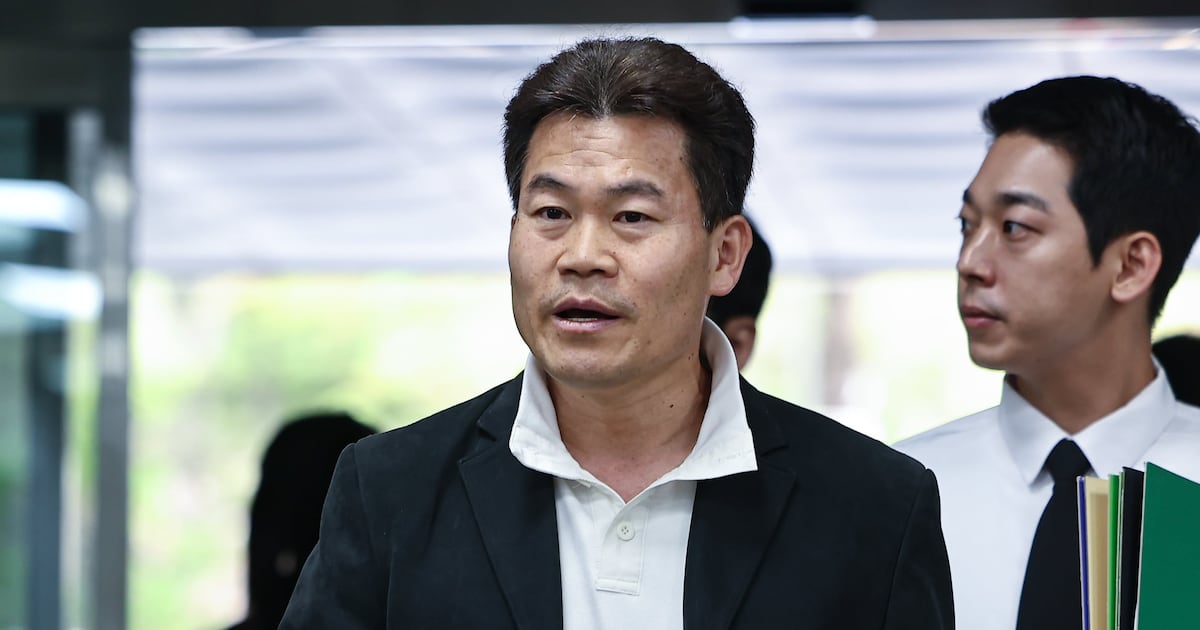
Jeon, who has been a vocal political commentator in recent months, addressed the accusations during a press conference held at the National Assembly. He characterized the claims against him as “baseless” and insisted his public statements about both politicians were grounded in factual evidence rather than personal attacks.
“My comments regarding both Lee Jae-myung’s legal challenges and Lee Jun-seok’s political decisions were based on publicly available information and legitimate political discourse,” Jeon stated. “In a democratic society, critical evaluation of public figures is not only permitted but essential for transparency.”
The controversy stems from a series of interviews Jeon gave to several media outlets last month, during which he questioned Lee Jae-myung’s fitness for leadership amid ongoing legal investigations and criticized Lee Jun-seok’s political maneuvering during his tenure as party chairman.
Lee Jae-myung’s legal team had subsequently indicated they were considering defamation charges, claiming Jeon’s statements went beyond fair criticism and contained false information designed to damage the Democratic Party leader’s reputation during a sensitive political period.
Political observers note this dispute reflects the increasingly polarized nature of South Korean politics, where the boundary between legitimate criticism and defamation has become increasingly contested ground. South Korea’s defamation laws allow for criminal penalties even when the statements in question might be factually accurate but deemed damaging to reputation.
Kim Sung-min, a political analyst at Seoul National University, explained, “We’re seeing a trend where political figures increasingly turn to legal action rather than public debate to settle disagreements. This raises important questions about freedom of expression in political discourse.”
The timing of the controversy is particularly significant as it comes amid shifting political alliances ahead of next year’s parliamentary elections. Both Lee Jae-myung and Lee Jun-seok represent different factions within South Korea’s complex political landscape, with the former maintaining strong support among progressive voters and the latter having cultivated appeal among younger conservative constituents.
Jeon Han-gil’s own political trajectory adds another dimension to the dispute. Once aligned with the conservative bloc, he has recently positioned himself as an independent voice, critical of both major political camps. Some analysts suggest this makes him a convenient target for established political figures uncomfortable with outside criticism.
“When you operate outside the traditional party structures, you become vulnerable to attacks from all sides,” noted Park Min-hee, a political communications expert at Korea University. “Jeon has deliberately positioned himself as a political outsider, which inevitably attracts scrutiny.”
The case has sparked renewed debate about the balance between protecting individual reputation and maintaining robust political discourse in South Korea. Civil society groups have expressed concern that defamation laws are increasingly weaponized to silence political opponents rather than protect individuals from genuine character assassination.
Representatives for both Lee Jae-myung and Lee Jun-seok declined to comment directly on Jeon’s latest statements, though sources close to Lee Jae-myung indicated his legal team is still reviewing options for potential legal action.
The Democratic Party issued a brief statement reiterating its position that “political discourse should be based on facts and mutual respect,” while the People Power Party has remained notably silent on the matter.
As the dispute continues, legal experts suggest any defamation case would face significant hurdles given the public interest dimension and the heightened protection typically afforded to political speech in democratic societies.
“The courts generally recognize that public figures, especially politicians, must tolerate greater criticism than private individuals,” said Lee Joo-hwan, a legal scholar specializing in media law. “Unless there is clear evidence of malicious intent or fabricated claims, defamation cases involving political figures rarely succeed in court.”
Fact Checker
Verify the accuracy of this article using The Disinformation Commission analysis and real-time sources.

6 Comments
It’s interesting that Jeon is framing this as a matter of transparency and accountability for elected leaders. I wonder how the public views his comments and whether they see them as fair political criticism or as unfair personal attacks.
That’s a good point. The public’s perception of Jeon’s statements will likely be key in determining whether the defamation claims have merit or if this is just part of normal political discourse.
This case highlights the fine line between legitimate political commentary and defamation. Jeon seems to be arguing that his statements were within the bounds of acceptable criticism, but the other side clearly views them as crossing that line. It will be interesting to see how this plays out.
It’s a complex issue with valid arguments on both sides. On one hand, public figures should expect scrutiny and criticism. On the other, defamation can undermine trust in institutions. Jeon will likely need to demonstrate that his statements were fair and factual to prevail.
Anytime public figures make accusations of defamation, it raises questions about freedom of speech and the role of the media in a democracy. Jeon’s defense that his comments were based on facts is reasonable, but the other side may still feel he went too far.
This seems like a complex political situation. Jeon Han-gil appears to be standing his ground, arguing that his comments on Lee Jae-myung and Lee Jun-seok were based on facts and legitimate political discourse. The concept of defamation can be tricky in a democracy where criticism of public figures is expected.