


Listen to the article
False Claims of Iranian Missile Strike on Riyadh Hotel Spread Through AI-Generated Images
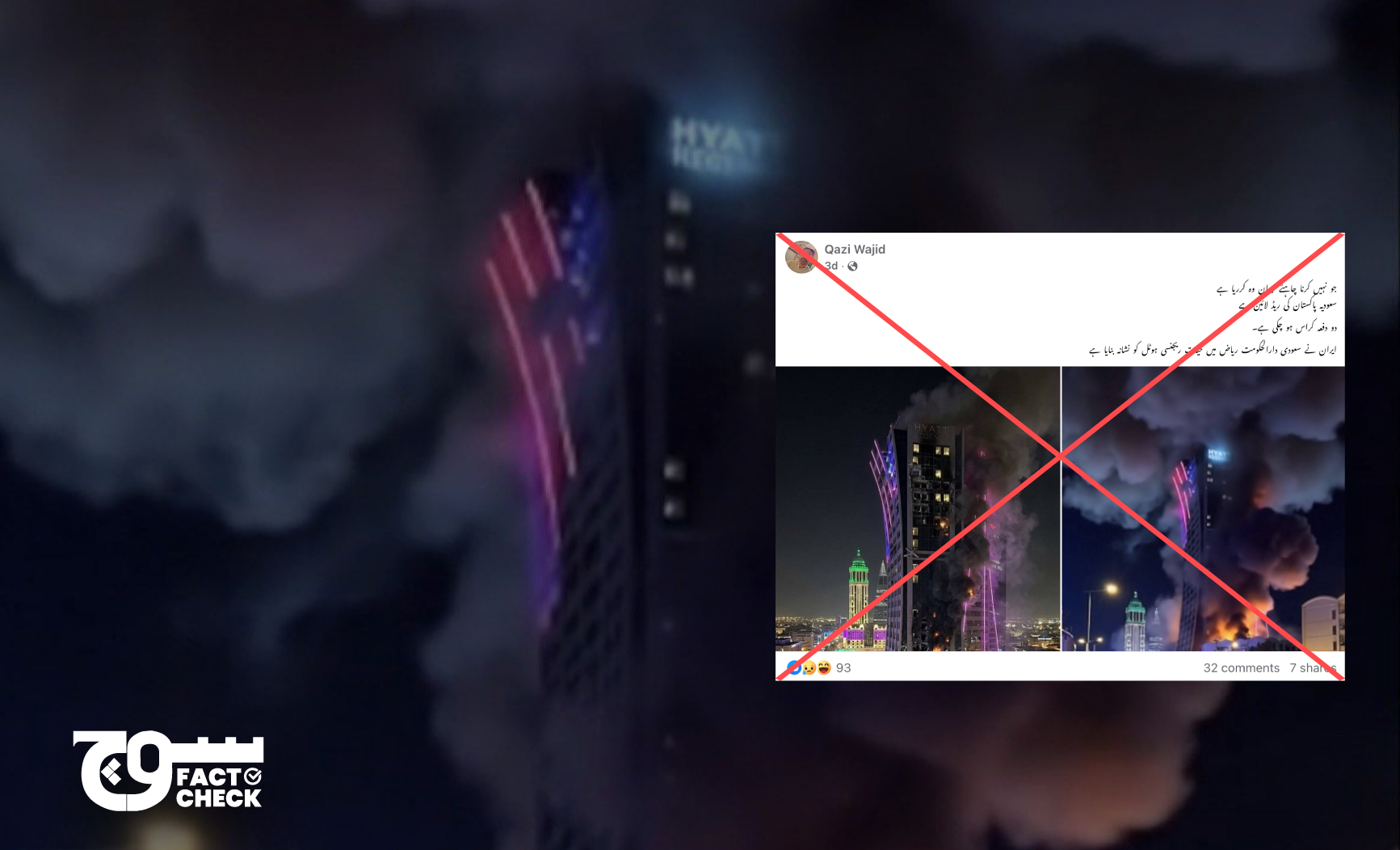
A viral image claiming to show the Hyatt Regency hotel in Riyadh, Saudi Arabia, burning after an alleged Iranian missile strike has been identified as artificially generated content, adding to the wave of misinformation emerging from the current Middle East conflict.
The image began circulating on March 2, 2026, when Facebook user Qazi Wajid shared a post showing what appeared to be a high-rise building engulfed in flames and smoke. The caption, written in Urdu, translated to: “Iran is doing what it shouldn’t. Saudi Arabia is Pakistan’s red line. Saudi has to step back two steps. Iran has targeted the Hyatt Regency hotel in Riyadh, the capital of Saudi Arabia.”
Analysis by fact-checkers revealed multiple indicators that the image was artificially created. Three different AI detection tools flagged the visual as likely generated by artificial intelligence. Hive Moderation rated the image at 99.8% likelihood of containing AI-generated content, while Sightengine returned a 96% probability score. Undetectable AI likewise indicated the image was likely AI-generated with a “38% real” assessment.
Visual analysis of the image revealed telltale signs of artificial creation, including unnaturally uniform smoke patterns that lack the chaotic dispersion typical of actual fires. The boundaries where smoke overlaps with the building show blending artifacts and warped edges characteristic of AI-generated imagery.
The falsified image has emerged against the backdrop of escalating regional tensions following joint US-Israeli strikes on Iran that began on February 28, 2026. That operation, which US officials characterized as necessary to degrade Iran’s nuclear and missile capabilities, resulted in significant casualties including the confirmed death of Iran’s Supreme Leader Ayatollah Ali Khamenei and numerous other senior officials.
Iran responded with retaliatory strikes across the region, particularly targeting areas hosting US forces. As the conflict expanded, rights groups reported mounting civilian casualties, with one estimate putting the death toll inside Iran at over 1,100 by March 4. Among the documented civilian impacts was the strike on the Shajareh Tayyebeh girls’ school in Minab and damage to medical facilities in Tehran.
Pakistan has taken a firm diplomatic stance in the widening crisis, condemning the escalation and urging de-escalation efforts. Deputy Prime Minister and Foreign Minister Ishaq Dar specifically warned Iran against attacking Saudi Arabia, citing existing Pakistan-Saudi security arrangements.
The rapidly evolving conflict has created fertile ground for misinformation. No credible news organizations or official sources have reported any missile strike on a Riyadh hotel matching the description in the viral posts. Extensive searches revealed no verified reports from major outlets or official statements confirming such an incident.
Despite the lack of verification, the AI-generated imagery spread quickly across multiple platforms. The false claim appeared in numerous posts on X (formerly Twitter), Facebook, Instagram and Threads, reaching potentially thousands of users across the region.
The fabricated hotel strike image demonstrates the increasing challenge of information verification during fast-moving conflicts, where AI-generated content can rapidly spread before fact-checkers and news organizations can establish the ground truth. The ease with which such convincing but false imagery can be created and disseminated highlights the growing need for digital literacy in assessing claims during international crises.
As regional tensions remain high, officials across multiple countries have urged caution regarding unverified claims circulating on social media that could further inflame the situation.
Fact Checker
Verify the accuracy of this article using The Disinformation Commission analysis and real-time sources.

8 Comments
This is really concerning – the spread of AI-generated misinformation can be so damaging. Fact-checking is crucial to identify and stop the proliferation of false claims, especially around sensitive geopolitical events.
With the increasing sophistication of AI-generated content, the public really needs to be vigilant about the sources and veracity of information, especially on volatile topics like the Middle East conflict. Fact-checking must keep pace with the technology.
It’s alarming to see how easily false images can be created and disseminated these days. Rigorous verification by media and fact-checkers is essential to combat the growing threat of AI-powered disinformation campaigns.
This highlights the critical importance of media literacy and source verification, especially when it comes to visual content. AI-powered image generation can be incredibly convincing, making it vital to double-check claims before sharing.
Absolutely. We all have a responsibility to be more discerning consumers of information in the digital age.
This is a troubling example of how AI can be exploited to create and spread false narratives. Maintaining a healthy skepticism and verifying claims through reputable sources is crucial to combat the growing threat of misinformation.
Misinformation spread through AI-generated content is a growing threat that can have serious real-world consequences. Vigilance and rigorous fact-checking are essential to stem the tide of falsehoods, especially on sensitive geopolitical issues.
The proliferation of AI-powered misinformation is deeply concerning. It’s a stark reminder that we must be extremely cautious about the sources and credibility of information, especially visual content, in today’s media landscape.