


Listen to the article
False Claims Circulate About Iranian Missile Strikes on US Navy Ships
Misleading videos purporting to show Iranian missiles striking US warships near Jask Island have been widely shared across social media platforms, investigation reveals. These claims, which began circulating in early May, have been debunked as entirely false.
The footage, which appears to show a ship being fired upon and eventually sinking, has been shared extensively on Facebook and X (formerly Twitter) with captions claiming: “Iran releases first footage that shows Two Iranian missiles hits multiple U.S. military ship or Frigates near Jask Island.”
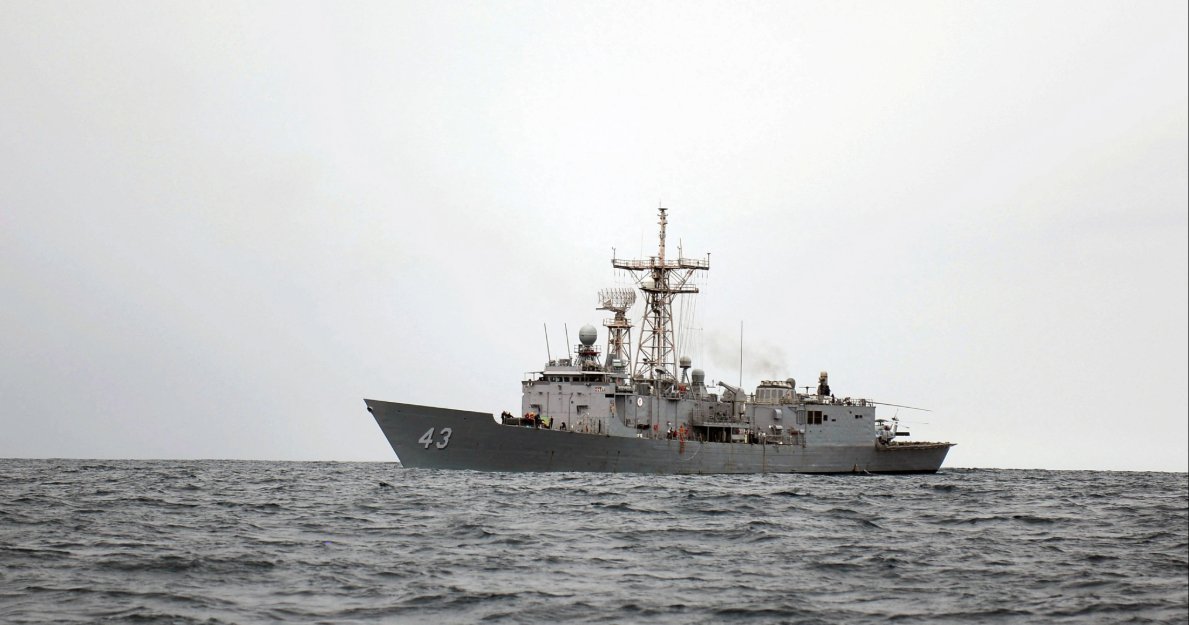
Fact-checking reveals the video actually dates back to 2016 and depicts a planned military exercise conducted jointly by forces from the United States, Canada, Australia, and South Korea. The ship shown in the footage is the decommissioned USS Thach, which was deliberately sunk as part of the controlled training operation.
The timing of these false claims coincides with heightened tensions in the Persian Gulf region. On May 4, Iran’s Fars News Agency, which maintains close ties with the Islamic Revolutionary Guard Corps, alleged that two missiles had struck a US warship sailing near the port of Jask at the southern entrance to the strategic Strait of Hormuz.
US Central Command swiftly denied these claims, issuing a formal statement that “no US Navy ships have been struck” and clarifying that American forces were “enforcing the naval blockade on Iranian ports” at the time of the alleged incident.
The Strait of Hormuz represents one of the world’s most critical maritime chokepoints, with approximately 20% of global oil shipments passing through this narrow waterway. Any military confrontation in this area could have significant implications for international energy markets and regional stability.
The circulation of this misleading footage comes amid complex diplomatic maneuvers regarding maritime access in the Gulf. US President Donald Trump had previously announced American intentions to “guide” vessels stranded by Iran’s closure of the Strait of Hormuz under an initiative dubbed “Project Freedom.” However, on May 5, Trump announced this operation would be “paused,” though without providing specific reasons for the suspension.
Media analysts note that the rapid spread of such false information underscores the challenges faced by news consumers in an era of easily manipulated digital content. When tensions rise between nations with a history of confrontation, misinformation often proliferates across social platforms, potentially inflaming an already delicate situation.
Maritime security experts emphasize that actual missile strikes against US naval vessels would represent a dramatic escalation in the long-standing tensions between Iran and the United States, likely triggering significant military response and diplomatic consequences.
For individuals encountering videos purporting to show military actions or international incidents, digital literacy specialists recommend several verification steps: checking multiple trusted news sources, investigating when the footage first appeared online, and considering whether the visual elements match known details about the purported event.
The incident highlights the ongoing information challenges surrounding geopolitical flashpoints, where false claims can rapidly gain traction and potentially influence public perception of sensitive international situations.
Fact Checker
Verify the accuracy of this article using The Disinformation Commission analysis and real-time sources.

17 Comments
The debunking of this false claim about an Iranian attack on US ships is a good reminder to be cautious of sensational claims, especially those that seem designed to inflame tensions. Verifying the source and context of media is essential.
Absolutely. In an environment of heightened geopolitical tensions, it’s critical that we all make the effort to fact-check claims before sharing or amplifying them, in order to prevent the escalation of dangerous misinformation.
It’s troubling to see how easily false narratives can take hold, especially around sensitive military and geopolitical issues. This highlights the need for rigorous fact-checking and media literacy to combat the proliferation of disinformation.
The false portrayal of this Iranian military exercise as an attack on US ships is quite concerning. It highlights the ongoing challenge of combating the spread of misinformation, particularly when it involves sensitive geopolitical issues.
The timing of these false claims coinciding with heightened regional tensions is concerning. It’s a good reminder to be extra vigilant about fact-checking claims, especially those related to military matters.
Absolutely. In an environment of rising tensions, the spread of misinformation can be very destabilizing. Responsible reporting and citizen fact-checking are essential to combat the proliferation of false narratives.
This is a sobering reminder of the power of misinformation, especially when it relates to military and security issues. The debunking of these false claims underscores the importance of rigorous fact-checking and media literacy.
The dissemination of this misleading footage is concerning, as it could potentially exacerbate regional tensions. It’s a good example of why we must all remain vigilant about verifying the source and context of media, rather than simply accepting sensational claims.
Absolutely. In an environment of heightened geopolitical instability, the spread of misinformation can have serious consequences. Maintaining a critical eye and fact-checking claims, especially those related to military matters, is crucial.
The deception around this Iranian military exercise video is concerning, as it could potentially escalate tensions in an already fragile region. Fact-checking and transparency are crucial to prevent the spread of dangerous misinformation.
This is a concerning example of how old footage can be repurposed and presented as new events to further certain narratives. It underscores the importance of rigorous fact-checking, especially around military and security-related issues.
Interesting to see the Iranian military exercise footage being misrepresented as an attack on US ships. Fact-checking is so important to avoid the spread of misinformation, especially around sensitive geopolitical issues.
You’re right, it’s concerning how quickly false narratives can spread online these days. Verifying the source and context of videos is crucial to prevent the amplification of disinformation.
The false portrayal of this Iranian military exercise as an attack on US ships is quite troubling. It highlights the ongoing challenge of combating the spread of misinformation, particularly when it involves sensitive geopolitical matters.
You make a good point. In today’s information landscape, we all have a responsibility to be discerning consumers of media and to verify claims before sharing them, in order to prevent the amplification of dangerous falsehoods.
This is a useful example of how old footage can be repurposed and misleadingly presented as new events. It highlights the importance of verifying the source and context of media, rather than just accepting sensational claims at face value.
Agreed. We should always be skeptical of claims that seem too dramatic or unbelievable, and take the time to cross-check the information from credible sources before sharing or amplifying it.