


Listen to the article
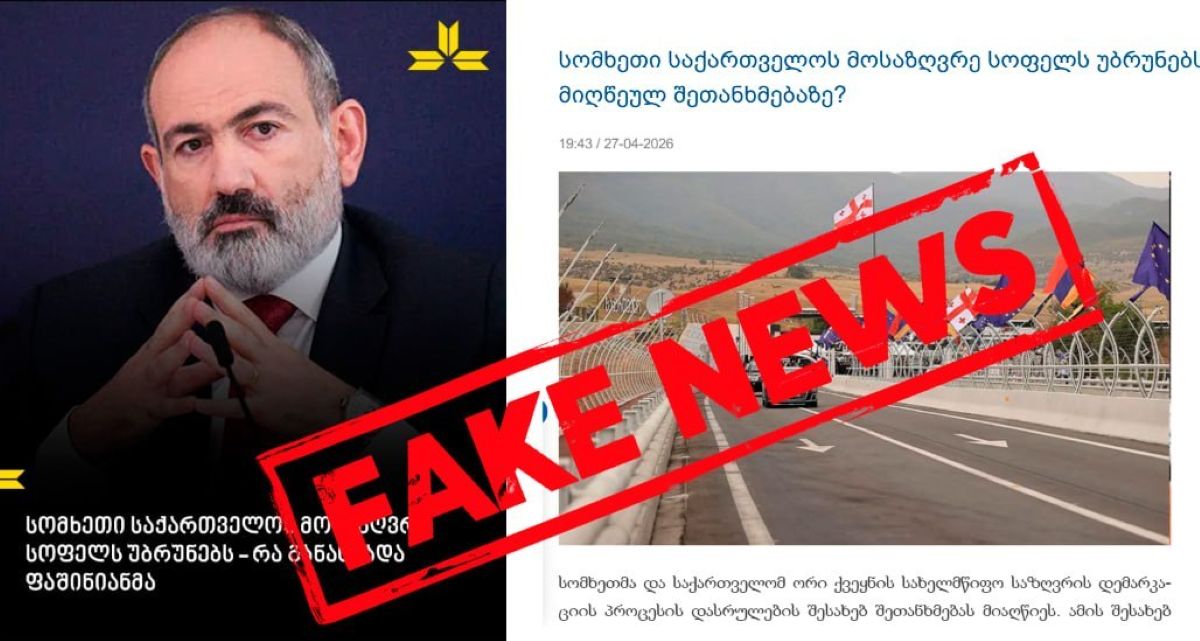
Georgian media reports claiming that Armenia would return the border village of Jiliza to Georgia have sparked outrage across Armenia, with officials firmly denying the false information that rapidly spread through both countries’ media channels.
The controversy began when several Georgian outlets, including Mtavari, CNews Exclusive, and others, published stories claiming Armenia was preparing to “return” the border village of Jiliza to Georgia as part of a border demarcation process. These reports incorrectly attributed statements to Armenian Prime Minister Nikol Pashinyan, who had only mentioned that border delimitation with Georgia remained on Armenia’s agenda.
“We have already reached agreements with our Georgian partners on this issue,” Pashinyan said during an event marking Border Guard Day for Armenia’s National Security Service. His comments, which made no reference to Jiliza or any territorial transfers, were apparently misinterpreted and amplified across media platforms.
The misinformation appears to have originated with Business Press News in Georgia, which later issued a correction and apologized for the inaccuracy. The outlet admitted it had based its reporting on a March 2024 article from Armenian newspaper Zhoghovurd that had suggested Armenia might “return” Jiliza to Georgia.
Nazeli Baghdasaryan, Pashinyan’s press secretary, issued a strong denial: “Any claim, suggestion or ‘information’ about an intention, plan or agreement to transfer any part of the sovereign territory of the Republic of Armenia to another country cannot be true.” She emphasized that the government “denied, denies and will continue to deny” such reports as fabricated.
The head of Jiliza’s local administration, Mher Vardanyan, added further clarity in comments to Armenian media, stating: “Our Jiliza has never been part of Georgia, so we do not fear any possible transfer.” He noted that no demarcation teams had been working in the Jiliza area.
Georgian political analyst Giorgi Tumasyan, who follows politics in both countries, suggested to JAMnews that the false reports were likely the result of journalistic negligence rather than a deliberate disinformation campaign.
The situation highlights ongoing sensitivities around borders in the South Caucasus region, which has seen multiple territorial disputes since the collapse of the Soviet Union. Armenia has been particularly sensitive to border issues following the 2020 Nagorno-Karabakh war and subsequent tensions with Azerbaijan.
The incident also reflects the challenges of information integrity in the region. What began as unverified “rumors” in Armenian media earlier this year was transformed into seemingly authoritative news by multiple outlets across both countries, demonstrating how easily misinformation can spread and inflame public sentiment.
On Armenian social media, users expressed particular outrage that some Armenian outlets had republished the false claims originating from Georgia. Many called for legal consequences for those spreading disinformation, suggesting fines of 2-3 million drams ($5,000-$8,000) or criminal charges for undermining Armenia’s territorial integrity.
“It is no longer funny that the authorities constantly deny disinformation spread daily by Kremlin-linked media and agents, putting pressure on our state,” wrote one commenter, reflecting widespread frustration with recurring misinformation issues.
The Georgian Foreign Ministry has not yet issued an official comment on the matter, according to fact-checking organization Myth Detector, which is seeking clarification from officials.
This incident underscores the ongoing vulnerability of the South Caucasus information space to misinformation and highlights the need for more rigorous fact-checking and editorial standards in regional media.
Fact Checker
Verify the accuracy of this article using The Disinformation Commission analysis and real-time sources.

9 Comments
Careful monitoring of media narratives and fact-checking are critical to counter disinformation campaigns. It’s concerning to see unverified claims gain traction, even if they are later retracted. Maintaining transparency and accuracy should be the top priority for responsible journalism.
This looks like a concerning case of disinformation targeting Armenia. It’s important that media outlets fact-check claims and avoid spreading misinformation, even if it originates from another source. Transparency and accuracy are critical, especially on sensitive border issues.
It’s concerning to see false claims about territorial transfers being amplified in the media, even if they are later retracted. Fact-checking and due diligence are essential to prevent the spread of damaging disinformation campaigns, especially on issues related to national borders and sovereignty.
I appreciate the outlet issuing a correction and apology for the inaccurate reporting. Taking accountability for mistakes is important to maintain public trust. Fact-based, unbiased journalism is crucial, especially on geopolitical matters with the potential to escalate tensions.
This incident highlights the need for rigorous media monitoring and fact-checking, particularly on issues related to border disputes and national sovereignty. Responsible journalism is vital to counter the spread of disinformation and maintain public trust.
You’re right, the media has a responsibility to verify information from authoritative sources before publishing. Fact-based reporting is crucial to prevent the escalation of tensions and maintain transparency on sensitive geopolitical issues.
It’s troubling to see false claims about territorial transfers being amplified in the media. Responsible journalism requires verifying information from authoritative sources before publication. Fact-checking is essential to prevent the spread of damaging disinformation campaigns.
While border delimitation is a complex and sensitive issue, it’s disturbing to see false claims circulating in the media. Outlets need to exercise due diligence and confirm information from reliable sources before publishing. Unsubstantiated reports can have serious consequences.
Absolutely, comprehensive fact-checking is essential to prevent the spread of damaging misinformation, especially on geopolitical matters. The media plays a crucial role in informing the public accurately.