


Listen to the article
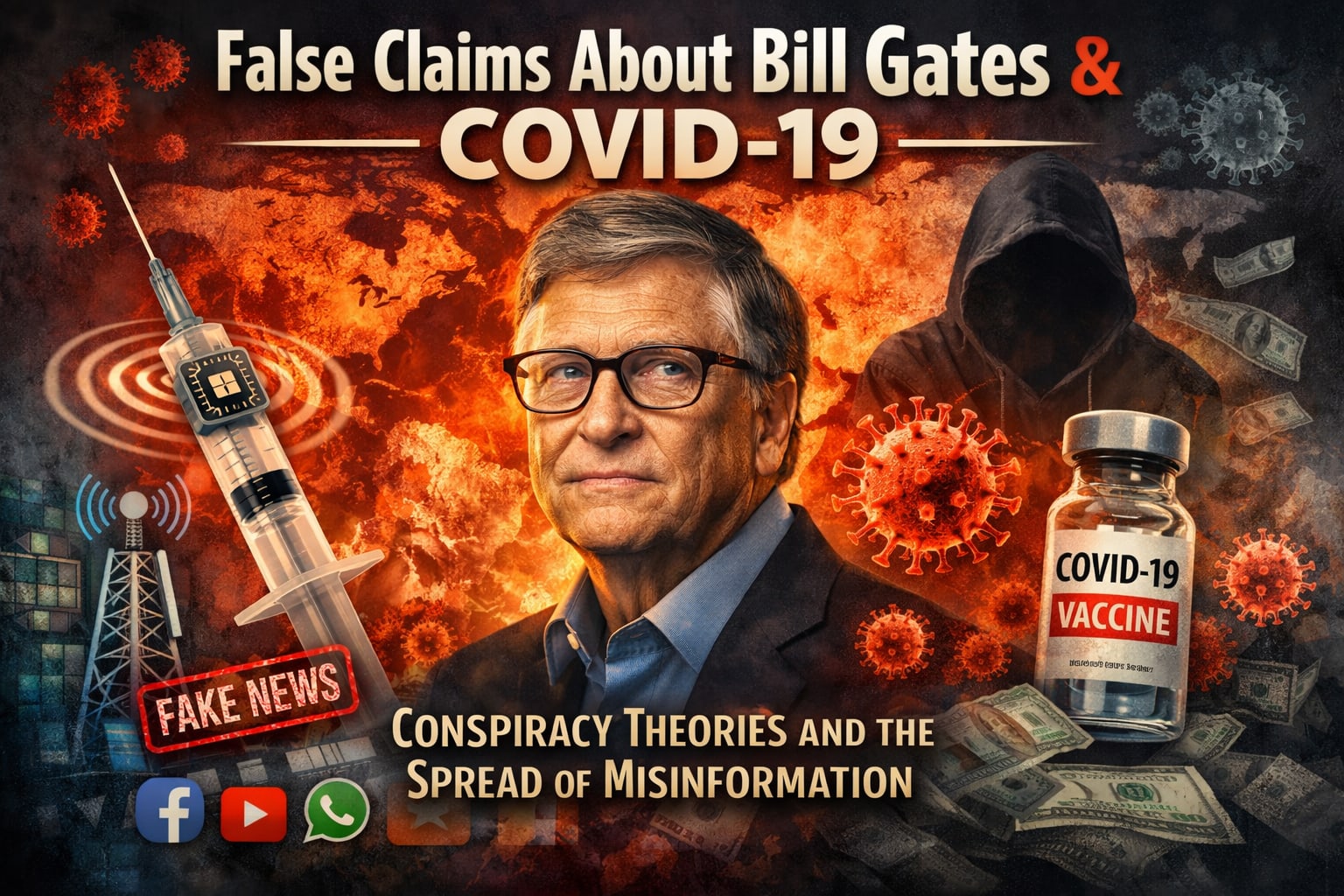
The COVID-19 pandemic sparked a surge in misinformation that spread globally alongside the virus, with Microsoft co-founder Bill Gates emerging as an unlikely focal point for numerous conspiracy theories. Despite no evidence supporting these claims, Gates found himself at the center of a web of false narratives that gained significant traction during a period of unprecedented fear and uncertainty.
Public health crises historically create environments where misinformation thrives, but COVID-19’s emergence in early 2020 presented a unique convergence of factors. As governments worldwide scrambled to respond and scientists raced to understand the novel coronavirus, many people sought explanations amid the chaos. This psychological vacuum became fertile ground for conspiracy theories offering simplistic explanations for a complex global catastrophe.
“During times of significant uncertainty, people naturally search for clear answers,” explains Dr. Karen Douglas, a social psychology professor who studies conspiracy beliefs. “When official information is evolving or incomplete, alternative narratives—even unfounded ones—can feel more satisfying than acknowledging the unknowns.”
The modern information ecosystem further exacerbated this problem. Social media platforms, with algorithms prioritizing engagement over accuracy, allowed false claims to spread at unprecedented speeds. Content that provoked strong emotional responses—regardless of its veracity—often received the greatest visibility and reach.
Gates’ vulnerability to these conspiracy theories stemmed largely from his decades of philanthropy in global health. The Bill & Melinda Gates Foundation has invested billions in public health initiatives worldwide, including significant funding for vaccine development and pandemic preparedness. Ironically, this legitimate work in disease prevention made him an easy target.
Conspiracy theorists weaponized Gates’ 2015 TED Talk warning about the global risk of a respiratory pandemic, reframing his prescient concerns as evidence of prior knowledge. Similarly, the Gates Foundation’s investments in vaccine development were distorted into claims that he planned to implant microchips through vaccination programs or intended to use vaccines for population control.
Joseph Uscinski, a political science professor specializing in conspiracy theories, notes this pattern: “Conspiracy theories typically take fragments of reality and reconfigure them into a malevolent narrative. Gates’ genuine public health advocacy became ‘proof’ of hidden agendas in the minds of those already predisposed to distrust powerful institutions.”
The spread of these false claims was turbocharged by several factors. Social media’s algorithmic amplification ensured that sensational content reached millions, while online echo chambers reinforced these beliefs among like-minded groups. Pre-existing mistrust in governmental institutions, pharmaceutical companies, and mainstream media created receptive audiences for alternative explanations.
Compounding the problem, the pandemic emerged during a period of heightened political polarization in many countries. Public health measures became politicized, and attitudes toward vaccines often aligned with political affiliations rather than scientific consensus.
These conspiracy theories carried real-world consequences beyond damaging Gates’ reputation. Public health officials reported that vaccine hesitancy, partially fueled by misinformation, slowed immunization efforts in multiple countries. The Gates Foundation faced increased security concerns as threats escalated against its founder and staff.
“The harm extends beyond individuals to society at large,” says Claire Wardle, co-founder of First Draft, an organization combating misinformation. “When people reject vaccines or distrust public health guidance based on false information, it compromises our collective ability to respond effectively to the pandemic.”
Tech companies eventually implemented measures to counter COVID-related misinformation, including warning labels, reduced algorithmic amplification, and removal of the most dangerous false claims. However, by then, many conspiracy narratives had already become entrenched.
The Gates conspiracy phenomenon highlights the vulnerabilities in our information ecosystem during crisis events. Media literacy experts emphasize the importance of developing critical evaluation skills, encouraging people to verify sources and seek information from established medical and scientific institutions.
Despite ongoing efforts to combat misinformation, the false narratives about Gates persist in certain circles. This persistence underscores a troubling reality: in the digital age, conspiracy theories can maintain momentum long after being debunked, continuing to influence public perception and potentially hampering future public health initiatives.
As the world gradually emerges from the acute phase of the pandemic, understanding how these false narratives developed remains crucial for building resilience against future waves of misinformation during times of crisis.
Fact Checker
Verify the accuracy of this article using The Disinformation Commission analysis and real-time sources.

16 Comments
The proliferation of COVID-19 misinformation is a stark reminder of the importance of reliable, science-based information during a public health crisis. Responsible journalism and digital literacy are key to countering these false narratives.
Absolutely. Misinformation can have real-world consequences, especially when it undermines public trust in institutions and experts. Combating this challenge requires a multi-faceted approach.
This article highlights the urgent need for greater media literacy and critical thinking skills among the general public. Conspiracy theories may provide a sense of control, but they often distract from the real issues at hand.
This is a cautionary tale about the dangers of social media echo chambers. Unchecked misinformation can quickly spiral out of control, undermining public trust and hampering efforts to address genuine issues.
Agreed. Social media platforms need to be more proactive in identifying and removing harmful misinformation, while also promoting media literacy to help users think critically about online content.
The COVID-19 pandemic has created a perfect storm for the spread of misinformation. As the article notes, people crave simple explanations during times of crisis, which makes them vulnerable to false narratives.
The proliferation of COVID-19 misinformation is a concerning issue that highlights the need for robust fact-checking and public education. Responsible journalism and digital literacy are key to countering these false narratives.
Absolutely. Misinformation can erode public trust and undermine efforts to address genuine challenges. A multi-pronged approach, involving platforms, authorities, and the public, is necessary to combat this issue.
This is a troubling trend that underscores the need for greater media literacy and critical thinking skills. Unchecked misinformation can have real-world impacts, especially when it targets high-profile individuals.
This is a concerning trend, as misinformation can spread rapidly online and undermine public trust during a crisis. Fact-checking and media literacy are crucial to counter these false narratives.
Agreed. Conspiracy theories often provide a false sense of control and simplicity, which can be very appealing in times of uncertainty. Responsible reporting and critical thinking are needed to combat this.
It’s disheartening to see how quickly false claims can spread, especially when they target high-profile individuals. This underscores the need for robust fact-checking and public education on identifying misinformation.
The COVID-19 pandemic has exposed the vulnerabilities of our information ecosystem. Fact-checking, media literacy, and proactive communication from authorities are essential to counter the spread of misinformation.
Agreed. Misinformation can have serious public health consequences, especially during a crisis. Responsible reporting and digital literacy are crucial to help people navigate complex issues and separate truth from fiction.
It’s disturbing to see how easily misinformation can take hold, especially around high-profile figures like Bill Gates. Careful scrutiny of sources and claims is essential to separate fact from fiction.
Absolutely. Conspiracy theories thrive in the absence of clear information. Public health authorities need to be proactive in providing accurate, transparent updates to the public.