


Listen to the article
Vatican Launches Investigation into Spanish Bishop Over Abuse Allegations
The Vatican has initiated a canonical investigation into Bishop Rafael Zornoza of Cádiz and Ceuta following allegations of sexual abuse reportedly dating back to the 1990s. The 76-year-old prelate has categorically denied the accusations, creating a case unprecedented in Spain for a sitting bishop.
The allegations emerged this summer when a man approached the Dicastery for the Doctrine of the Faith in Rome, claiming he was abused by Zornoza between the ages of 14 and 21. During that period, Zornoza served as rector of the diocesan seminary of Getafe, a then-newly established diocese south of Madrid where he held significant influence in formation.
Church sources confirm the case has now been formally admitted to the tribunal of the Apostolic Nunciature in Spain. In an October 10 statement, the Diocese of Cádiz and Ceuta described the accusations as “very serious and entirely false,” while expressing “full confidence in justice and complete willingness to cooperate.” The diocese also emphasized “the respect due to the presumption of innocence that applies to all persons.”
Bishop Zornoza, who has been battling aggressive cancer, has suspended his pastoral duties “to allow the clarification of the facts” and to focus on his medical treatment. Though he submitted his resignation to Pope Francis upon reaching the canonical retirement age in 2024, the pontiff has not yet accepted it.
The complexity of this case lies in its canonical nature. While civil proceedings are reportedly time-barred due to the alleged events occurring approximately thirty years ago, the Vatican process will determine whether the accusations possess the “verisimilitude” required to proceed to a formal penal trial under Church law.
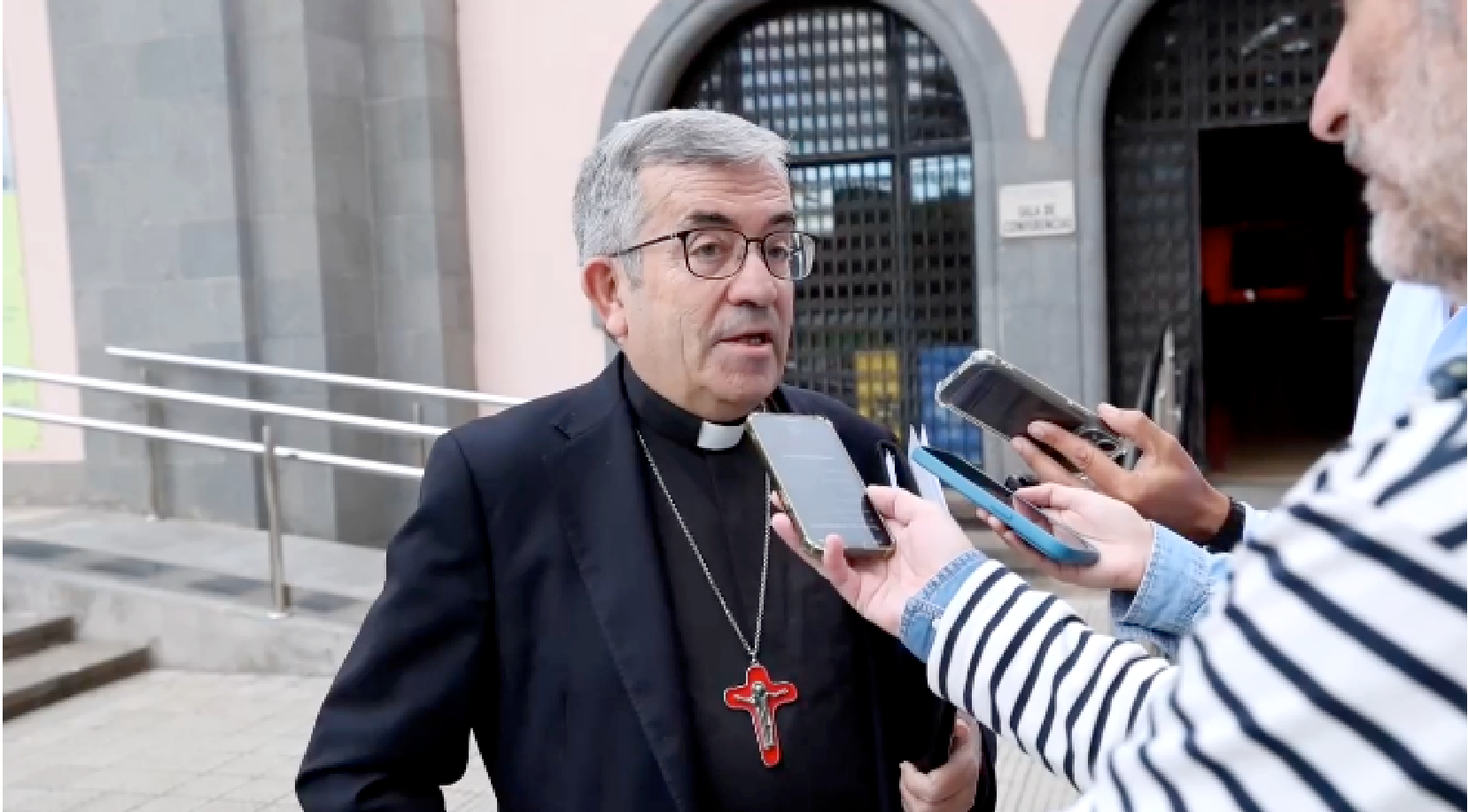
Archbishop Luis Argüello, president of the Spanish Bishops’ Conference, addressed the situation with measured concern. “The fact that the Holy See has initiated an investigation means the accusation carries a certain credibility,” he said during remarks in Las Palmas. “We wish to know the truth, to bring justice to any victim if confirmed, and to accompany all affected persons.”
Cardinal José Cobo, Archbishop of Madrid, described the situation as “a drama” involving “two sons of the Church.” He expressed confidence in the canonical system’s thoroughness, noting Pope Francis has strengthened these procedures to ensure accountability.
The allegations first appeared in the newspaper El País, which has consistently scrutinized the Catholic Church in Spain. Church officials and some media analysts have criticized the publication for what they consider ideological bias and methodological flaws in its reporting on abuse cases, pointing to previously documented instances where demonstrably false testimonies were included in investigations.
Nevertheless, Church leaders acknowledge that all allegations require serious attention and transparency, regardless of their age or initial plausibility. “The mere existence of pain, whether from the victim or from an unjustly accused priest, calls us to truth and compassion,” Archbishop Argüello noted.
For Bishop Zornoza, whose ecclesiastical career includes service as rector, auxiliary bishop of Getafe, and since 2011 as bishop of Cádiz and Ceuta, this investigation represents a profound challenge. His legacy now hangs in the balance as both the Church and history await judgment.
The case has significant implications for the Church in Spain and globally. If Zornoza is cleared, it will affirm the Church’s commitment to due process amid heightened scrutiny. If the allegations are substantiated, it would demonstrate the Vatican’s willingness to hold even senior clerics accountable.
This investigation occurs against the backdrop of the Church’s ongoing efforts to address historical abuse cases. In recent years, Pope Francis has implemented numerous reforms to strengthen accountability measures and improve transparency in handling such allegations.
The Zornoza case marks a critical moment where Rome’s commitment to truth-seeking, Spain’s ecclesiastical accountability, and the painful reconciliation with historical wrongs converge in what Church leaders describe as the difficult but necessary work of institutional purification.
Fact Checker
Verify the accuracy of this article using The Disinformation Commission analysis and real-time sources.

20 Comments
This is a complex and delicate situation. I appreciate the Diocese’s commitment to cooperating with the investigation while also upholding the presumption of innocence. It’s important to let the facts emerge through a careful and thorough process.
Agreed. Rushing to judgment, on either side, could undermine justice. Patience and due process are crucial in cases like this.
The allegations against Bishop Zornoza are very serious, but I’m glad to see the Diocese taking a measured approach and emphasizing the importance of due process. A fair and impartial investigation is crucial in cases like this.
Well said. Maintaining objectivity and respecting the rights of all involved is essential when dealing with such sensitive matters.
The allegations against Bishop Zornoza are certainly concerning, but I’m glad to see the Diocese taking a measured approach and emphasizing the importance of the presumption of innocence. A thorough, transparent investigation is the best way to uncover the truth.
Absolutely. In sensitive matters like this, it’s critical to let the facts speak for themselves through a fair and impartial process.
This is a very serious and sensitive case. It’s good that the Diocese is cooperating with the investigation and respecting the presumption of innocence. We should wait for the full facts to emerge before drawing any conclusions.
Agreed, rushing to judgment would be unwise. A thorough, impartial investigation is critical in matters like this.
Abuse allegations are always deeply concerning, but the Diocese’s stance of cooperating fully while upholding the presumption of innocence seems prudent. I hope the investigation is thorough and transparent.
Absolutely. Maintaining objectivity and fairness is crucial in sensitive cases like this.
This is a sensitive and difficult situation. I appreciate the Diocese’s stance of cooperating fully while upholding the presumption of innocence. A thorough, transparent investigation is the best way to determine the truth.
Exactly. Jumping to conclusions without all the evidence would be unwise and could undermine justice.
The allegations against Bishop Zornoza are certainly concerning, but I’m glad to see the Diocese taking a measured approach and emphasizing the importance of the presumption of innocence. A thorough investigation is needed to uncover the facts.
Agreed. In matters like this, it’s critical to let the facts speak for themselves through a fair and impartial process.
This is a complex and delicate situation. I appreciate the Diocese’s commitment to cooperating with the investigation and respecting the presumption of innocence. The truth needs to be established through a careful process.
Well said. Rushing to judgment, on either side, would be unwise. Patience and due process are essential.
The allegations against Bishop Zornoza are certainly troubling, but I appreciate the Diocese’s statement emphasizing the presumption of innocence. These types of cases can be complex, and I hope the investigation uncovers the full truth.
Yes, it’s important to let due process play out. Jumping to conclusions without all the facts could undermine justice.
This is a delicate and complex situation. I appreciate the Diocese’s stance of cooperating fully with the investigation while also upholding the presumption of innocence. A careful, objective process is essential to determine the facts.
Well said. Maintaining fairness and respect for the rights of all involved is crucial when dealing with such sensitive allegations.