


Listen to the article
European Union Becomes Prime Target for Disinformation in January
The European Union emerged as the most targeted subject of disinformation in January 2026, according to the latest analysis from the European Digital Media Observatory (EDMO) fact-checking network. The network, comprising 34 organizations, identified a significant shift in disinformation patterns across the continent.
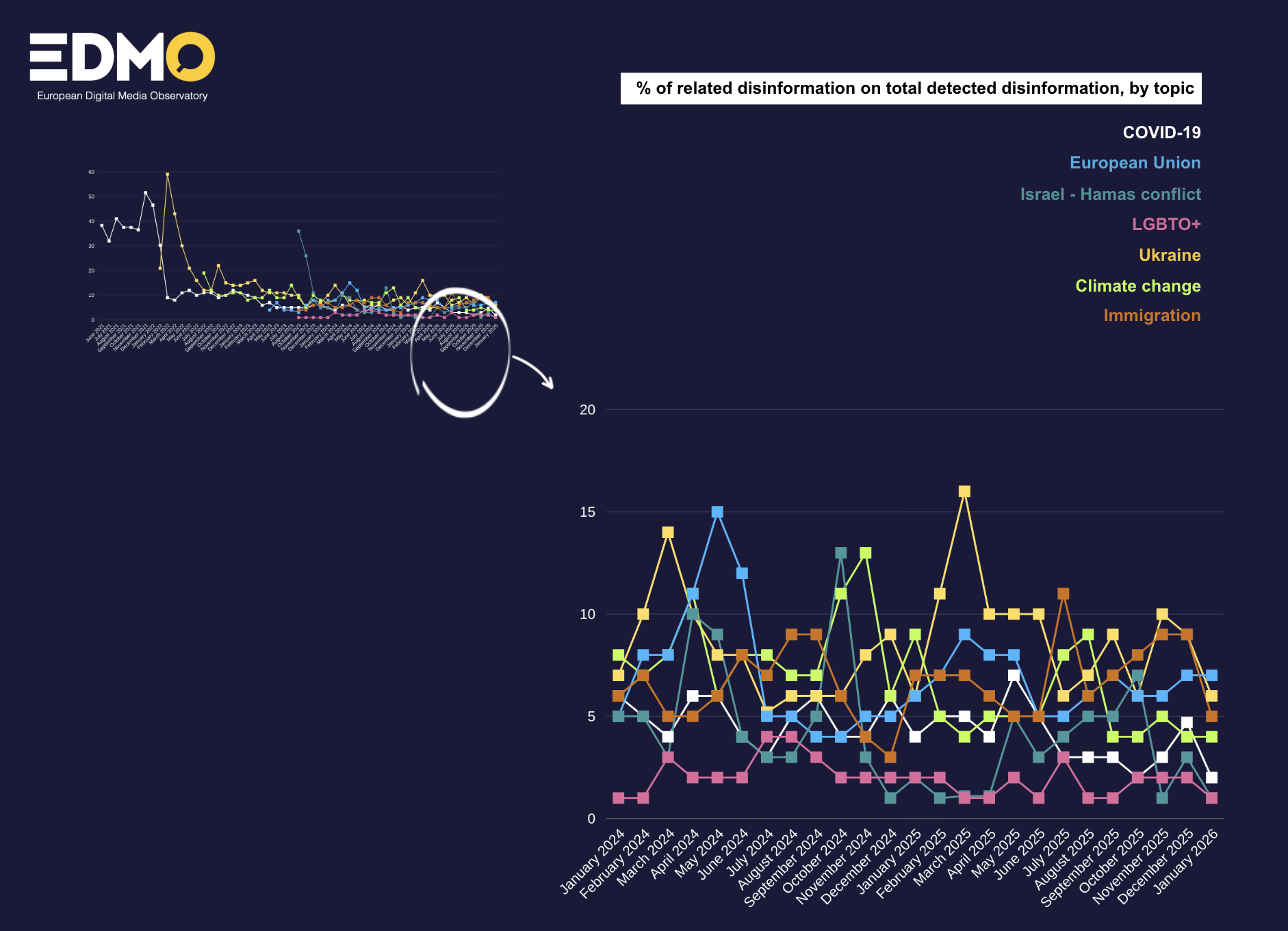
EDMO’s fact-checkers published 1,633 articles debunking false claims in January, with 112 articles (7%) specifically addressing EU-related disinformation. This marks a notable increase in EU-targeted false information, while disinformation about the Ukraine conflict and immigration decreased by three and four percentage points respectively, accounting for 6% and 5% of fact-checks.
Other monitored topics showed relatively stable patterns, with climate change-related disinformation at 4%, COVID-19 at 2%, and both the Gaza crisis and LGBTQ+/gender issues at 1% each.
The surge in EU-focused disinformation appears linked to several concurrent events. Bulgaria’s adoption of the Euro, the signing of the EU-Mercosur Agreement that triggered farmers’ protests across multiple countries, and a corruption scandal involving former European Commission Vice President Federica Mogherini all contributed to the proliferation of false claims.
Fact-checkers identified numerous fabricated stories, including claims that “Bulgarian euros” were being rejected in countries like Germany. Disinformation also circulated regarding the specifications of the EU-Mercosur agreement and alleged government suppression of farmers’ protests.
Top EU officials found themselves targeted by false claims, with European Commission President Ursula von der Leyen, EU High Representative Kaja Kallas, and European Central Bank President Christine Lagarde all facing disinformation campaigns.
The EDMO report highlights a troubling trend in the use of artificial intelligence to create deceptive content. January witnessed a record-breaking 20% of all fact-checked disinformation being either created or manipulated using AI technologies. This represents 325 of the 1,633 fact-checking articles published during the month.
The prevalence of AI-generated disinformation has been steadily climbing in recent months. Political crises in Venezuela and Iran, events in the United States, and farmers’ protests across the EU have all been subjects of misleading AI-generated content.
An investigation by Maldita, one of the EDMO network’s fact-checking organizations, uncovered a network of TikTok accounts exploiting political polarization to monetize content. These accounts used AI to create videos depicting protests in Iran and Venezuela, as well as pro-Palestinian demonstrations.
Other events, including a train accident in Spain and extreme snowfall in Russia’s Kamchatka region, were also subjects of AI-generated disinformation. This suggests an emerging pattern where AI tools are being used to exploit breaking news situations for financial gain by creating emotionally charged but false content.
The findings point to an evolving disinformation landscape where artificial intelligence is increasingly being deployed as a tool to create convincing false narratives. This development poses new challenges for fact-checkers, media organizations, and digital platforms in their efforts to combat the spread of misleading information.
As the EU continues to implement regulatory frameworks like the Digital Services Act to address online disinformation, these latest trends underscore the dynamic nature of the threat and the need for adaptive countermeasures.
Fact Checker
Verify the accuracy of this article using The Disinformation Commission analysis and real-time sources.

8 Comments
It’s worrying to see disinformation targeting the EU surge during this period of geopolitical tension and major policy changes. Careful scrutiny and debunking of false claims is crucial to maintaining public trust and social stability.
This data highlights the need for robust fact-checking and media literacy efforts across Europe. Disinformation can quickly spread and undermine democratic processes if left unchecked. Fact-checkers are essential guardians of the truth.
Well said. Fact-checking organizations are a crucial safeguard against the erosion of truth and the manipulation of public opinion. Their work deserves strong support.
The surge in EU-focused disinformation is concerning and underscores the importance of vigilant fact-checking. Maintaining public trust in institutions and democratic processes requires constantly debunking false claims.
The rise in EU-focused disinformation is concerning. Disinformation campaigns can undermine public confidence and fuel social divisions. Rigorous fact-checking is vital to uphold truth and transparency, especially on important policy issues.
Absolutely. Fact-checkers play a vital watchdog role in a healthy democracy. Their work helps the public sort fact from fiction and make informed decisions.
Interesting how disinformation targeting the EU has surged recently, amidst events like Bulgaria’s Euro adoption and the EU-Mercosur trade deal. Fact-checking networks like EDMO play a crucial role in debunking false claims and maintaining public trust.
I agree, the EU must be vigilant against malicious actors trying to sow discord through disinformation. Fact-checking is essential to counter the spread of misinformation.