


Listen to the article
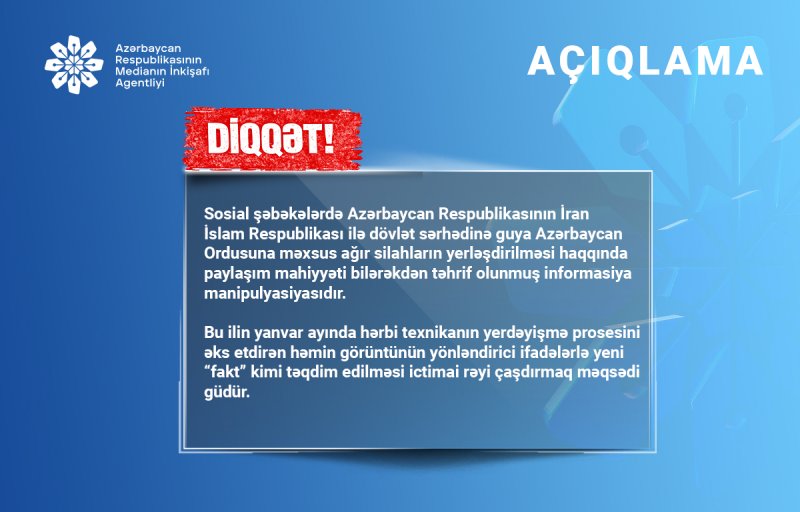
The Azerbaijan Media Development Agency has issued a strong condemnation of what it describes as deliberate information manipulation regarding alleged Azerbaijani military movements near the Iranian border.
According to an official statement from the agency, videos from January showing routine military activities have been recirculated on social media platforms with misleading captions suggesting they represent new deployments. These false representations appear designed to provoke public concern amid already heightened tensions in the broader region.
“We strongly condemn these information provocations, which seek to create panic by manipulating data during ongoing military operations in the Middle East,” the agency declared in its statement. The timing of this misinformation campaign coincides with escalating military actions elsewhere in the region, potentially creating a dangerous conflation of separate geopolitical situations.
The agency emphasized that sharing information about Azerbaijani Armed Forces movements, including details about personnel, weapons systems, or equipment deployment, constitutes a criminal offense under national security laws. This reminder comes as Azerbaijan continues to maintain vigilance over sensitive military information, particularly given its strategic position between Russia, Iran, and Turkey.
Regional security experts note that Azerbaijan’s geopolitical positioning makes it particularly vulnerable to information warfare. The country shares a 765-kilometer border with Iran, a relationship that has experienced periods of both cooperation and tension over the years. Recent developments in Iranian-Azerbaijani relations have been complicated by Azerbaijan’s close ties with Israel and Turkey.
The deliberate spreading of false information about military movements represents a significant security concern for Azerbaijani authorities, particularly as regional conflicts intensify elsewhere in the Middle East. Such misinformation could potentially inflame diplomatic tensions or create unnecessary alarm among the civilian population.
Media professionals across Azerbaijan are being urged to exercise heightened vigilance when reporting on social media content related to national security matters. The agency specifically called on journalists to rely exclusively on official government sources for information about military activities and to refrain from amplifying suspicious content that lacks proper verification.
“In times of regional instability, professional journalism serves as a crucial defense against panic and misinformation,” said a regional media analyst who requested anonymity. “The recycling of old footage with new, alarming captions is a common tactic in modern information warfare.”
The agency’s warning comes amid broader concerns about disinformation campaigns targeting countries in the Caucasus region. Digital forensic experts have identified increasing sophisticated attempts to manipulate public opinion through coordinated social media campaigns, often using authentic but outdated footage repurposed with misleading contexts.
Security analysts suggest that such information operations may be intended to test Azerbaijan’s public response mechanisms or to distract attention from other regional developments. The targeted nature of the misinformation—specifically focusing on the sensitive Iran-Azerbaijan border—raises questions about potential geopolitical motivations.
For everyday citizens in Azerbaijan, the proliferation of such content represents a challenge in distinguishing reliable information from manipulation. The Media Development Agency has previously conducted public awareness campaigns about digital literacy and critical consumption of social media content.
As regional conflicts continue to evolve elsewhere in the Middle East, Azerbaijani authorities remain on alert for further information provocations that could undermine public confidence or misrepresent the country’s military posture to international observers.
The agency concluded its statement by reiterating the importance of responsible media practices during periods of regional instability and urging citizens to rely on official channels for accurate information about matters of national security.
Fact Checker
Verify the accuracy of this article using The Disinformation Commission analysis and real-time sources.

8 Comments
I’m curious to learn more about the specific military activities that were misrepresented in these social media posts. Was it just routine training exercises, or something more significant? Either way, it’s good that the government is taking steps to correct the record.
Interesting that Azerbaijan is cracking down on military misinformation. Social media can be a breeding ground for false claims, especially around sensitive geopolitical issues. It’s important for governments to address this proactively to maintain public trust and stability.
It’s concerning to see how social media can be used to spread disinformation, even about routine military activities. This just highlights the importance of critical thinking and verifying sources, especially when it comes to sensitive geopolitical issues.
The Azerbaijan government’s strict stance on sharing military information is understandable, given the sensitivity of the situation. However, I wonder if there are ways to strike a balance between security and transparency, so that the public can be informed without compromising national interests.
That’s a fair point. Governments need to find ways to communicate factual information without escalating tensions or enabling misinformation. A nuanced approach that respects both national security and public interest would be ideal.
While I appreciate the Azerbaijan government’s efforts to combat false claims, I wonder if there are any concerns about overreach or suppression of legitimate information. Maintaining the balance between national security and press freedom is always a delicate challenge.
The timing of this misinformation campaign is certainly concerning, given the heightened tensions in the broader region. It’s a reminder that we need to be vigilant about verifying information, especially when it comes to national security matters.
Agreed. Fact-checking and responsible reporting are crucial to prevent the spread of harmful rumors and propaganda, especially during times of conflict.