


Listen to the article
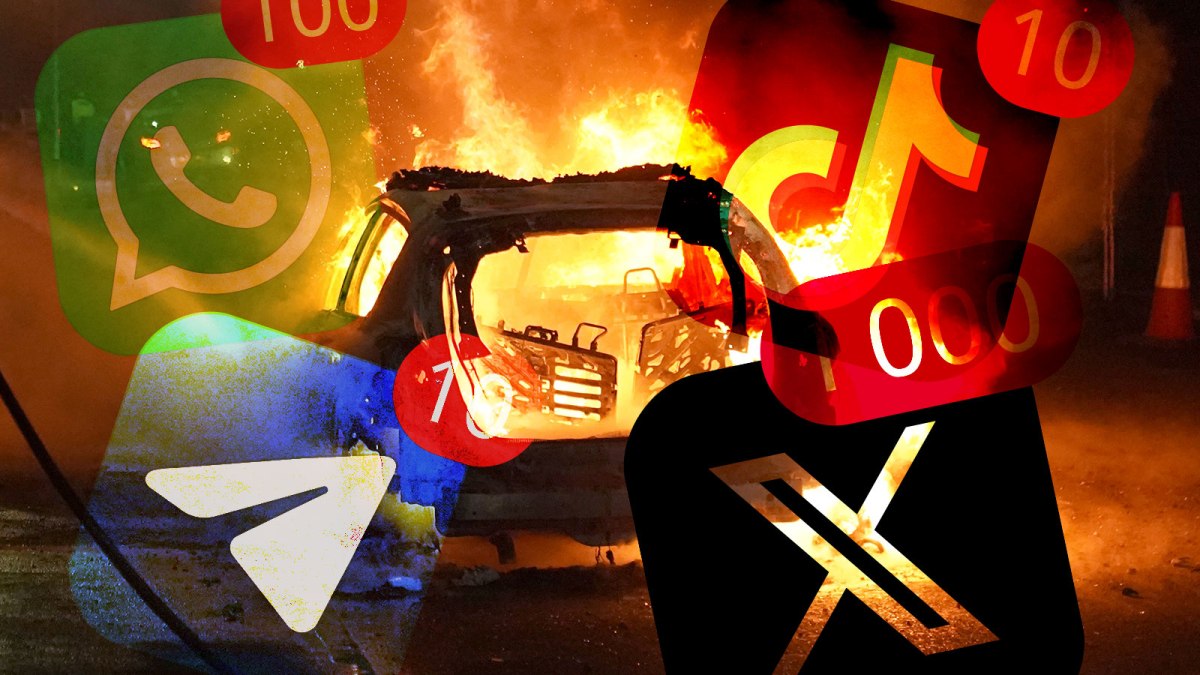
In the wake of recent violent clashes in Southport, a troubling social media phenomenon has emerged, fueling tensions and spreading misinformation across the UK. What began as a genuine outpouring of grief following a tragic knife attack that killed three children has morphed into something far more sinister, as anonymous social media accounts have orchestrated and amplified civil unrest.
Security officials and social media experts have identified a network of accounts deliberately spreading false narratives about the attack. These accounts, many appearing overnight with few followers, have been pushing inflammatory content claiming the suspect is an Islamic extremist who arrived in the UK by boat – assertions directly contradicted by police statements.
“We’re seeing a coordinated effort to manipulate public sentiment,” said Dr. Hannah Mitchell, a digital disinformation specialist at King’s College London. “These aren’t simply concerned citizens sharing information. The timing, messaging, and amplification patterns suggest an organized campaign designed to incite division.”
The accounts follow a recognizable pattern: they typically use Union Jack imagery in their profiles, share similar talking points, and rapidly amplify each other’s content. Many originate from accounts created just days before the violence, raising suspicions about their authenticity.
Counter-terrorism officials are particularly concerned about the role of foreign influence operations. Intelligence sources have noted similarities to Russian disinformation tactics used during previous periods of national tension. While definitive attribution remains challenging, digital forensics teams have traced some of the most viral content to IP addresses outside the UK.
“These are the classic hallmarks of information warfare,” explained former MI6 officer Richard Barnes. “Create division, amplify existing tensions, and watch a society tear itself apart from within. It’s cost-effective and provides plausible deniability.”
The impact has been tangible. In Southport, Liverpool, and several other cities, violent demonstrations have broken out, with participants citing misinformation that originated from these suspicious accounts. Police have reported numerous injuries among officers and civilians, alongside significant property damage.
Social media platforms, criticized for their slow response, have begun removing some of the most egregious content and suspending accounts. However, their efforts face significant challenges, as new accounts quickly emerge to replace those removed. Twitter (now X) has been particularly criticized for its reduced content moderation team following Elon Musk’s acquisition of the platform.
“The platforms have the technical capability to address this more effectively,” said Dr. Mitchell. “The question is whether they have the will to prioritize public safety over engagement metrics.”
Legal experts note that while the UK’s Online Safety Act provides some tools to combat harmful content, practical enforcement remains difficult. The anonymous nature of many accounts, combined with jurisdictional challenges when dealing with foreign actors, creates significant hurdles for law enforcement.
Home Secretary Yvette Cooper has promised a “comprehensive response” to the orchestrated disinformation, including working directly with social media companies to expedite content removal and account suspensions.
Community leaders in affected areas have launched counter-campaigns, urging residents to verify information through official channels and avoid sharing unverified claims. In Southport, local religious leaders from various faiths have united to promote harmony and reject division.
Media literacy experts emphasize that the public plays a crucial role in combating such campaigns. “Before sharing emotional content, particularly about sensitive issues, take a moment to check the source,” advised media literacy educator James Wilson. “Look at when the account was created, examine their posting history, and verify claims with trusted news sources.”
As investigations continue, security analysts warn this pattern of social media manipulation represents a new normal in civil disruption. The low cost and high impact of such operations make them an attractive tool for both state and non-state actors seeking to destabilize democratic societies.
“What we’re witnessing isn’t spontaneous outrage,” Barnes concluded. “It’s a carefully orchestrated attempt to turn tragedy into division. Recognizing that is the first step in building resilience against it.”
Fact Checker
Verify the accuracy of this article using The Disinformation Commission analysis and real-time sources.

9 Comments
This is a worrying development, but I’m glad the authorities and experts are on top of it. Maintaining public trust and social cohesion will be key to moving forward in a constructive manner.
While I’m concerned about the potential for social media to be misused to incite unrest, I hope the authorities will proceed cautiously and avoid overreacting in a way that could further inflame the situation.
Social media has become a powerful tool for both good and ill. Developing effective ways to combat the spread of deliberate disinformation while preserving legitimate discourse is an important challenge for our times.
It’s troubling to see how quickly misinformation can spread and inflame tensions, especially in the aftermath of a tragic event. Responsible social media use and fact-checking are crucial.
This is a concerning situation. We should be cautious about jumping to conclusions and let the authorities investigate thoroughly to get the full facts before drawing any firm conclusions.
Organized disinformation campaigns designed to sow division are a real threat to public discourse. I hope the authorities can identify the source of these false narratives and take appropriate action.
Agreed. Transparency and accountability around the spread of misinformation online are important for maintaining social cohesion.
This is a complex issue without easy solutions. Balancing freedom of speech with the need to limit the spread of harmful disinformation is an ongoing challenge for policymakers and platforms.
That’s a fair point. There are no simple answers, but open dialogue and a commitment to facts from all sides will be crucial.