


Listen to the article
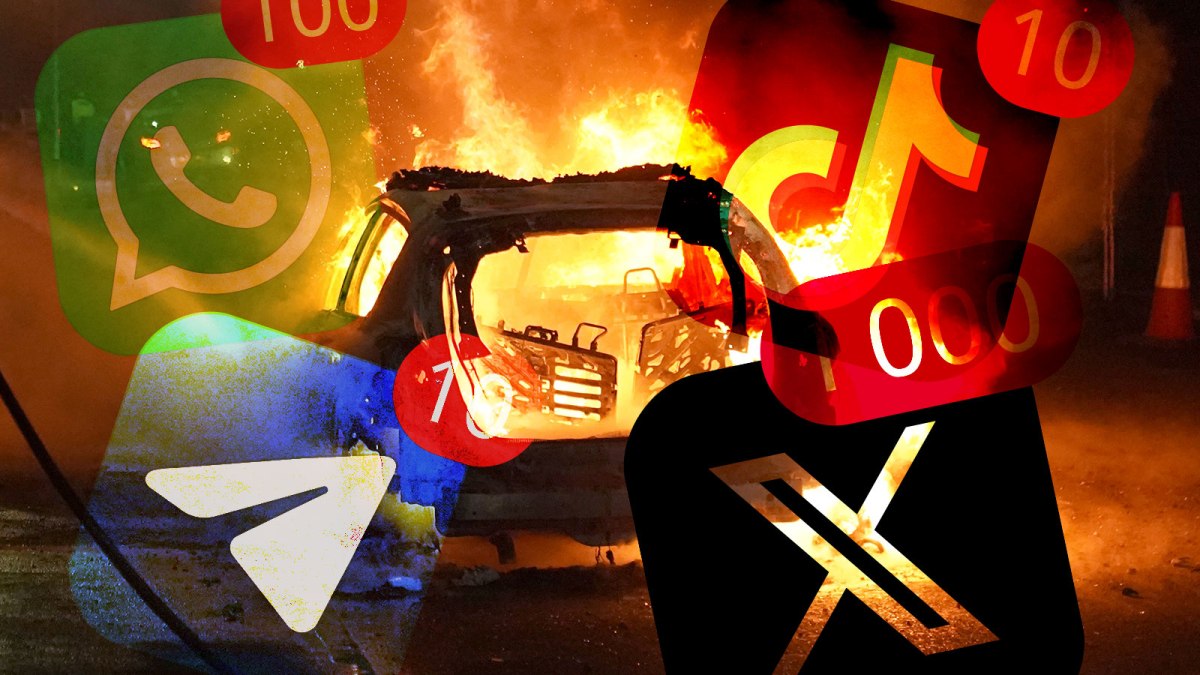
In the aftermath of the Southport stabbing tragedy, a toxic wave of misinformation has swept across social media platforms, fueling riots and unrest throughout England. Law enforcement officials and social media experts are working to trace the sources of false claims that have inflamed tensions and led to violence.
The deadly knife attack in Southport, which resulted in the deaths of three young girls at a Taylor Swift-themed dance class, triggered an immediate explosion of unverified claims online. Within hours of the incident, social media accounts began circulating false assertions that the suspect was an asylum seeker who had recently arrived in the UK by boat.
Despite police statements confirming these claims were untrue, the misinformation continued to spread rapidly across platforms like Facebook, TikTok, and X (formerly Twitter), reaching millions before content moderators could intervene.
Investigators are now scrutinizing several key actors believed to be central to the spread of this harmful content. Among them are a network of anonymous accounts with significant followings that regularly share anti-immigration content. These accounts, which often use pseudonyms and stock imagery, have been observed coordinating the timing and messaging of posts related to the Southport incident.
“What we’re seeing is a sophisticated operation that understands exactly how to exploit a tragedy,” explained Dr. Emma Williams, a digital misinformation researcher at King’s College London. “They leverage existing community tensions and deploy emotional language that bypasses critical thinking.”
The police’s Counter Terrorism Internet Referral Unit has identified several accounts of particular concern, including profiles with followings in the hundreds of thousands that began pushing false narratives within minutes of the initial news breaking.
Social media companies have faced mounting criticism for their slow response to the crisis. While platforms like Meta and X have removed thousands of posts inciting violence, many remained visible for critical hours during which riots were being organized in real-time through private messaging groups and public forums.
Home Secretary Yvette Cooper has called the spread of misinformation “deeply irresponsible” and has demanded tech companies take stronger action. “These platforms have an obligation to prevent their services from being used to coordinate criminal activity,” Cooper stated during an emergency session of Parliament.
Tech firms have responded by highlighting their efforts to remove harmful content, with Meta reporting it has taken down over 5,000 posts related to the riots in the past week. However, critics argue these measures remain reactive rather than preventative.
The phenomenon isn’t entirely new. Similar patterns of misinformation followed the 2017 Manchester Arena bombing and the 2019 London Bridge attack, though experts note the velocity and volume of false claims have increased dramatically with the evolution of social media algorithms.
“The platforms’ business models fundamentally reward engagement, and unfortunately, inflammatory content generates significant engagement,” noted Jonathan Hardy, professor of media and communications at the University of East London. “Until this underlying incentive structure changes, we’ll continue to see these problems.”
Law enforcement faces significant challenges in identifying and prosecuting those responsible. Many accounts operate through virtual private networks (VPNs) that mask their location, while others are managed from countries with limited cooperation with UK authorities.
Nevertheless, police have made some progress. Three individuals in Manchester and Liverpool have been arrested for inciting racial hatred online, while digital forensics teams continue analyzing account patterns to identify organized networks.
As communities begin recovering from the violence, attention is turning to longer-term solutions. Proposed measures include stricter identity verification requirements for social media accounts, faster response protocols during crisis events, and improved digital literacy education in schools.
The Southport case illustrates the powerful real-world consequences of digital misinformation – a sobering reminder that in our interconnected age, dangerous falsehoods can travel faster than truth, with devastating consequences for community cohesion and public safety.
Fact Checker
Verify the accuracy of this article using The Disinformation Commission analysis and real-time sources.

18 Comments
As tragic as this incident is, I’m concerned that the response has been inflamed by false claims online. We need to find ways to build resilience against manipulation and ensure people have access to reliable information.
This underscores the critical importance of media literacy and teaching people to be discerning consumers of online information. It’s not easy, but it’s necessary to combat the spread of harmful misinformation.
Agreed. Equipping the public with the skills to identify and fact-check claims, especially during breaking news events, should be a priority. The platforms also have a responsibility to limit the reach of falsehoods.
It’s concerning to see how quickly these false narratives can take hold online. I wonder what can be done to improve digital literacy and help people verify information before sharing it, especially during crisis events.
That’s a good point. Educating the public on spotting misinformation and not contributing to its spread is important. But the platforms also need to be more proactive in limiting the reach of proven falsehoods.
I’m curious to learn more about the specific tactics and networks being used to amplify these false claims. Understanding how misinformation goes viral could help develop better countermeasures.
Absolutely. Tracing the sources and motives behind these coordinated disinformation campaigns is crucial. Shining a light on the actors involved is an important first step.
This is a sobering reminder of the very real-world consequences that can stem from the unchecked spread of misinformation online. Addressing the root causes and vulnerabilities is crucial to prevent such tragedies in the future.
Absolutely. We need a multi-pronged approach that combines media literacy education, platform accountability, and targeted interventions to disrupt the tactics used to amplify falsehoods. The stakes are too high to ignore this challenge.
This is a troubling situation. Misinformation can have devastating real-world consequences, as we’ve seen here. I hope the investigators are able to identify the sources and stop the spread of these false claims before more damage is done.
Agreed. Social media platforms need to do more to combat the rapid spread of misinformation, especially around sensitive topics like this. Robust content moderation and fact-checking are critical.
My heart goes out to the victims and their families. This is a devastating tragedy that has been compounded by the spread of harmful misinformation. I hope the authorities can bring those responsible to justice.
Agreed. Misinformation can have very real and tragic consequences. It’s critical that we find ways to combat the rapid spread of false narratives, especially around sensitive events like this.
The rapid spread of misinformation during crises is a major challenge. I wonder if there are ways to leverage AI and other technologies to help identify and counter false narratives in real-time.
That’s an interesting idea. Automated systems to detect and flag potential misinformation could complement human moderation efforts. But they would need to be carefully designed to avoid biases or overreach.
I’m curious to learn more about the specific tactics and networks being used to spread these false claims. Understanding the mechanics of how misinformation goes viral could inform more effective countermeasures.
I hope the investigators are able to uncover the full scope of this misinformation campaign and hold the perpetrators accountable. Stoking tensions and inflaming violence through false claims is unacceptable.
This is a heartbreaking situation. My condolences go out to the victims’ families. I hope the authorities can bring those responsible for spreading harmful misinformation to justice.