


Listen to the article
Trump Defends Controversial Pardon of Binance Founder Amid Conflict of Interest Concerns
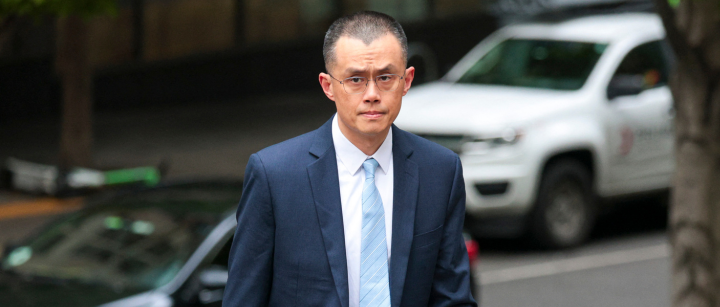
President Donald Trump has defended his October 23 pardon of Changpeng Zhao, the founder of cryptocurrency exchange Binance, claiming the executive was victim of a Biden administration “witch hunt.” The pardon has raised significant questions about potential conflicts of interest due to business connections between Zhao’s company and ventures run by Trump’s sons.
During a November 2 interview on CBS News’ “60 Minutes,” Trump claimed, “I don’t know who he is” and “I know nothing about the guy,” despite Zhao’s company having assisted in business dealings that benefit World Liberty Financial, the cryptocurrency venture operated by Eric and Donald Trump Jr.
White House Press Secretary Karoline Leavitt later clarified that the president meant “he does not have a personal relationship with” Zhao. She also asserted that the judge in the case had found the Biden administration’s requested sentence “egregious.”
Zhao, widely known as “CZ,” had pleaded guilty to failing to maintain an effective anti-money laundering program at Binance, in violation of the Bank Secrecy Act. He served a four-month sentence in a low-security California prison and a halfway house in Long Beach, which ended in September 2024.
The Department of Justice had been investigating Binance since 2018 – during Trump’s first presidential term – with the case culminating in November 2023. At that time, Binance agreed to pay over $4.3 billion in penalties, one of the largest corporate penalties in U.S. history, and Zhao resigned as CEO.
“Binance turned a blind eye to its legal obligations in the pursuit of profit. Its willful failures allowed money to flow to terrorists, cybercriminals, and child abusers through its platform,” Secretary of the Treasury Janet Yellen said at the time of the settlement.
According to the Department of Justice, Binance’s lax controls permitted illegal transactions between U.S. users and users in sanctioned jurisdictions including Iran, Cuba, Syria, and Russian-occupied regions of Ukraine. Internal communications revealed that Binance employees recognized the company’s lack of protocols to flag or report transactions for money laundering risks would attract criminals to the platform.
Prosecutors had sought a three-year sentence for Zhao, while his defense requested probation with no jail time. Judge Richard A. Jones ultimately sentenced him to four months in prison plus a $50 million fine – a relatively small sum for Zhao, whose personal worth was estimated between $33 billion and $43 billion.
Trump’s pardon of Zhao raises notable concerns about potential conflicts of interest. Bloomberg reported in July that Binance had assisted in creating the initial code enabling the issuance of USD1, a stablecoin offered by World Liberty Financial, the Trump family’s crypto venture. This arrangement potentially channels millions annually from interest-bearing assets to the Trump family.
Days after Trump pardoned Zhao, Binance began promoting sales of USD1 on its U.S. site, making the digital coin more accessible to American investors and potentially increasing its value.
When asked on “60 Minutes” about concerns regarding the appearance of corruption in pardoning Zhao, Trump gave an evasive answer: “I can’t say, because — I can’t say — I’m not concerned. I don’t — I’d rather not have you ask the question. But I let you ask it.”
The Trump administration has denied any conflict of interest, with Leavitt stating, “Neither the president nor his family have ever engaged, or will ever engage, in conflicts of interest.”
However, legal and financial experts have expressed significant concerns. Eswar Prasad, an economics professor at Cornell University, told the New York Times, “There is little justification for this pardon and highlights how far this administration will go to promote the cryptocurrency industry.”
Dan Kobil, a professor with expertise in executive clemency at Capital University Law School, noted several unusual aspects of the pardon, including its timing shortly after Zhao completed his sentence and before establishing a significant record of ongoing lawful behavior. The ties between Binance and the Trump family make the pardon “look like a reward,” Kobil observed.
Seven senators have written to Attorney General Pam Bondi seeking information about the pardon, stating it “signals to cryptocurrency executives and other white-collar criminals that they can commit crimes with impunity, so long as they enrich President Trump enough.” A separate letter from 28 Democratic House members also opposed the pardon, highlighting concerns about potential conflicts of interest.
The White House maintains that the pardon underwent proper legal review, with Leavitt emphasizing that Trump was “most interested in looking at pardoning individuals who were abused, and used by the Biden Department of Justice, and were over-prosecuted by a weaponized DOJ.”
Fact Checker
Verify the accuracy of this article using The Disinformation Commission analysis and real-time sources.

10 Comments
The Binance founder’s pardon is an intriguing development in the world of crypto regulation. I’m curious to learn more about the specifics and implications of this case.
Resolving these types of issues in a fair and transparent manner is crucial for building public trust in the crypto industry.
As the crypto industry continues to evolve, it’s crucial that regulators keep a close eye on potential misconduct and enforce laws equally across the board. This pardon seems to warrant further scrutiny.
While I understand the desire to support innovation, the integrity of the financial system must be protected. Hopefully this situation can be resolved transparently.
Interesting situation with the Binance founder’s pardon. Curious to see how this plays out and if there are any real conflicts of interest given the Trump family connections.
The president’s claims of not knowing the Binance founder seem questionable given the reported business ties. Transparency around these relationships would be helpful.
Cryptocurrency regulation is a complex and rapidly changing landscape. This pardon raises important questions about how such cases are handled, regardless of who is involved.
It will be interesting to see if more details emerge about the reasoning behind this pardon and any potential conflicts of interest.
Cryptocurrencies and blockchain technology are still relatively new, so it’s not surprising to see some legal and regulatory gray areas. This pardon raises valid concerns that should be looked into further.
It will be important for authorities to carefully examine the specifics of this case and any potential conflicts of interest, regardless of political affiliations.