


Listen to the article
Trump’s Primetime Address Faces Backlash as Viewers Demand Fact-Checking
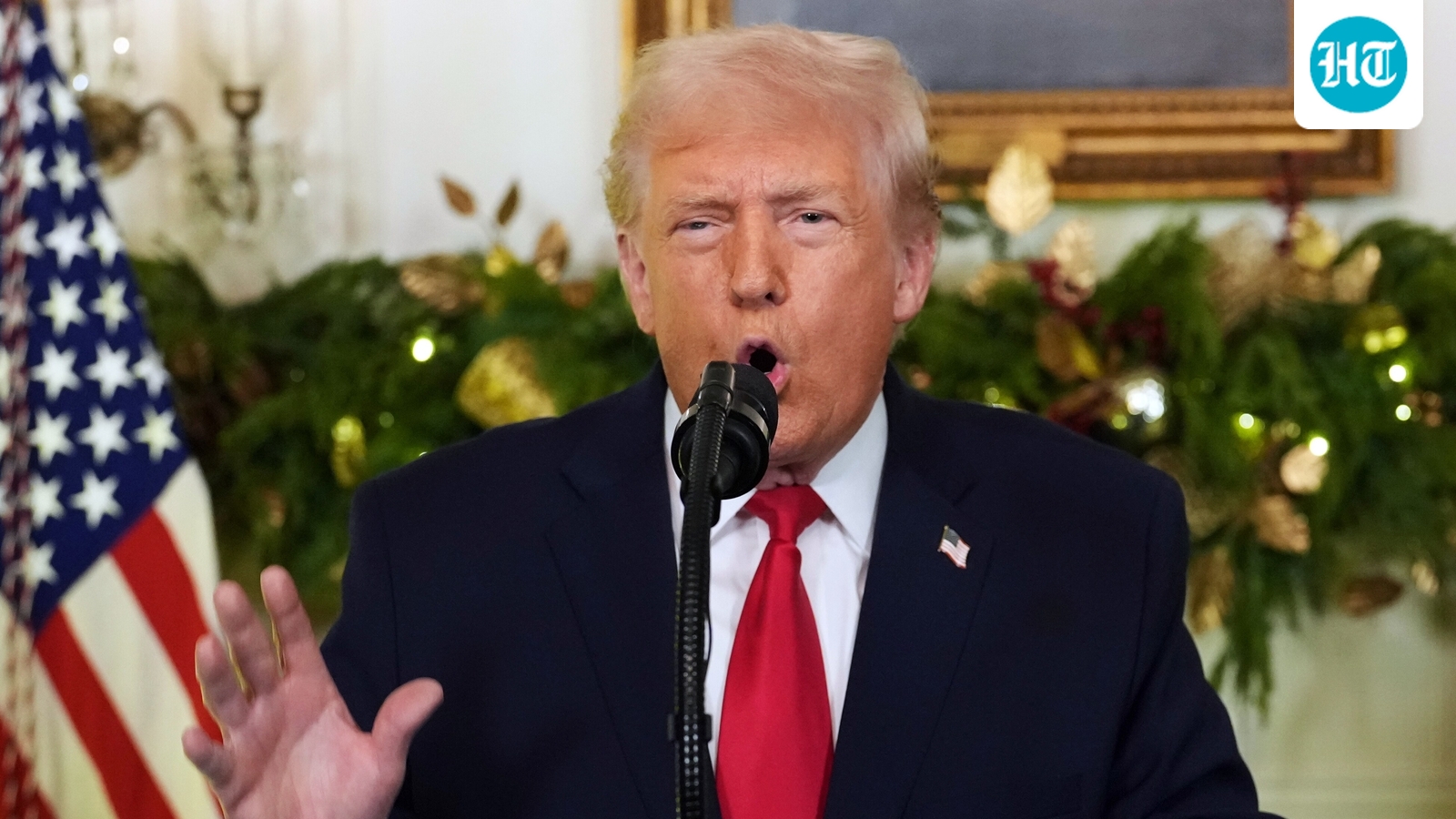
President Donald Trump addressed the nation in a primetime speech on Wednesday, triggering immediate criticism on social media as viewers challenged numerous claims made during his address.
The 79-year-old president devoted considerable time to immigration policy, claiming his administration had achieved what many considered impossible. “For the past seven months, zero illegal aliens have been allowed into our country, a feat which everyone said was absolutely impossible,” Trump stated during his address.
The president contrasted his approach with that of his predecessor, Joe Biden, saying, “Do you remember when Joe Biden said that he needed Congress to pass legislation to help close the border? As it turned out, we didn’t need legislation. We just needed a new president.”
However, recent polling suggests Americans remain skeptical of Trump’s immigration policies. A Quinnipiac poll released this week revealed that 54% of registered voters disapprove of the president’s handling of immigration issues, with only 44% expressing approval. This disconnect between the administration’s messaging and public perception has become a recurring theme in Trump’s second term.
Social media platforms erupted with demands for fact-checking during and after the speech. One user on X (formerly Twitter) wrote, “Trump’s address is starting off with just a series of complete lies about the economy. You would literally need to fact check almost every statement. According to him, prices are way down and manufacturing jobs are going great!”
Another viewer expressed similar sentiment: “Can’t wait for the fact check on Trump’s speech! How many distorted facts were provided?” A third comment urged fellow citizens to verify the president’s claims: “Fellow Americans please fact check everything Donald Trump is saying tonight and you will find out it is full of lies.”
The president’s economic claims also faced scrutiny. Trump asserted that Democrats had brought the country to the “brink of ruin” before his administration stepped in to bring “prices down.” This narrative contradicts many economists’ assessments of current economic conditions, which acknowledge persistent challenges in several sectors despite some improvements.
The primetime address comes at a crucial moment for the Trump administration as it attempts to shape public perception around its policy achievements. Presidential addresses traditionally serve as opportunities for leaders to communicate directly with the American people, free from media interpretation, but the immediate skepticism highlights the polarized information environment of contemporary politics.
Media outlets have begun publishing comprehensive fact-checks of the speech, analyzing claims about immigration, economic indicators, and criticism of previous administrations. These assessments have become standard practice following major presidential addresses, particularly in an era of heightened concern about misinformation.
The administration has yet to respond to the wave of criticism following the address. White House communications staff typically defend presidential statements by providing additional context or clarification after major speeches face public scrutiny.
This latest controversy underscores the ongoing challenge facing not just the Trump administration but American political discourse more broadly – the struggle to establish agreed-upon facts in an increasingly fragmented media landscape where audiences can choose information sources that align with their existing political perspectives.
As viewers continue to digest and debate the president’s remarks, the episode highlights how presidential communication has evolved in the digital age, where real-time fact-checking and instant public reaction have become integral parts of the political conversation.
Fact Checker
Verify the accuracy of this article using The Disinformation Commission analysis and real-time sources.

16 Comments
It’s encouraging to see viewers actively questioning the claims made in Trump’s speech. Maintaining a vigilant and critical approach to political discourse is crucial.
Well said. Fact-based analysis and open dialogue are vital for ensuring that our leaders are held accountable and that the public has access to accurate information.
Interesting to see the criticism around Trump’s speech and claims about immigration. Fact-checking is important to ensure the public has accurate information, regardless of political affiliation.
Agreed. Transparency and accountability should be the priority when it comes to political statements, not partisan bias.
While Trump may have achieved a reduction in illegal border crossings, the polling data suggests the public is still skeptical of his overall immigration policies. Balanced analysis is key here.
That’s a fair point. Public perception doesn’t always align with the administration’s messaging, so it’s important to dig deeper into the nuances.
It’s good to see that viewers are actively challenging the claims made in Trump’s address. Fact-based discourse should be the foundation of any political discussion.
Exactly. Holding our leaders accountable and ensuring transparency is crucial, regardless of party affiliation.
The disconnect between Trump’s claims and public perception highlights the importance of critical thinking and fact-checking, especially when it comes to high-profile political speeches.
Well said. Maintaining a healthy skepticism and verifying claims is essential for a well-functioning democracy.
I’m curious to see how this plays out in terms of the broader political landscape. Immigration remains a hot-button issue, and fact-checking is crucial to ensure an informed electorate.
Absolutely. Voters deserve to have access to reliable information from multiple sources to form their own opinions on complex policy issues.
This situation highlights the importance of having a well-informed and engaged citizenry. Fact-checking and critical thinking are essential for maintaining a healthy democracy.
Absolutely. An informed and skeptical public is the best defense against potential misinformation or partisan rhetoric, regardless of the source.
The Quinnipiac poll results suggest that the public may not be fully convinced by the administration’s messaging on immigration. Continued scrutiny and analysis will be important going forward.
Agreed. Public opinion can be a powerful force, and it’s clear that the administration’s claims are not aligning with how many Americans perceive the issue.