


Listen to the article
President Trump’s Economic Claims Face Scrutiny as Fact-Checkers Challenge White House Narrative
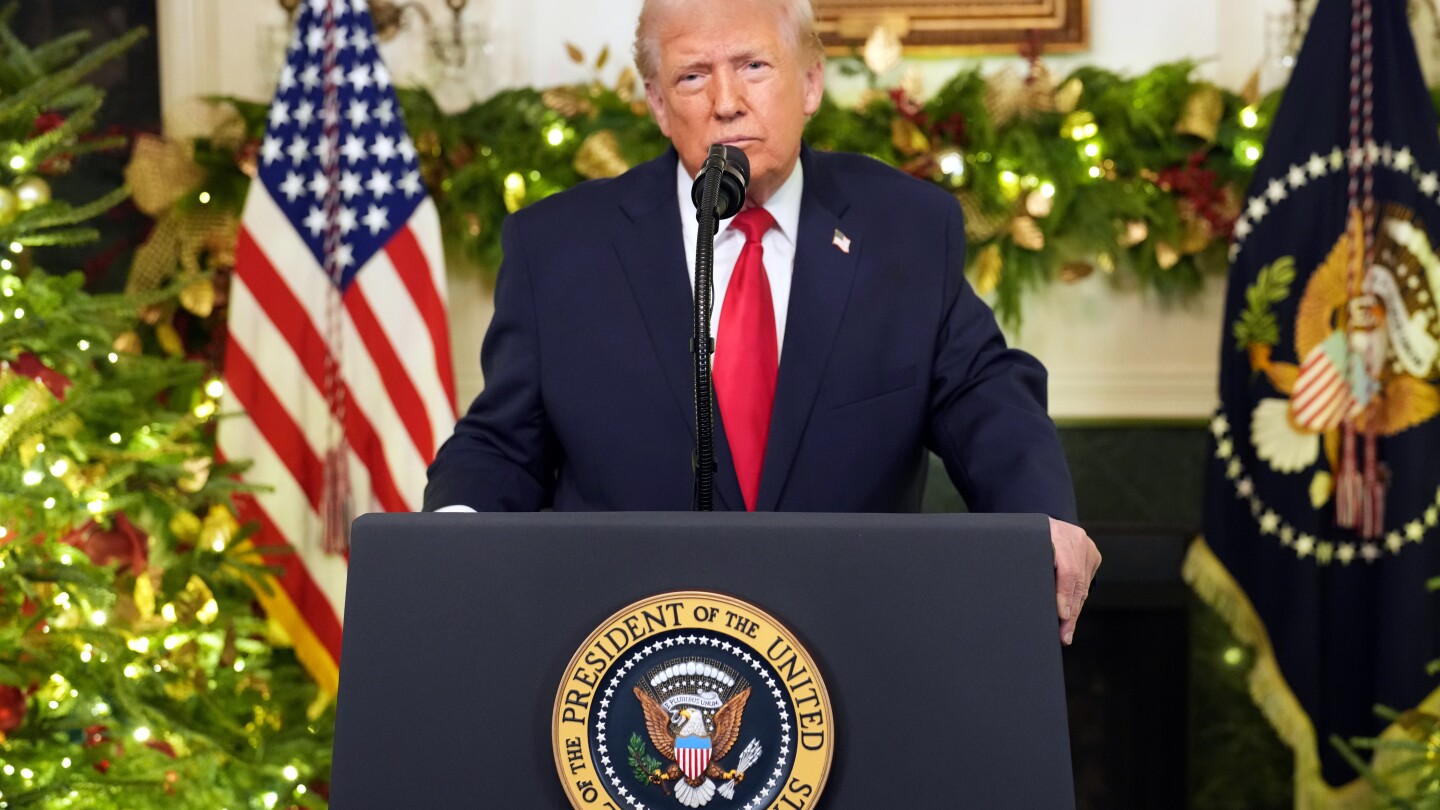
In a wide-ranging White House address Wednesday, President Donald Trump painted an optimistic picture of America’s economic trajectory under his leadership while criticizing his predecessor’s record. However, several of the President’s key assertions appear inconsistent with government statistics and economic indicators, raising questions about the accuracy of his claims.
Trump characterized the economic situation he inherited as an “inflation disaster,” describing it as “the worst in the history of our country.” He went on to claim prices are now “falling rapidly,” highlighting decreases in turkey and egg prices as evidence of his administration’s progress.
Economic data, however, tells a different story. The consumer price index currently sits at 3% – exactly where it was when Trump took office in January. This represents only a slight change from the 2.9% rate recorded during Joe Biden’s final month in office. Far from experiencing “rapidly falling” prices, most Americans continue to feel economic pressure, with an AP-NORC poll this month revealing the vast majority of U.S. adults have noticed higher than usual prices for groceries, electricity, and holiday gifts.
While inflation did reach 9.1% during Biden’s presidency in June 2022 – driven by a combination of pandemic supply chain disruptions, government stimulus spending, and Russia’s invasion of Ukraine – this peak was far from historic. Americans endured significantly higher inflation rates during previous economic crises, including rates exceeding 13% in 1980 and approaching 20% during World War I according to some estimates.
Economists note that inflation had actually been declining in the early months of Trump’s current term before rebounding after his tariff announcements in April.
The President’s investment claims also face scrutiny. During his address, Trump declared he had “secured a record-breaking $18 trillion of investment into the United States.” This figure appears substantially inflated compared to documentation available on the White House’s own website, which lists a more modest $9.6 trillion. Even this lower figure seems to include investment commitments made during the Biden administration.
Trump has previously announced investment agreements during diplomatic trips to Japan and South Korea in October, but these commitments span multiple years and their ultimate fulfillment remains uncertain. Economic analysts have consistently requested more transparency regarding the methodology behind these investment figures.
The President also characterized his recent election victory as a “landslide,” claiming he won the popular vote and “all seven swing states” with a mandate to reform what he termed a “sick and corrupt system.”
While Trump did secure a decisive victory with 312 electoral votes and did win more popular votes than Kamala Harris, electoral historians point out that his margin falls short of true landslides in American presidential politics. For comparison, Barack Obama received 365 electoral votes in 2008 and 332 in 2012, while Bill Clinton won 370 in 1992 and 379 in 1996.
These modern victories pale compared to the historic sweeps by Franklin Roosevelt in 1936 (523 electoral votes), Lyndon Johnson in 1964 (486), Richard Nixon in 1972 (520), and Ronald Reagan in 1984 (525).
The discrepancies between President Trump’s statements and verifiable economic data highlight the ongoing tension between political rhetoric and statistical reality. As the administration moves forward with its economic agenda, economists and analysts will continue monitoring key indicators to evaluate the actual impact of policies on American consumers and businesses.
Fact-checking organizations remain focused on analyzing presidential statements against available data as the administration begins implementing its economic vision for the next four years.
Fact Checker
Verify the accuracy of this article using The Disinformation Commission analysis and real-time sources.

7 Comments
The President seems to be putting a positive spin on the economic situation, but the data tells a more nuanced story. I appreciate fact-checkers scrutinizing the claims to provide a clearer picture for the public.
As an investor in mining and energy, I’m always interested in economic trends and policy changes. This analysis provides a helpful reality check on some of the administration’s rhetoric around the economy.
The data seems to paint a more mixed picture than the optimistic narrative presented by the White House. I’m curious to see how this plays out and impacts policy decisions going forward.
While I’m generally supportive of the President, I think it’s important to hold all leaders accountable when their claims don’t align with statistical evidence. Objective analysis is key for informed decision-making.
Interesting to see the data doesn’t fully back up the President’s claims on the economy. It’s important to rely on objective statistics rather than just rhetoric, no matter the source. Curious to hear other perspectives on this.
As someone invested in mining and energy, I’m always attuned to economic conditions and policy shifts. This fact-check provides a helpful counterpoint to some of the administration’s rhetoric.
It’s concerning to see the disconnect between the President’s statements and the underlying economic data. Transparent and fact-based public discourse is crucial, especially on important issues like the economy.