


Listen to the article
The International Criminal Court (ICC) has asserted its jurisdiction over the Philippines’ drug war cases involving former president Rodrigo Duterte and Senator Ronald “Bato” dela Rosa, contradicting claims made by Duterte allies.
In a unanimous ruling issued on October 23, 2025, the ICC Pre-Trial Chamber explicitly stated that the Court “can exercise jurisdiction in the present case over the crimes alleged against Mr. Duterte that were committed on the territory of the Philippines while it was a state party.” This clarification directly refutes statements made by former presidential spokesperson Harry Roque.
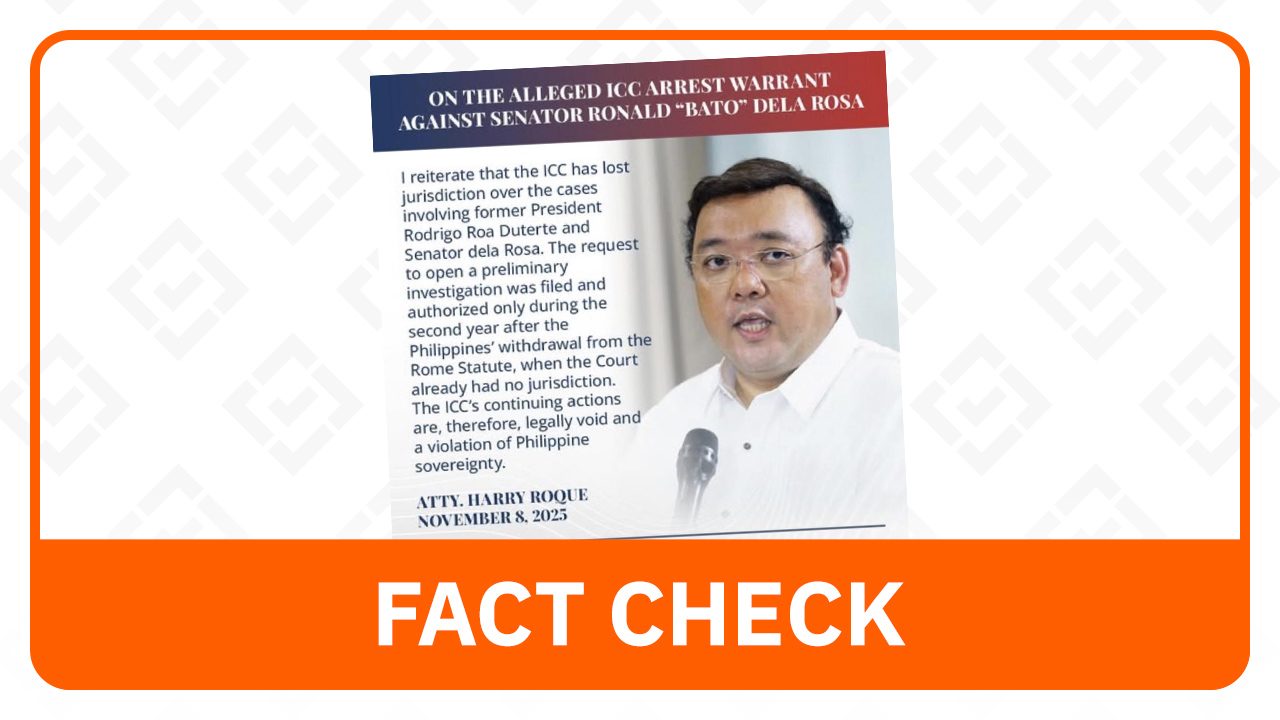
Roque had claimed that the ICC “lost jurisdiction” over cases involving Duterte and Dela Rosa, arguing that the request to open a preliminary investigation was filed and authorized during the second year after the Philippines withdrew from the Rome Statute. He characterized the ICC’s continued actions as “legally void and a violation of Philippine sovereignty.”
Legal experts point out that the Philippines’ withdrawal from the ICC in 2018, which became official in March 2019, does not invalidate the Court’s jurisdiction over crimes committed while the country was a signatory to the Rome Statute. The accusations against Duterte cover alleged crimes committed from November 1, 2011, to March 16, 2019 – a period when the Philippines was bound by the treaty.
The ICC judges specifically rejected arguments from Duterte’s legal team that the Court lost jurisdiction because the drug war investigation was only formally authorized in September 2021, two years after the Philippines’ withdrawal took effect. They also dismissed claims that the preliminary investigation opened in 2018 did not qualify as a “matter under consideration” under Article 127(2) of the Rome Statute.
“The matter that was already under consideration by the Court was the allegations of crimes committed in the Philippines,” the ruling stated. “That matter was under consideration in the preliminary examination and remained under consideration when the Prosecution requested, and the Chamber granted, authorization for the commencement of the investigation in the Philippines Situation.”
The legal situation intensified on November 8, when Philippine Ombudsman Jesus Crispin “Boying” Remulla revealed that the ICC had issued an arrest warrant for Senator Dela Rosa. While the warrant has not yet been made public, Dela Rosa responded by filing a petition with the Supreme Court on November 13 to block its enforcement.
Dela Rosa’s central role in the drug war makes him a key figure in the ICC’s investigation. As the country’s police chief from July 1, 2016, he implemented “Project Double Barrel” through a circular that expanded what critics call the “Davao model” nationwide. This policy directed police operations aimed at “neutralizing” alleged drug offenders, with Dela Rosa publicly supporting the use of lethal force and minimizing civilian casualties.
Human rights organizations have documented extensive abuses during the drug war. According to Philippine Drug Enforcement Agency data, at least 4,999 deaths occurred during Dela Rosa’s tenure as police chief. Independent estimates from human rights groups place the total number of killings much higher.
The ICC’s continued pursuit of the case highlights the international legal principle that withdrawal from the Rome Statute does not retroactively absolve a country or its officials from accountability for crimes committed while under the Court’s jurisdiction. Article 127(2) of the Rome Statute specifically states that a country’s withdrawal “shall not affect any cooperation with the Court in connection with criminal investigations and proceedings” that were underway before the withdrawal took effect.
As the legal battle continues, the case represents a significant test of international criminal justice mechanisms and their ability to address alleged human rights violations, even when nations attempt to withdraw from their jurisdiction.
Fact Checker
Verify the accuracy of this article using The Disinformation Commission analysis and real-time sources.

12 Comments
The mining and commodities industries will likely be watching this case closely, as it could set important precedents around corporate and government accountability for human rights violations.
Good point. Extractive industries operating in developing countries with weak rule of law will be concerned about potential ICC jurisdiction over abuses.
This is a complex and sensitive issue, but it’s encouraging to see the ICC asserting its jurisdiction. Accountability for alleged human rights violations is important, regardless of a country’s political leadership.
I agree. The ICC’s ruling sends a strong message that impunity for such abuses will not be tolerated, even in the face of national withdrawal from the Rome Statute.
This is a complex issue at the intersection of international law, national sovereignty, and human rights. I hope the ICC can investigate thoroughly and impartially to determine the facts.
Agreed, it’s a delicate balance. The ICC will need to tread carefully to uphold international norms while respecting national jurisdictions.
Interesting development on the ICC’s jurisdiction over the Philippines’ drug war cases. It will be important to see how this plays out and whether it leads to any accountability for the alleged human rights abuses.
Agreed, the ICC’s ruling seems to directly contradict claims made by Duterte allies. I’m curious to see if the Philippine government will cooperate with the ICC investigation.
As an investor in mining and energy stocks, I’ll be monitoring this case closely. Allegations of human rights abuses can have significant reputational and financial impacts on companies operating in the region.
Good point. Investors will want to understand the potential legal and regulatory risks associated with the Philippines’ drug war cases.
The Philippines’ withdrawal from the ICC seems to have had little impact on the Court’s ability to assert jurisdiction. This could set an important precedent for holding countries accountable even after they leave the Rome Statute.
That’s an astute observation. The ICC’s ruling appears to affirm that withdrawal does not necessarily shield a country from prosecution for past crimes.