


Listen to the article
Federal Database Flags Thousands of Potential Noncitizen Voters, But Accuracy Questions Persist
Republican Senator Mike Lee recently claimed there are “at least tens of thousands, probably hundreds of thousands” of noncitizens illegally registered to vote in the United States. The Utah senator has championed the SAVE America Act, which would require all states to verify voter eligibility through the Department of Homeland Security’s Systematic Alien Verification for Entitlements (SAVE) program.
Early results from nearly two dozen states that have voluntarily used the SAVE database identified approximately 10,000 potential noncitizens among 49 million voter registrations checked, according to federal officials cited by the New York Times. This represents about 0.02% of those checked registrations.
However, election officials have discovered significant flaws in the database’s accuracy. County officials investigating the flagged registrations found many U.S. citizens were incorrectly identified as noncitizens, particularly recently naturalized citizens. Other cases involved noncitizens who were inadvertently added to voter rolls by county officials or individuals who mistakenly checked voter registration boxes while acknowledging their noncitizen status on the same forms.
“The SAVE program is one of many tools that election officials have in their toolbox to use. It comes with a myriad of data flaws, and any results that come directly from a search to the SAVE program need to be viewed with that lens and with a good degree of skepticism,” said Jasleen Singh, senior counsel in the Brennan Center for Justice’s democracy program.
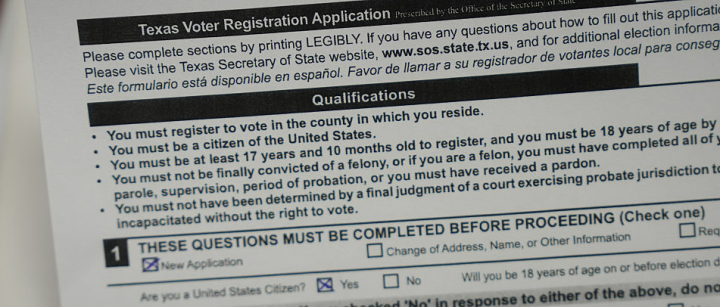
The results from states that have implemented SAVE reviews reveal a pattern: initial reports of thousands of potential noncitizen voters are dramatically reduced after thorough investigation. In Texas, Secretary of State Jane Nelson announced the SAVE program had identified 2,724 potential noncitizens on voter rolls out of more than 18 million registered voters. However, a joint investigation by ProPublica and the Texas Tribune found that when counties compared these names against Department of Public Safety records, more than 5% of those flagged proved to be citizens.
Perhaps most telling are the results from Senator Lee’s home state of Utah, which conducted a comprehensive citizenship review of its voter rolls. After checking 2 million voters, officials could initially not verify citizenship for 71,314 individuals. Further screening through the SAVE database narrowed this to 8,836, and additional investigation reduced it to 486. After contacting these individuals, state officials concluded that only one noncitizen was confirmed on the rolls, and that person had never voted.
“The bottom line is, there is not a widespread problem,” said Utah Lieutenant Governor Deidre Henderson, a Republican who oversees elections. “You hear people say hundreds or thousands — it’s just not.”
Henderson has also criticized the SAVE database as “notoriously inaccurate” and raised concerns about the SAVE America Act mandating its use immediately during an election year without adequate preparation.
Similar issues arose in Louisiana, where SAVE identified 403 potential noncitizens among 2.96 million registered voters. Louisiana Secretary of State Nancy Landry emphasized, “I want to be clear: noncitizens illegally registering or voting is not a systemic problem in Louisiana.”
In Missouri, more than 70 county election clerks from both parties wrote to state officials expressing concerns about SAVE-generated lists, describing them as “deeply flawed: they are outdated, inaccurate, and include individuals we know to be U.S. citizens—our neighbors, colleagues, and even voters we have personally registered at naturalization ceremonies.”
Experts point out that noncitizens face severe consequences for voting illegally, including fines, jail time, and deportation, creating a strong deterrent. According to the conservative Heritage Foundation’s election fraud database, fewer than 100 noncitizens have been convicted of illegally voting or registering since 1982.
“Someone who is in this country, who may not have documents, or who has a legal presence and is not a citizen yet, whatever it is, they’re not going to risk their ability to be in this country to cast a ballot,” Singh explained.
The SAVE America Act passed the House and is being debated in the Senate, while U.S. Attorney General Pam Bondi has sued 29 states and the District of Columbia for refusing to provide their voter rolls to federal authorities.
As the debate continues, the evidence suggests noncitizen voting remains exceptionally rare, with most cases resulting from administrative errors rather than deliberate fraud.
Fact Checker
Verify the accuracy of this article using The Disinformation Commission analysis and real-time sources.

12 Comments
The high error rate in the SAVE database is very concerning. Wrongly accusing naturalized citizens of ineligibility is unacceptable and could undermine public trust in our elections. Any voter verification tools must be rigorously tested to ensure accuracy and fairness, not create barriers to legitimate voters.
Agreed. Protecting the democratic process should be the top priority, not pursuing unsubstantiated claims of widespread fraud. Flaws in the SAVE database that target naturalized citizens are particularly troubling and need to be addressed through robust safeguards and quality control measures.
The SAVE database’s high error rate in identifying noncitizen voters is very concerning. Incorrectly flagging naturalized citizens undermines the integrity of the electoral process and could lead to voter suppression. Any tools used to verify eligibility must be rigorously tested and validated to avoid these kinds of problems.
Absolutely agree. Wrongly accusing naturalized citizens of ineligibility is unacceptable and could seriously erode public trust in our elections. Protecting the fundamental right to vote should be the top priority, not pursuing dubious claims of widespread fraud.
This report raises serious questions about the accuracy and fairness of the SAVE database in identifying noncitizen voters. Incorrectly flagging naturalized citizens is a major issue that could lead to voter suppression. Any voter verification tools must be thoroughly vetted to ensure they don’t unfairly target certain groups.
Well said. Protecting the integrity of elections is crucial, but it must be done in a way that safeguards the democratic process and the rights of all eligible voters. Flaws like these in the SAVE database undermine that goal and need to be addressed.
It’s troubling to see such a high error rate in this federal database meant to identify noncitizen voters. Wrongly accusing naturalized citizens of ineligibility is unacceptable and could undermine public trust in the electoral system. Rigorous quality control is essential for any voter verification program.
Absolutely. Flaws like these raise serious concerns about the reliability and fairness of the SAVE database. Any efforts to enhance voter integrity need to be implemented with extreme care and transparency to avoid disenfranchising eligible citizens.
This report highlights the need for caution when using unproven tools to police voter eligibility. Incorrectly flagging naturalized citizens is a major issue that could suppress legitimate votes. Protecting the democratic process should be the top priority, not pursuing unsubstantiated claims of widespread fraud.
Well said. Any voter verification system needs to be extensively vetted to ensure accuracy and fairness. Targeting naturalized citizens is particularly troubling and could have damaging consequences for democratic participation. Robust safeguards are essential.
The SAVE database seems to have significant accuracy issues when it comes to identifying noncitizen voters. Wrongly flagging naturalized citizens is concerning and could lead to voter suppression. We need robust and reliable systems to protect election integrity without disenfranchising legitimate voters.
Agreed. Any tools used to verify voter eligibility must be thoroughly tested and validated to avoid false positives that could unfairly target certain groups. Protecting the democratic process should be the priority, not creating barriers to voting.